
CANADA · ANALYSIS
Key Facts
- —What is happening Ottawa has given Cleveland-Cliffs 15 days from October 22, 2026 to reverse up to 500 planned Stelco layoffs or prove compliance with its Investment Canada Act commitments.
- —Why it matters If Cleveland-Cliffs does not satisfy Industry Minister Mélanie Joly, Canada may ask a court to impose daily penalties of up to C$10,000 or order a forced sale of Stelco.
- —Who is who Mélanie Joly is Canada’s Industry Minister; Lourenco Goncalves is Chairman, President and CEO of Cleveland-Cliffs; Stelco president Paul Simon argues the undertakings do not prohibit temporary layoffs.
- —What to watch The 15-day deadline expires in early November 2026, after which Ottawa may file a court application under section 40 of the Investment Canada Act.
- —What it means for you For US shareholders of CLF, the dispute adds legal, cost, asset-allocation and political risk beyond ordinary steel-cycle volatility, and could complicate the company’s position in US-Canada tariff talks.
Ottawa is demanding that Cleveland-Cliffs reverse up to 500 planned layoffs at its Stelco subsidiary in Ontario or prove it is honouring the job commitments it made to win approval of the 2024 acquisition. If the NYSE-listed steelmaker does not satisfy Canada’s Industry Minister by early November 2026, the federal government may ask a court to impose daily fines or force a sale of the Canadian assets.
Canada is treating the Stelco dispute as a test of whether a foreign buyer of strategic industrial capacity can be held to the promises it made to secure regulatory approval. This analysis explains what Ottawa is demanding, what happens if Cleveland-Cliffs does not comply, and why the outcome matters for US shareholders and North American steel supply. The wider Canada-US context is covered in the USA-Canada Intelligence Brief.
How the Dispute Began
Cleveland-Cliffs, an Ohio-based steelmaker listed on the New York Stock Exchange under the ticker CLF, acquired Stelco in 2024. The Canadian government approved the transaction under the Investment Canada Act, subject to legally binding undertakings that Ottawa says remain in force for five years.
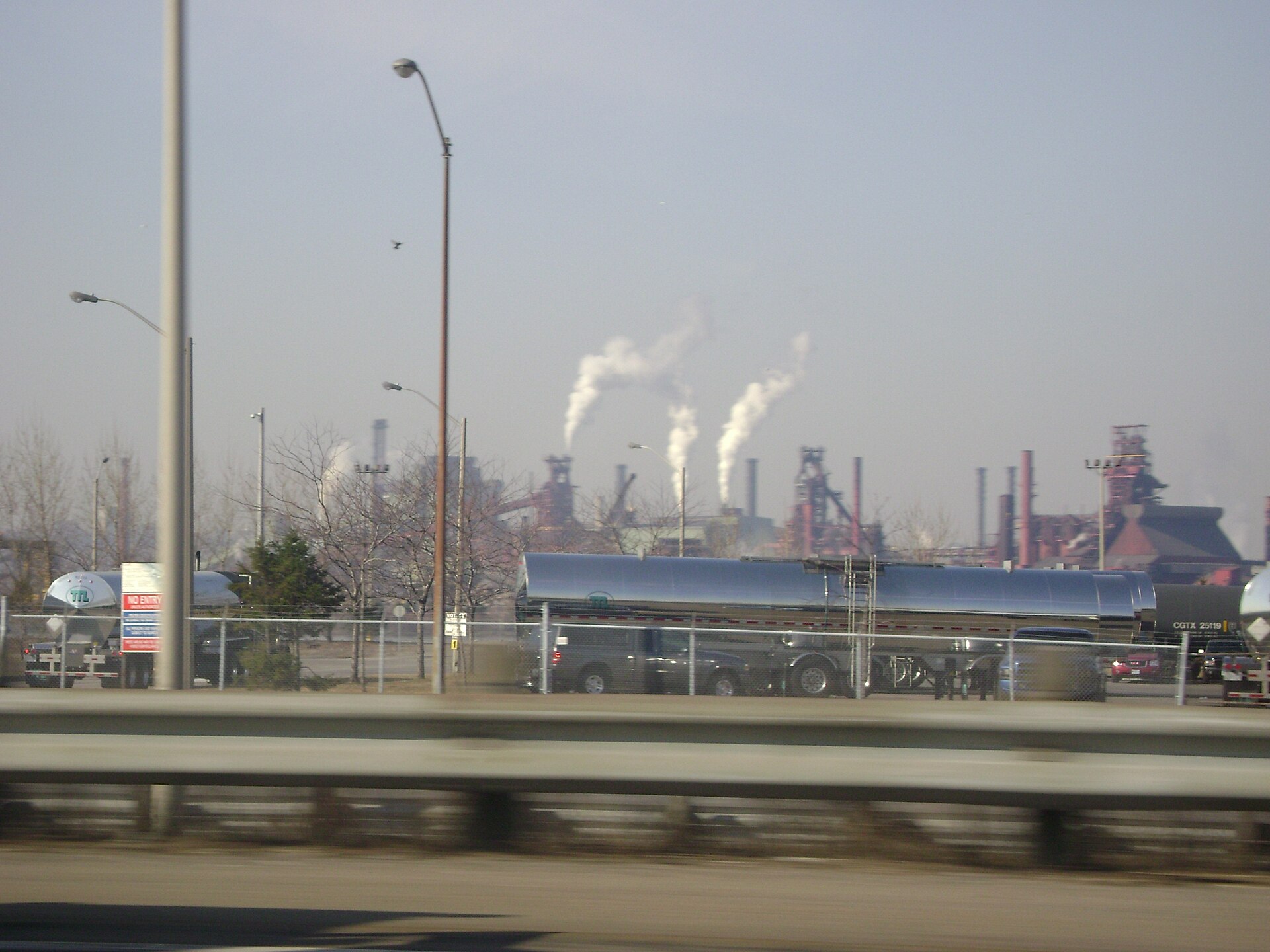
The immediate trigger came on September 28, 2026, when Stelco announced it would lay off as many as 500 workers at Hamilton Works and Lake Erie Works in Ontario. The company cited US tariffs, weak demand, import pressure and difficult market conditions.
Industry Minister Mélanie Joly responded with escalating warnings. On October 22, 2026, she issued a formal demand under the Investment Canada Act, giving the company 15 days to remedy the alleged violations, prove compliance, or explain its failure.
The union requested scrutiny of production, customer orders, investment and employment allocations between Cleveland-Cliffs’ Canadian and US operations.
Joly has also criticised Cleveland-Cliffs for supporting US tariffs on Canadian steel and then citing those tariffs as a reason for cutting Canadian jobs. That creates a political contradiction for Ottawa: measures defended as protecting North American steel can also make Canadian operations less competitive if Canadian plants lose access to the US market or face higher cross-border friction.
What Ottawa Says Cleveland-Cliffs Promised
Beyond headcount, the undertakings require Cleveland-Cliffs to respect collective agreements, pension obligations and benefit commitments, and make significant capital and research-and-development expenditures supporting Stelco’s operations. Ottawa says those undertakings were central to approving the transaction.
That distinction is likely to become central to any court dispute.
Ottawa argues that the announced reductions may breach the binding commitments.
The company also said total Stelco production tonnage would be maintained, with production concentrated on hot-rolled products rather than galvanizing lines.
The Numbers That Matter
The dispute involves several figures that will shape any court proceeding or negotiated settlement. These are the key numbers as of October 2026.
- Up to 500 jobs at risk across Hamilton Works and Lake Erie Works, announced September 28, 2026.
- About 330 United Steelworkers Local 1005 members expected to be laid off in Hamilton, according to union president Ron Wells.
- 90 notices issued by early October 2026, according to USW Local 1005.
- C$3.4 billion acquisition value for Stelco in 2024.
- C$10,000 per day potential monetary penalty for non-compliance under the Investment Canada Act.
- 15 days from October 22, 2026 for Cleveland-Cliffs to respond, expiring in early November 2026.
- Approximately 25,000 employees at Cleveland-Cliffs as of December 31, 2025, according to regulatory filings reported by CBC.
That performance claim, reported on October 20-23, 2026, may complicate the company’s argument that market conditions justify the layoffs.
Canada lost 68,000 jobs in September 2026, according to labour-market data reported by BNN Bloomberg. That broader employment weakness gives the federal government additional political incentive to resist job losses at a high-profile industrial employer.
The Actors and What Each Wants
Mélanie Joly is Canada’s Industry Minister and the public face of the federal government’s enforcement effort. She wants Cleveland-Cliffs to reverse the layoffs or demonstrate that they are consistent with the 2024 undertakings, and she has said “everything is on the table,” including financial penalties and a forced sale of Cleveland-Cliffs’ Canadian assets.
Lourenco Goncalves is Chairman, President and CEO of Cleveland-Cliffs. He leads the US steelmaker that acquired Stelco and now faces the prospect of court-ordered remedies, including a potential forced sale of the Canadian assets. Cleveland-Cliffs says its decision to idle the galvanizing lines at Stelco affects about 2,000 Canadian jobs, and that those workers will return as soon as conditions improve.
Paul Simon is president of Stelco. He argues that the undertakings do not prohibit temporary layoffs and do not require staffing to remain above a fixed level at all times, provided the company restores staffing within the five-year commitment period.
The United Steelworkers represents workers at Stelco’s Ontario facilities. The union wants Ottawa to examine whether Cleveland-Cliffs directed production, customers, capital and employment toward US facilities at the expense of Stelco.
Mark Carney is Prime Minister of Canada and leads the federal government that is enforcing the Investment Canada Act commitments. Doug Ford is Premier of Ontario, the province where Stelco’s Hamilton operations are located.
What Happens If Cleveland-Cliffs Does Not Comply
The 15-day period is not itself a divestiture order. It is the statutory step that allows Ottawa to escalate the matter to court if the company does not provide an acceptable response.
If Cleveland-Cliffs does not satisfy Ottawa’s demand, the minister may apply under section 40 of the Investment Canada Act to a superior court. The government’s potential remedies include a court order requiring compliance, monetary penalties of up to C$10,000 per day, or an order requiring Cleveland-Cliffs to divest control of Stelco or sell its Canadian operations.
That does not mean a buyer has been selected, a transaction has been negotiated or a sale is imminent. It means Ottawa is signalling that enforcement could go beyond fines and employment directives.
A forced sale would be an exceptional remedy. It would raise difficult questions about valuation, the scope of the assets to be sold, the treatment of employees and pension obligations, the identity and financial capacity of an approved buyer, and whether the court considers divestiture proportionate to the alleged breach.
The dispute therefore tests two competing principles. A steel producer must be able to idle capacity and adjust staffing when tariffs, imports or demand make operations uneconomic. But a foreign acquirer that obtained approval by promising to preserve Canadian jobs and capacity must honour those promises even when conditions deteriorate.
Why the Case Matters to US Shareholders
For CLF shareholders, the Stelco dispute adds several risks beyond ordinary steel-cycle volatility. A court proceeding could produce fines, mandatory staffing, operational restrictions or a forced divestiture.
Maintaining Canadian employment and idled capacity during weak demand could increase cash costs and reduce operating flexibility. Ottawa is explicitly examining whether Cleveland-Cliffs directed production, customers, capital and employment toward US facilities at the expense of Stelco.
The dispute could complicate Cleveland-Cliffs’ position in US-Canada tariff negotiations and expose the company to retaliation or reputational costs on either side of the border. Investors will also need to assess whether the company’s public statements about temporary layoffs, annual-average staffing and market conditions align with its Canadian undertakings.
The available reporting does not establish the precise financial impact on Cleveland-Cliffs, the expected duration of the idling, the number of workers ultimately affected, or whether the company has recorded a provision for fines or other remedies.
Stelco supplies flat-rolled steel from Ontario into an integrated North American market. Reductions in Canadian production could tighten particular product categories, increase reliance on US or overseas supply, and raise costs for downstream manufacturers.
What It Means for the United States and Latin America
For US readers, the Stelco case is a reminder that foreign investment approvals can carry binding conditions that outlast the transaction. A US company that acquires strategic assets abroad may face enforcement action years later if it restructures in ways that conflict with the promises it made to secure approval.
The outcome could influence how Ottawa structures future approvals of foreign acquisitions in steel, critical minerals, energy and other strategic sectors. That matters for US companies considering Canadian acquisitions in those industries.
For Latin America, the case offers a template for how a mid-sized economy can use investment-review legislation to hold foreign buyers to employment and operational commitments. Countries with strategic mining, energy or industrial assets may watch closely as Canada tests the limits of enforcement.
The dispute also intersects with broader US-Canada trade talks. Cleveland-Cliffs says tariffs and challenging market conditions are driving the restructuring, while Ottawa says the company cannot use market conditions to escape commitments it voluntarily made.
If Ottawa succeeds in forcing a sale or imposing significant penalties, it could embolden other governments to demand stronger enforcement of foreign-investment conditions. That would raise the stakes for US companies operating across borders.
The Scenarios
The most stabilising scenario is a negotiated settlement before the early-November deadline. Cleveland-Cliffs could agree to delay or reduce the layoffs, provide evidence that annual-average employment will remain above the thresholds, or seek an amendment to the undertakings that Ottawa accepts.
A second scenario is litigation. Ottawa could file a court application seeking compliance orders, daily penalties, or divestiture. That would extend the dispute for months and create uncertainty for workers, investors and steel customers.
A third scenario is forced divestiture. If a court orders Cleveland-Cliffs to sell Stelco, the company would face a complex transaction under political pressure.
What would tip the situation toward stabilisation is a credible commitment from Cleveland-Cliffs to restore staffing within the five-year undertaking period, combined with transparency about production and investment allocations. What would tip it toward escalation is a defiant response that Ottawa interprets as a refusal to honour the 2024 promises.
For now, the dispute remains unresolved. The next concrete milestone is the expiry of the 15-day deadline in early November 2026.
What It Means for You
If you hold CLF shares, the Stelco dispute adds legal and political risk that is not fully captured by steel prices or demand forecasts. A court-ordered divestiture would force the company to sell Canadian assets under pressure, potentially at a loss.
If you do business in Canada or are considering a Canadian acquisition, the case shows that Ottawa is willing to enforce investment conditions aggressively. Foreign buyers should treat employment and operational undertakings as binding commitments, not aspirational statements.
If you follow US-Canada trade, the Stelco case is a live example of how tariff policy can collide with investment policy. The same company that supported US tariffs on Canadian steel is now citing those tariffs as a reason to cut Canadian jobs, and Ottawa is pushing back.
What Is Not Known
Several important facts remain unresolved. It is not known whether Cleveland-Cliffs will reverse the layoffs, suspend them, or defend them as temporary and compatible with annual-average employment commitments.
It is not known whether the company has formally sought an amendment, waiver, replacement or other relief from its original undertakings. The exact number and timing of workers affected at Hamilton Works and Lake Erie Works also remains unclear.
It is not known whether Ottawa will file a court application after the 15-day period and which remedy it will seek.
It is not known whether a court would order divestiture, impose daily penalties, require staffing, or reject Ottawa’s interpretation. Which potential buyers Ottawa has in mind and whether any would receive regulatory approval is also unknown.
Finally, it is not known how the dispute will affect CLF’s earnings, cash flow, capital allocation and US production decisions, or whether the conflict will produce a negotiated settlement before litigation.
What to Watch
The principal scheduled milestone is the expiry of the 15-day deadline in early November 2026. If no resolution is reached by then, the Government of Canada may begin court proceedings and seek monetary remedies or other enforcement measures under the Investment Canada Act.
The government identified employment undertakings requiring Stelco to maintain minimum annual average employment levels. The available results do not provide the exact expiry date or the complete undertaking text.
Watch for any statement from Cleveland-Cliffs or Stelco about whether the layoffs will proceed, be delayed, or be reversed. Watch for any court filing by the federal government after the deadline.
Watch for any indication that Ottawa has identified a specific buyer for Stelco’s Canadian assets or that Cleveland-Cliffs is negotiating a sale. Watch for any impact on CLF’s share price as the market prices in the legal and political risk.
Finally, watch the broader US-Canada tariff negotiations. The Stelco dispute is one front in a larger conversation about how North American steel production, employment and investment are allocated across the border.
Frequently Asked Questions
What is Ottawa demanding from Cleveland-Cliffs over Stelco?
Ottawa is demanding that Cleveland-Cliffs reverse up to 500 planned layoffs at Stelco’s Hamilton Works and Lake Erie Works, demonstrate compliance with its Investment Canada Act undertakings, or explain why it cannot do so. The demand was issued on October 22, 2026 with a 15-day deadline.
What happens if Cleveland-Cliffs does not comply with Canada’s demand?
If Cleveland-Cliffs does not satisfy Industry Minister Mélanie Joly, Canada may apply to a superior court under section 40 of the Investment Canada Act. The court could order compliance, impose penalties of up to C$10,000 per day, or require Cleveland-Cliffs to divest control of Stelco.
How many jobs are at risk at Stelco in Ontario?
Stelco announced on September 28, 2026 that it would indefinitely idle certain cold-rolled and coated operations at Hamilton Works and lay off as many as 500 workers at Hamilton Works and Lake Erie Works.
What employment commitments did Cleveland-Cliffs make when it bought Stelco?
Cleveland-Cliffs promised to respect collective agreements and pensions and make significant capital and research-and-development expenditures. The commitments last five years from the 2024 approval.
Could Canada force Cleveland-Cliffs to sell Stelco?
Yes. Industry Minister Mélanie Joly has said “everything is on the table,” including financial penalties and a forced sale of Cleveland-Cliffs’ Canadian assets. A court would need to order the sale under the Investment Canada Act, and no buyer has been selected or transaction negotiated as of October 2026.
When is the deadline for Cleveland-Cliffs to respond to Ottawa?
The 15-day deadline from the October 22, 2026 demand expires in early November 2026. If no resolution is reached by then, the Government of Canada may begin court proceedings under the Investment Canada Act.
How does the Stelco dispute affect US shareholders of Cleveland-Cliffs?
The dispute adds legal, cost, asset-allocation and political risk for CLF shareholders. A court-ordered divestiture could force the company to sell Canadian assets under pressure, and the conflict could complicate Cleveland-Cliffs’ position in US-Canada tariff negotiations.
Sources: riotimesonline.com, cbc.ca, toronto.citynews.ca, ottawa.citynews.ca, morningstar.com, hcamag.com. Retrieved 23 October 2026.
This article was produced by The Rio Times’ automated newsroom system. How we use AI · Report an error · Editorial responsibility: Matthias Camenzind, Editor-in-Chief
LatAm Markets: Live Signals → — real-time movers, turnover leaders and FX across Latin America.