US Discussed New Sanctions on Moraes, FT Reports
Brazil · US Relations
Key Facts
- —What happened US discussed re-imposing sanctions on justice Alexandre de Moraes, (US$…), per FT on 16 Aug 2026.
- —How big a jump The proposed measures would freeze his US assets and bar US citizens and firms from dealing with him.
- —The real story The talks follow police searches Moraes authorised against a journalist, exposing a source in a case involving another STF justice.
- —The catch No final decision yet, and Moraes’ US sanctions lifted 12 December 2025 remain off.
- —Who it touches The move could push US-Brazil relations to their lowest in decades and cast a shadow over Brazil’s October elections.
- —What comes next Fresh sanctions are considered unlikely for now, but banks and payment firms may tighten access ahead of any formal decision.
The Financial Times (a major business newspaper) reports that Washington—that’s the U.S. government—has been talking about fresh penalties against Alexandre de Moraes, a justice on Brazil’s top court, the STF (Supreme Federal Court). No final call has been made yet, and a previous 2025 sanction against him was already taken off the books.
The Financial Times reported on Sunday 16 August 2026 that the US government has discussed imposing new sanctions on Alexandre de Moraes, a justice of Brazil’s Supreme Court. Reuters carried the report. It did not establish whether officials have reached a final decision, or when any step might come.
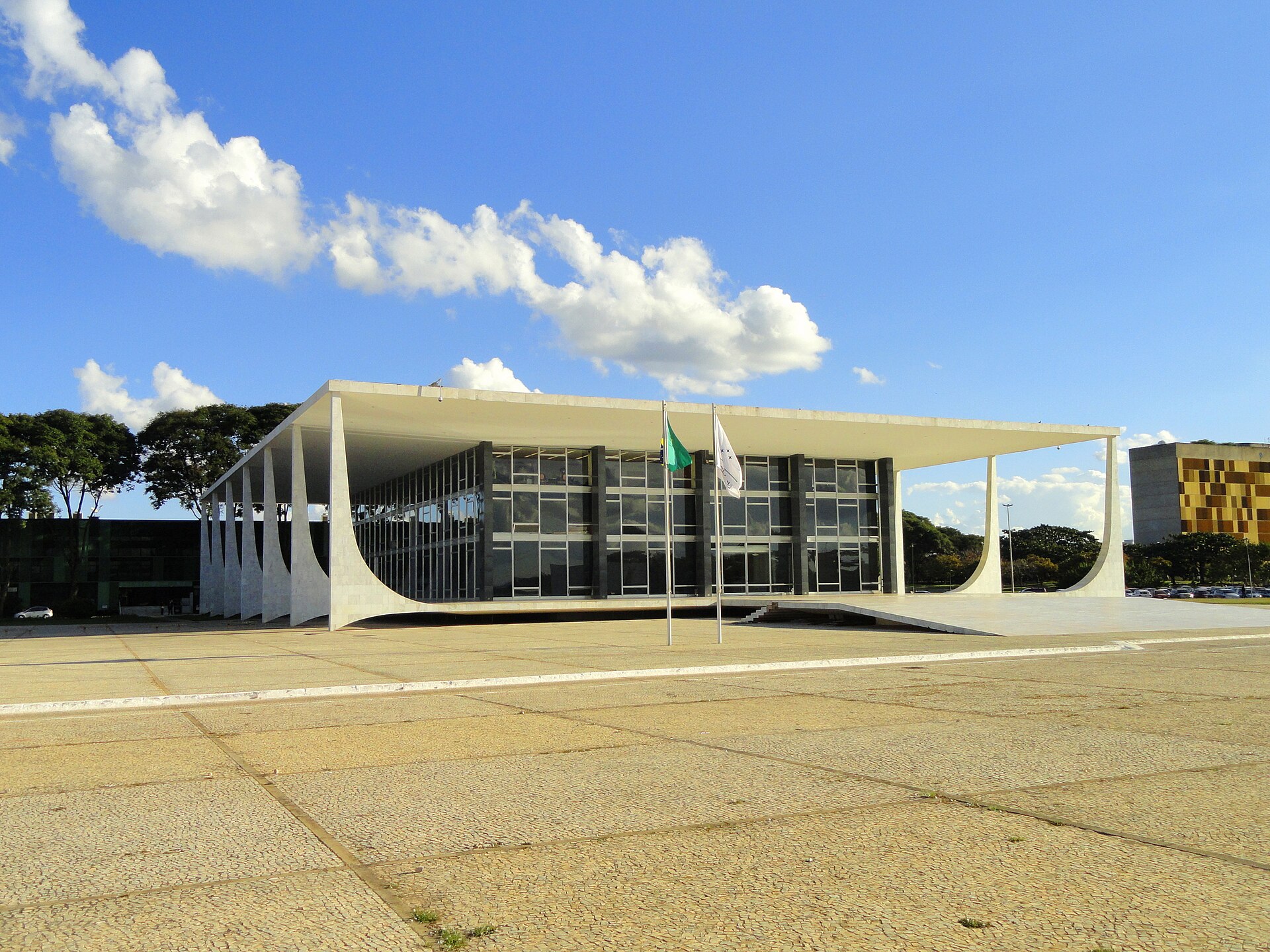
What the Financial Times reported
The Financial Times, citing people close to the situation, says the Trump administration has talked about putting sanctions back on Moraes under the Global Magnitsky Act—that’s a US law that lets Washington freeze assets and ban visas for people tied to human rights abuses. The paper stresses no final call has been made yet.
Brazil’s Valor Economico, summing up the FT, notes such sanctions could push relations between the two countries to their lowest point in decades, and could cast a shadow over Brazil’s October elections, when voters pick a new president and Congress.
According to Poder360’s take on the FT piece, the options on the table include freezing any assets Moraes holds in the United States, plus barring US companies and citizens from doing business with him. Neither the White House nor the US Treasury, the government’s financial arm, has announced any such move so far.
The case behind the report
The FT tied the renewed discussion to police searches that Moraes authorised in March 2026 against Luis Pablo Conceicao Almeida, a journalist in the northeastern state of Maranhão. Those searches broke the journalist’s source confidentiality, and they stemmed from his reporting on the alleged irregular use of official cars by STF justice Flavio Dino and his relatives — the STF is Brazil’s Supreme Federal Court, the country’s top court.
Moraes, who is handling the case at the STF, maintains that the information was obtained and published illegally. He also argues the reporting indicates its author used some state mechanism to identify the vehicles, improperly exposing officials’ security — accusations the journalist denies in full.
The breach led investigators to the journalist’s main source, Raimundo Cutrim, a former Maranhao state secretary for legislative affairs, Poder360 reported. That means the searches exposed who tipped off the journalist, and the story now turns on whether that leak was legal or a crime.
Moraes was sanctioned in 2025 — and taken off the list in December
This wouldn’t be the first time. On 18 July 2025, Secretary of State Marco Rubio—the top US diplomat—ordered the immediate revocation of US visas for Moraes and seven other justices from Brazil’s Supreme Court, known as the STF. That was part of a wave that the Brazilian news outlet Poder360 says reached at least 16 Brazilian officials.
On 30 July 2025, the US Treasury placed Moraes on its Global Magnitsky sanctions list, which targets people accused of human rights abuses and corruption. That happened on the same day President Donald Trump signed an executive order declaring a national emergency regarding Brazil. A second round of sanctions in September 2025 reached his wife, lawyer Viviane Barci de Moraes, and the couple’s research institute, the Lex Institute.
All of those sanctions were lifted on Friday, 12 December 2025, following negotiations that came after a meeting between Brazil’s President Luiz Inacio Lula da Silva and Trump in Malaysia. So Moraes is not under US sanctions today—any new measures would be a re-imposition, not an extension of something already in force.
The 2025 measures came after a trial overseen by Moraes that led to former president Jair Bolsonaro’s conviction in September 2025 for attempting a coup after losing the 2022 election. Bolsonaro was sentenced to 27 years and three months in prison, and he remains imprisoned.
What a Magnitsky designation actually does
A Global Magnitsky designation puts a person on the US Treasury’s Specially Designated Nationals list, which is run by its Office of Foreign Assets Control. In plain terms, it freezes whatever they own in the United States and bars US citizens and companies, anywhere in the world, from dealing with them.
The practical effect is to cut the person off from the US financial system and from the dollar itself. This tool is meant for people accused of serious human rights abuses or large-scale corruption.
The knock-on effect is usually wider than the legal text suggests. Banks outside the US — including Brazilian ones with US branches or dollar-clearing ties — often restrict or close a designated person’s accounts to protect themselves, even when they are not strictly obliged to.
A separate row over X and the election
Sarah B. Rogers, the US Under Secretary of State for Public Diplomacy—that’s the State Department official in charge of public outreach and communication—criticised the Brazilian electoral rule behind the change on Sunday 16 August, according to Folha de S.Paulo. Her remarks reached Brazilian readers only in Portuguese translation, so we’re paraphrasing rather than quoting her directly: she said the disclosure was the kind of transparency many regulators ask for, while also making Brazil’s censorship explicit.
The rule is TSE Resolution 23.610/2019, issued by Brazil’s electoral court (the TSE, or Superior Electoral Court), which requires platforms using recommendation systems to keep registered candidates’ official profiles and content out of those recommendations, except in paid promotion. X responded by publishing code—the underlying programming instructions—that contains a filter it named “Brazil2026ElectionFilter”.
The filter stops posts from candidates’ official accounts being recommended in the “For You” feed—that’s the algorithmically curated stream of suggested posts—to users who do not follow them. It does not suspend accounts or delete posts, meaning the content stays online, and X said it was acting in strict compliance with the resolution.
How Brazil responded — and what is at stake for investors
The STF declined to comment on the FT report, Valor said. No statement from Lula’s office or from Itamaraty, the foreign ministry, on the report itself had been reported by 17 August.
The government has spoken on the wider dispute. In a note on 29 July 2026 it repudiated Washington’s decision to extend the national emergency order by a year, saying it is “entirely unreasonable to characterise Brazil as a threat to the United States”.
Officials at the Planalto palace and Itamaraty told Poder360 on 28 July that they read that extension as political, with no immediate practical effect. They added that a fresh use of the Magnitsky Act remains on the radar, though it is considered unlikely at this moment.
The trade side of the quarrel has moved on. The 50% tariff imposed on Brazilian goods in July 2025 was struck down by the US Supreme Court, and Washington then moved via Section 301: a 25% tariff on Brazilian goods took effect on 22 July 2026, and a separate forced-labour duty can lift the stacked rate as high as 37.5%. Brazil has gone to the World Trade Organization.
For investors and expatriates, the thing to watch is less the headline than what compliance departments do with it — banks and payment firms tend to tighten access first and ask questions later. Any re-listing would land with the real near R$5.21 (~US$1) to the dollar and Brazil’s first round due on 4 October, so US-Brazil friction now carries both election-season and currency risk.
More: Brazil news in English, every day from The Rio Times.
Frequently Asked Questions
Is Alexandre de Moraes currently under US sanctions?
No. He and his wife were removed from the Global Magnitsky list on 12 December 2025. The FT reported that new sanctions have been discussed, but no decision has been reported.
What exactly did the Financial Times report?
The FT reported on 16 August 2026, citing people familiar with the matter, that the US government has discussed new sanctions on Moraes. The report did not establish whether officials have reached a final decision, or when any step might come.
What does a Global Magnitsky designation do?
It freezes the person’s assets in the United States and bars US citizens and companies from dealing with them, cutting them off from the US financial system and the dollar. Banks elsewhere often restrict their accounts too, to avoid US enforcement risk.
Why did X change its algorithm in Brazil?
X said it was complying with TSE Resolution 23.610/2019, adding a filter that stops candidates’ official posts being recommended to non-followers, without deleting posts or suspending accounts. US official Sarah B. Rogers criticised the rule, saying it made Brazilian censorship explicit, according to Brazilian media translations of her post.
Connected Coverage
Brazil Opens Its Reciprocity Law Against US Tariffs, Clearing a Path to Hit Back
US Sanctions Brazilian Firms Linked to Gang It Now Calls Terrorists
Embraer’s Praetor 500E Wins Certification in Three Big Markets
Sources: Reuters: US considers new sanctions on Brazilian judge; Reuters PT: EUA consideram novas sanções contra Moraes; WHBL: Full Reuters text; Valor: EUA discutem novas sanções contra Moraes; Poder360: EUA avaliam reimpor Lei Magnitsky contra Moraes; Folha: Autoridade do governo Trump acusa Brasil de censura; Folha: Governo Trump estuda novas sanções a Moraes; Reporter News: EUA removem Moraes e esposa da lista Magnitsky; Poder360: Governo Lula avalia risco de nova Magnitsky; G1: Brasil repudia prorrogação de sanções dos EUA
This article was produced by The Rio Times’ automated newsroom system. How we use AI · Report an error
Read More from The Rio Times