The Mekong Basin Contains COVID-19 to Some of the World’s Lowest Casualties
RIO DE JANEIRO, BRAZIL – A memory of SARS/MERS, a population with a history of compliance with government orders, immediate and drastic reactions by governments, and a much younger population have given the lightly policed borders of the Mekong Basin a common thread of advantage in containing the COVID-19 infections, making the area of nearly a quarter of a billion people one of the danger areas least affected by the virus from neighboring Wuhan.
The area has identified a total of only 4857 cases and 84 deaths. Even accounting for the possibility of cases going undetected, the Mekong is also a case study and an area of significant lessons in stopping and neutralizing COVID-19. Transparent, clear communications about the outbreaks, even in an area where everyday communications are questionable, are credited for the success of the actions in Thailand and Vietnam.
Hospitals in the five countries outside China that form the Mekong River Basin are basically empty of COVID-19 patients. Total deaths attributed to the virus n Vietnam are at 20, 6 in Myanmar and 58 in Thailand. Laos and Cambodia report zero deaths, New cases are mostly concentrated in a recent outbreak in Vietnam that recorded nearly 500 new cases and the country’s first deaths, now at 20. Still, the numbers of new cases and deaths for the entire region are around the lowest in the world.

Thailand was the first country outside of China infected with the novel coronavirus back in January, yet its 69 million people have largely avoided the devastating effects of COVID-19. Thailand recording just 3,236 cases since January, suffering 58 deaths, and achieving a 95.5 percent recovery rate; it ran a period of no cases of local transmission for about seven weeks. Yet it is its neighbors along Southeast Asia’s critical Mekong river that tell an even more remarkable story, reporting only six deaths.
The data for Thailand and Vietnam shows that these countries monitored the outbreak well from the start or caught up rapidly after an initial outbreak, forcefully stalling the advance, controlling the number of confirmed cases and increasing the ratio of tests to confirmed cases. When their Mekong neighbors Cambodia, Laos, and Myanmar are looked as part of the group, the response followed similar trajectories due largely to similarities and not differences in government culture and customs – they squashed the curve early and monitor the outbreak well.
Sum Tzu wrote about not only winning, but winning with ease, yet for as easy as the statistics may look, this was no easy battle for any of these Southeast Asian countries. In an area that seemed ripe to be overrun by COVID-19 there have been no overwhelmed hospitals, no pictures of the dead and dying in the streets, no tragic stories of powerlessness before the virus.
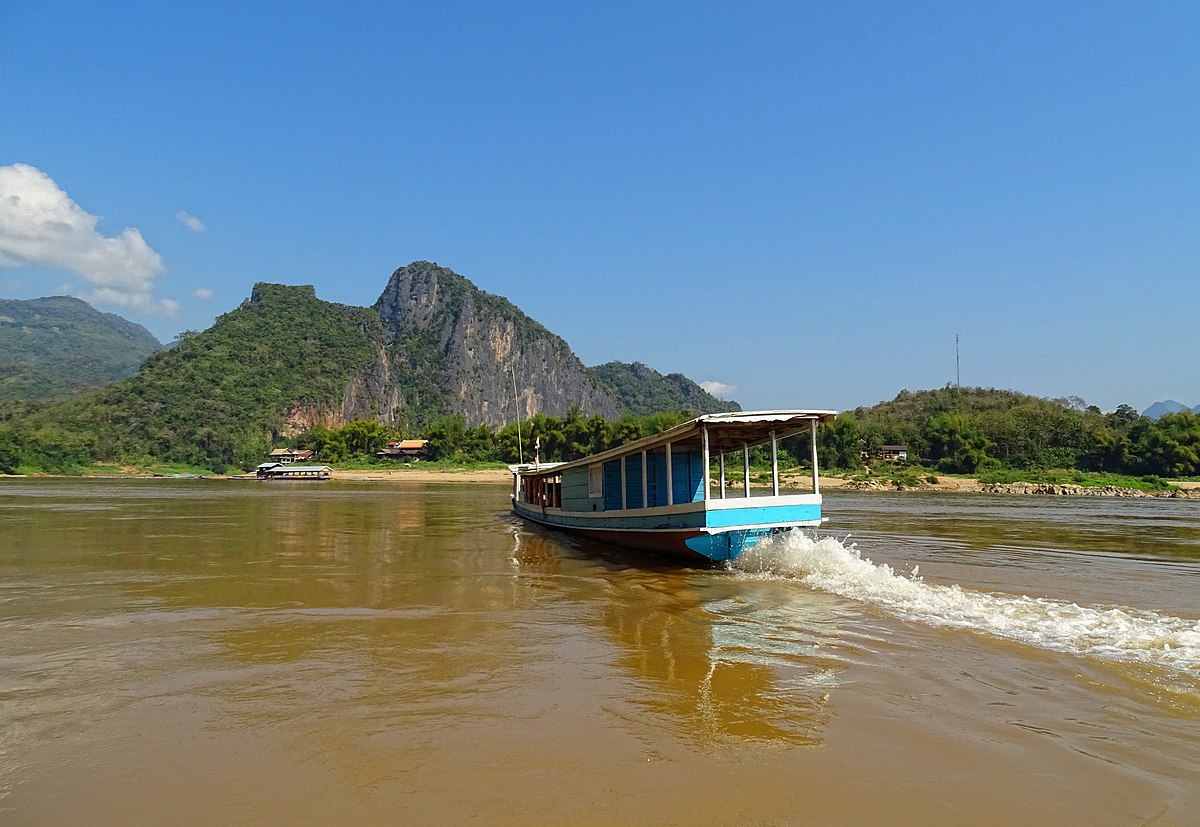
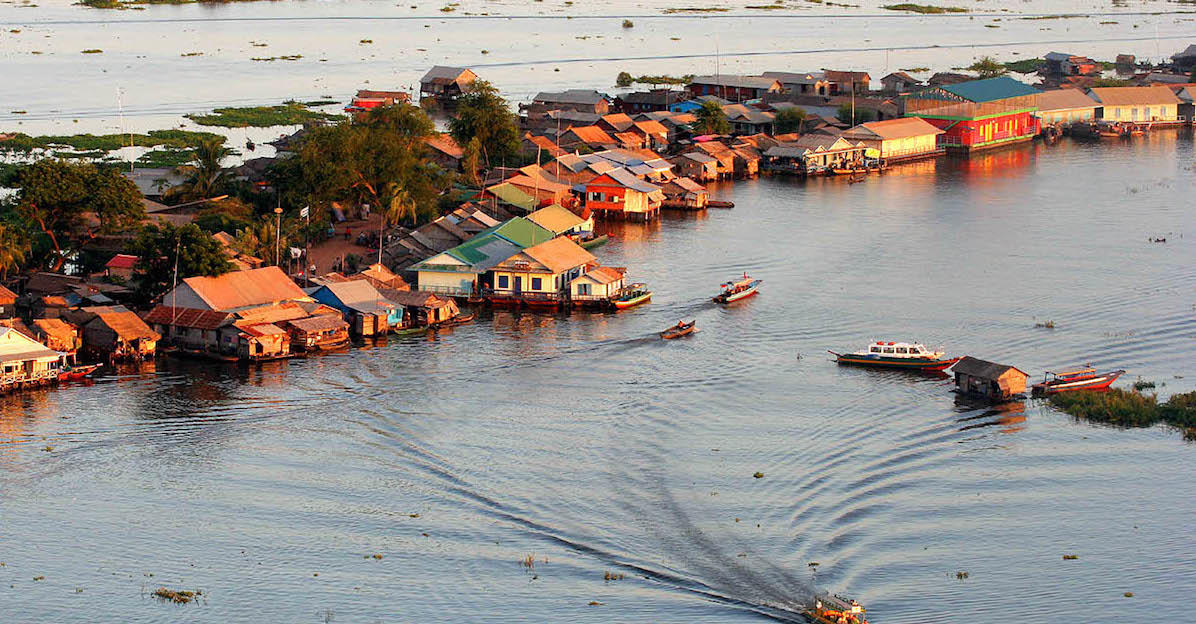
The Mekong River Basin ends in the Mekong Delta, a multi-channel estuary that begins in Cambodia’s capital Phnom Penh and flows south mostly within Vietnam, where it meets the South China Sea. The river defines the region into a common economy; Cambodia, Laos, Thailand, and Vietnam work in tandem with joint-cooperation and mutual consideration agreements. Through 11,000 km of canals and 20,000 km of flood-dykes, people and resources flow easily between the countries.
The area’s mostly Buddhist population shares social, cultural, economic, and even food habits. These similarities extend to a healthy respect for government, a whole-of-society war footing, a common experience with past epidemics, and government structures that are straight-lined down to the village level. That all serves as a partial explanation.
“It has to do with culture,” according to says Dr Taweesilp Visanuyothin, of Thailand’s Centre for Covid-19 Situation Administration. “Thai people do not have body contact when we greet each other. This is how the countries in the Mekong region greet each other as well.” In actuality, the Thai wai gesture of palms brought together in front of the face or chest instead of a handshake is very much like the namaste greeting of Buddhists and Hindus.
For the national and cultural differences, the countries of the Mekong Basin have many customs in common, and they share strong elements of their COVID-19 containment strategy. Cultural elements in the Mekong region do favor social distancing but Sun Tsu teaches that victory in war requires method and discipline.
The real story then is one of an early and consistent war hard-fought even before the first battle, and of these international societies largely fighting the fight as one.
Let us look at the independent country responses and how they bled onto the rest of their Mekong neighbors: Early on Vietnam took a multi-disciplinary and integrated planning approach and created a National Steering Committee, NSC, at the national and province levels; their task: to that all instructions and activities proposed by the NSC are carried out. To boost this, the Prime Minister himself carefully addressed issues and problems daily on tv news, boosting the credibility of the NSC recommendations as a whole-of-society fight.
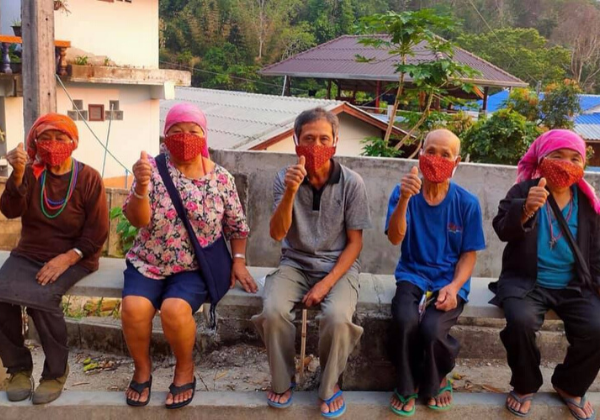
Transparency of communications were crucial to getting a public buy-in. “From an early stage, communications about the virus and the strategy were transparent. Details on symptoms, protective measures, and testing sites were communicated through mass media, a government website, public grass-root organizations, posters at hospitals, offices, residential buildings and markets, via text messages on mobile phones, and as voice messages before a phone call could be made,” says Professor Le Vu Anh, a prominent public health leader in Vietnam, the former founding Dean of Hanoi School of Public Health (HSPH), current President of the Vietnam Association of Public Health and editor of the Vietnam Journal of Public Health.
“The government also launched a contact tracing app in big cities. This well-coordinated multi-media approach strengthened public trust and helped society adhere to protective and containment measures,” noted Ahn, speaking to International Monetary Fund (IMF) specialists Era Dabla-Norris, Anne-Marie Gulde-Wolf, and Francois Painchaud of the IMF Asia and Pacific Department.
While leaders in the US, Brazil, and Mexico downplayed the threat, the Vietnamese government was serious and clear about the thread and dangers of infection since before the first case was reported. Now, the US has over 166,750 COVID-19 deaths, Brazil shows 105,000 deaths, and Mexico death count is at 54,666, the first, second, and third worst death numbers. Vietnam has zero deaths.
“The lesson learned was that panic and fake news would bring about unexpected consequences which are very difficult to control not only during that time but for a long time later. Transparent reporting and up-dating real information would be the best way of dealing with the outbreak in terms of communication,” said Ahn.
In April, the country issued a decree authorizing fines for those who “share false, untruthful, distorted, or slanderous information” on social media. Nine-three percent of people surveyed believe the government is doing the right thing.
Quarantine, testing, and availability of free services are crucial in containing the pandemic in developing countries, said Ahn.
Like the successful containment effort in Guayaquil, Ecuador, the South American city once the worst-hit by COVID-19, ensuring that people were fed and informed through neighborhood visiting brigades were integral parts of the success of the strategy. “The Prime Minister stopped all exports of rice to ensure food security for the country,” according to Daniel Hoài Tiến Nguyễn.
“A huge part of the effort is they also mobilized neighborhood self-defense militias and neighborhood organizations to help spread the information and keep people posted,” explained New York activist Cathy Dang-Santa Ana in observations she shared with the IMF researchers.
The all-society effort was supported by mask-wearing cartoon characters in a public service announcement video with the soundtrack of a popular song. It explained the virus, the threat, and extoled people to “definitely stay alert,” and “be responsible to stop it [the virus] from exploding,” explaining “it is very small, it is very cruel. Many have died because of it.” The video has been seen over 55 million times.
There were no protests, no dissent from what was pretty much an all-society effort. With a warring history, people in the area did what they had to do, though businesses and families suffered considerable economic damage.
“The government strictly controlled the situation,” says Tam Huu, owner of Guitar Hawaii, a bar for foreigners in the ancient tourist city of Hoi An, which he has had closed since the Lunar New Year, incurring heavy economic losses. “The people were all very good wearing masks, washing hands, using disinfectant. I want to visit my wife and children in Da Nang, but they still will not le me pass. The roads are still blocked for the safety of the community.”
Considering that most of these measures were put into effect with only a handful of confirmed cases, the countries’ success in pushing back seem to rest on overreacting and doing it early. Vietnam rolled out an early stage multi-media communications effort with posters papering offices, hospitals, buildings, markets conveying the same message on splash pages on government websites, mass media and even with texts and voice messages on cell phones before a call could be made. People were made aware of symptoms, protective measures, and testing sites.
In late February, while President Donald Trump in the US was boasting , “You have 15 people, and the 15 within a couple of days is going to be down to close to zero,” Vietnam’s aggressive preventative action contained the virus, showing only 16 cases – all recovered – by the end of the month. The country has had 905 cases and 20 deaths; on July 24, Vietnam reported its first domestically transmitted case in 100 days and moved quickly to put down a July outbreak that infected more than 495 people and caused the country’s first deaths. The US is now counting its 4,900,000th case and mourning 160,000 deaths, and mounting.
When the July outbreak was identified, Vietnam took “unprecedented measures,” to stop the spread, according to a government statement by Dang Duc Anh, Director of Vietnam’s National Institute of Hygiene and Epidemiology amid countywide alarm that the virus was circulating since early July, undetected.
The country went on high alert. Entertainment venues were immediately closed, and gatherings restricted. In Da Nang, the source of the outbreak, the city imposed a lockdown, banning movement in and out of the city, stopping all air, train and bus service, and the government statement said it would test its entire 1.1 million population.
The lockdown extended to Buon Ma Thuot in the Central Highlands coffee-growing region, according to reports “We have to deploy full force to curb all known epicenters, especially those in Da Nang,” said Vietnam’s Prime Minister Nguyen Xuan Phuc, according to a VTV report.
In addition to government actions, there is strong solidarity between the international communities with cooperation and strong common threads: Health takes precedence to the economy; government and the public sector work together implementing a united, credible communications strategy, strict local lockdowns when necessary, and a mask-compliant population comfortable with physical distancing.
Like Vietnam, neighboring Thailand set up an early and vigorous COVID program, adopting the use of facemasks, closing schools, and enforcing social distancing on public transportation. Even today, 95% of Thais and 94% of Vietnamese are likely to wear a mask, compared to 44% of U.S. adults who say they “always” wear a mask when outside their homes, and 28% who say they do so “very often.”
In public communications, the government has made sure people knew that its policies have been guided by scientific and technical committees. Local doctors, hospitals, and health officials worked in tandem with the National Institute of Health.
The Thai cases can be traced to a wave of infections from a boxing match that became one of the world’s first COVID-19 superspreader events and to people arriving from Japan, Europe and the US, say reports from the Thai NIH. The country declared a national state of emergency and curfew, sealing its borders and forbidding interprovincial travel.
Lock-down was thorough and it put down transmissions. The tourist island of Phuket closed-down to its subdistrict level. People could not leave a subdistrict but for emergencies and movement within the subdistrict’s villages was severely limited. It worked. Thailand remains as 3236 cases and 58 deaths.
Taken alone, the total of 6 deaths reported by Myanmar, and zero by Laos and Cambodia seem statistically implausible. It is tempting to chalk the low number of reported cases of underreporting reporting or perhaps false government figures while the virus thrives undetected. The countries have porous borders but the people share a cultural penchant for complying with government orders.
Yet, Medical Action Myanmar, MAM, a medical aid organization focusing on the area’s poorest people has been able to keep open its HIV clinics and say not one of its patients went without treatment implying that there simply is no large-scale transmission in the area. The organization’s director, Dr Frank Smithuis, former Director of Medicins Sans Frontières and a man with extensive expertise says it is impossible to hide a COVID-19 outbreak, MAM has not seen people showing up at hospitals.
“We have introduced social distancing in all our clinics, hand washing stations and all our patients have their temperature taken on arrival,” says the organizations website with scarcely a mention of COVID-19 under its section dedicated to the pandemic.
Satellite imagery and experts in Cambodia, Thailand and Vietnam have not reported any evidence of widespread COVID-19 infections.
To be sure, the area common practices have spread through the countries of the basin. The extent to which they contribute to the area being spared by the pandemic so close to the Wuhan hotspot are still uncertain, but there are some actions that deserve note: A system of Emergency Operations Centers and surveillance systems to manage and coordinate response to public health issues.
- Early and large reaction – overreaction by American standards – including very early border closings and lockdowns.
- A contact-tracing system that drives the containment strategy, identifying, targeting contacts and follow-up.
- Quarantines based on possible exposure rather than waiting until a confirmed exposure or symptoms.
- A cohesive participation in decision-making and implementation
- A narrative-based communication across multiple channels and an unambiguous message.
“Infections and deaths are low almost entirely thanks to a moderate, reasonable, responsible and considerate population. Wearing masks, no hugs, no handshakes, no kisses helped immensely,” says Milos Zorica, a Croatian expat living and working in Thailand, discussing the understanding of the cultural differences that could account for the low transmission rate.
“Government didn’t compromise. Scientists and medical professionals had a say in the response, and are well regarded by everyone,” adds Zorica describing how Thailand felt during the height of its quarantine.
“When the public follows preventive measures — keeping physical distancing, wearing masks, and washing hands, new cases in that country go down. Informing, engaging, and listening are key pillars that will help us get through this worldwide crisis together,” said Dr. Tedros Adhanom Ghebreyesus, Director-General of the World Health Organization.
The World Health Organization says that Thailand is a model country for having carefully and consistently followed WHO guidelines on COVID-19 prevention and getting a good handle on the spread of the virus. Bloomberg ranks Thailand fourth in its ranking of how well countries have dealt with the pandemic, and the Global COVID-19 Recovery Index ranks Thailand first in the ranking of countries that can best recover from COVID-19.
Thailand is moving forward. It has developed a vaccine which starts human trails in October, an effort spearheaded by the Chulalongkorn University’s Centre of Excellence in Vaccine Research and Development (Chula VRC), with support from Bangkok biotech BioNet-Asia under the direction of Dr. Kiat Ruxrungtham, scientific mentor and founder, as reported by Bloomberg News.
People in Vietnam and Thailand are moving on and returning to a masked and careful routine. What happens in these countries is likely to spread to Cambodia, Laos, and Myanmar.
One evening in late July along Bangkok’s foreign tourist hangout in Khao San Road, Mulligan’ bar had a packed house of a mostly Thai clientele. The 40,000-50,000 tourists per day that filled the area are gone for now, but some of the other bars are developing a Thai clientele.
The city is moving forward comfortably cautious, says Zorica. “I’m grateful for riding the storm out here; my life, despite multiple health ailments, being largely unaffected. Government, scientists, and medical professionals work together and there is a credible, clear message.”
As of this writing, the Mekong countries report a total of 84 deaths for the length of the pandemic following a strong and stable pandemic response. COVID-19 deaths are not subtle. There is no evidence of higher than usual numbers of dead. Life is cautiously returning out of the storm deaths. In the US, Americans are dying at a rate averaging to 1000 deaths per day. Brazil reposted 1242 deaths on August 11, and 1164 deaths on August 12.
Certainly, where the fight against COVID-19 is concerned, the Mekong Basin as a whole is one of the world’s most stable areas.
More: Brazil news in English, every day from The Rio Times.
Read More from The Rio Times