Tactical Changes in São Paulo: Bolsonaro’s Camp Reevaluates Mayoral Support
In the bustling political landscape of São Paulo, a strategic reshuffle is unfolding as former President Bolsonaro and Governor Tarcísio reconsider their support for Mayor Nunes’ reelection.
This reevaluation comes in light of the rising prominence of Marçal, a contender from the PRTB party, who is increasingly winning favor among the right-wing base.
Recently, Bolsonaro has shared his concerns with Tarcísio about the potential political fallout from backing Nunes.
Criticisms on social media have escalated, with bolsonaristas voicing their disapproval of the governor’s support for Nunes over Marçal.
Meanwhile, allies of Bolsonaro are gravitating towards Marçal, distancing themselves from the incumbent mayor.
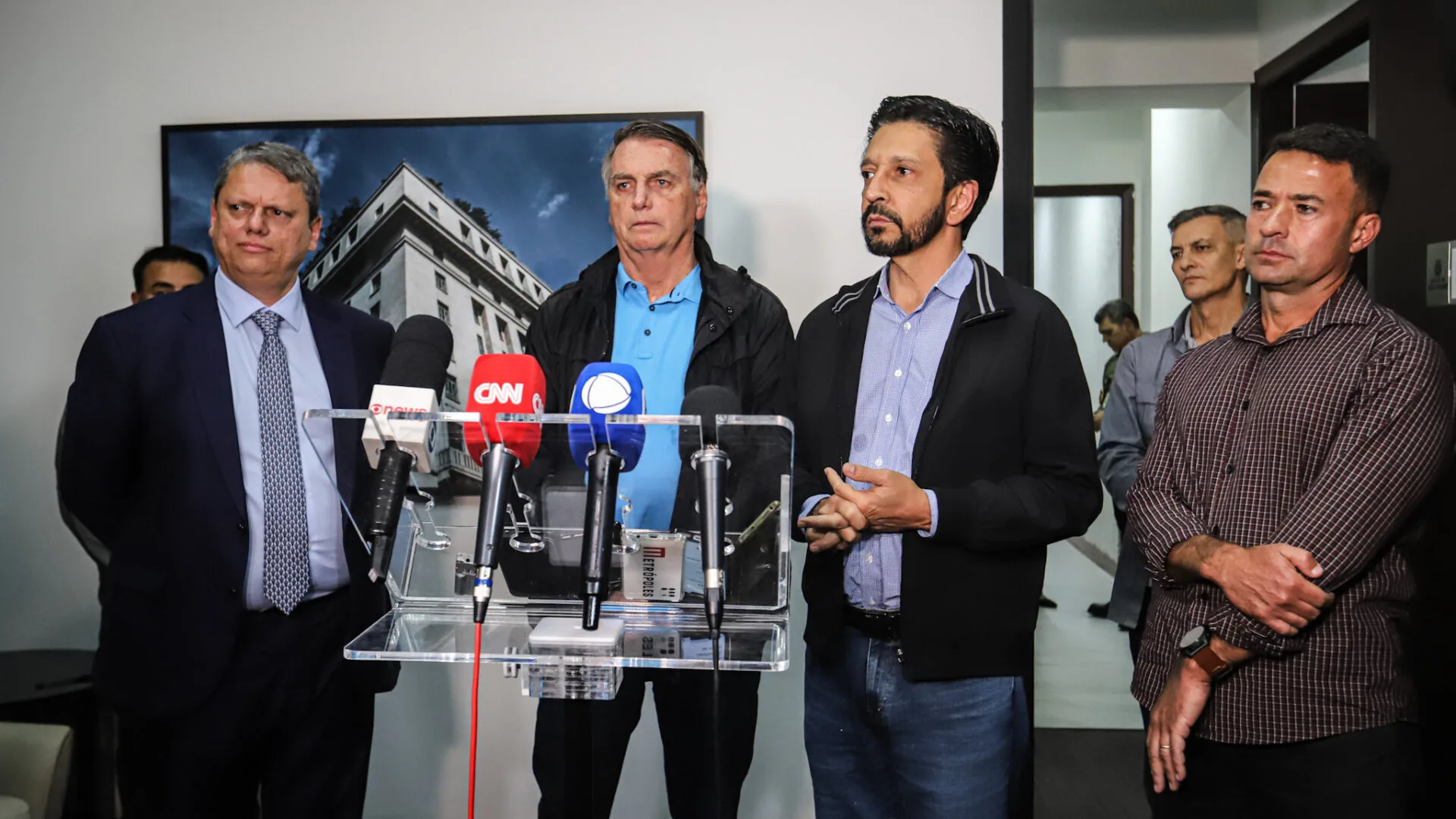
Tarcísio, initially a key figure in forging an alliance that saw Colonel Mello Araújo of the PL party become Nunes’ running mate, remains steadfast in his support.
In addition, he is deeply involved in the campaign’s strategic efforts, aiming to consolidate this alliance.
However, two weeks ago, after Bolsonaro publicly declared his reservations about Nunes, describing him as less than an ideal candidate and praising Marçal, Tarcísio convened a meeting.
This gathering at the state government headquarters involved discussions with the mayor, campaign marketer Duda Lima, and Bolsonarista Congressman Nikolas Ferreira, focusing on strategies to counter Marçal’s ascent.
São Paulo’s Political Dynamics
As the September 7 Independence Day demonstrations loomed—a significant event for bolsonaristas in São Paulo—both Marçal and Nunes signaled their intentions to participate, alongside Bolsonaro.
This appearance would be a critical moment for demonstrating unity or division within the right-wing factions of the city.
Tarísio has strategically avoided direct confrontations with Marçal. He actively supports Nunes’ campaign, appearing in ads and attending events with the mayor.
Since the campaign officially kicked off on August 16, they have appeared together on multiple occasions, underscoring their partnership. On a recent campaign trail, Tarcísio voiced his commitment to intensifying his campaign efforts.
He emphasized the essential nature of the collaboration between the state government and the city’s administration.
This partnership is especially crucial in tackling the challenges faced by a metropolis home to 12 million residents.
This political narrative in São Paulo reflects the intricate dance of alliances and strategic positioning typical of major electoral battles.
The outcome of this mayoral race could significantly influence the political landscape. It highlights the complex interplay between individual ambitions and collective political strategies.
More: Brazil news in English, every day from The Rio Times.
This article was produced by The Rio Times’ automated newsroom system. How we use AI · Report an error
Read More from The Rio Times