Brazil Senate Weighs 11.3% Rate for New Tax
The Senate must pick a tax rate that auditors, ministers and senators describe in very different ways. Companies are already writing 2027 prices while they wait.

BRAZIL ECONOMY · TAX REFORM
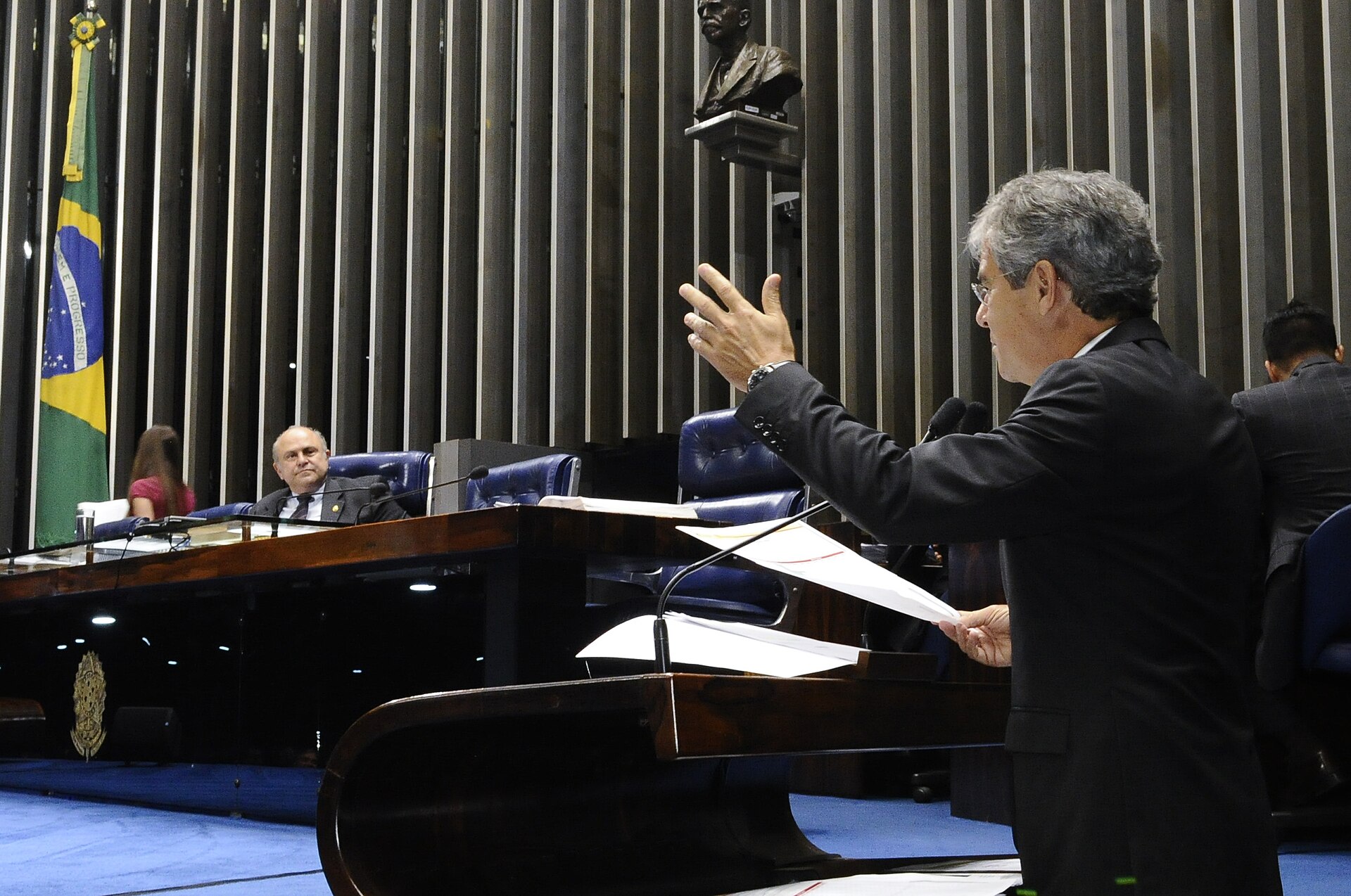
Brazil has until 15 December to decide how heavy its new federal consumption tax will be, and the number on the table is under attack. The Senate must set the reference rate for the tax, called CBS, after the federal audit court put it at 11.3%.
CBS, short for Contribution on Goods and Services, replaces two older federal taxes on revenue, PIS and Cofins, in January 2027. Its rate will shape price lists across Brazil’s economy, from shops to hotels to schools.
Key Facts
- Who and what The Senate must set the reference rate of CBS; the audit court calculated 11.3%.
- Deadline Senators have until 15 December 2026; if they stay silent, the audit court’s rate prevails.
- Start CBS, a federal value-added tax, replaces two older revenue taxes in January 2027.
- Status As of Sunday 22 November 2026, 06:10 GMT.
The Senate must pick a tax rate that auditors, ministers and senators describe in very different ways. Companies are already writing 2027 prices while they wait.
The tax comes from Brazil’s consumption tax reform, which builds a VAT-style system, meaning a tax charged at each step of the supply chain. CBS is the federal piece of that system.
The Federal Audit Court, known as TCU, the state body that audits public accounts, calculated the reference rate at 11.3468%. The law requires rounding, which gives 11.3%.
That is the headline rate for a taxpayer with no special regime, not what everyone will pay. An earlier estimate was 9.21%.
TCU president Vital do Rêgo told senators the figure rose after Congress approved benefits and differentiated regimes. In his account, each benefit granted by lawmakers lifted the rate.
The Senate sets the reference rate by resolution, and if it does not decide by the deadline, the rate calculated by TCU prevails. So 11.3% is the default, not yet the final answer.
Finance Minister Dario Durigan defended the figure on Tuesday 17 November 2026 at a hearing of the Senate Economic Affairs Committee (CAE). He said 11.3% is the maximum rate and that anyone with a differentiated regime will pay less.
He put the average effective burden at about 8.5%, because of cuts of 40% for hotels and restaurants, 60% for education, culture and press, and 30% for some liberal professions. The staple food basket is exempt.
Durigan said the rate will be reviewed every year: “The rate is high? Great, we will revisit it.”
He ruled out postponing the reform’s start while promising to review benefits to lower the rate in later years. He also allowed for “some small inflationary impact” at first, as businesses learn to price under the new rules.
He did not say how large it could be. Senator Eduardo Braga, of the MDB, a centrist party, for Amazonas state, is the Senate’s rapporteur, or lead reviewer, of the reform, and he takes the other side.
He calls TCU’s assumed compliance gap of 15.9% “excessively conservative”.A compliance gap is the difference between tax owed and tax actually collected, through evasion and non-payment.
Braga points to split payment, a system that separates the tax automatically at the moment of payment, as a reason the gap should be smaller. He asked the Senate’s technical consultancy to simulate gaps of 12.5%, 11% and 10% to see how each would move the rate.
Experts heard over two days of hearings also questioned TCU’s evasion and default estimates and offered calculations with lower percentages, which we have not verified and do not repeat. On Wednesday 18 November 2026, after the two-day public hearing, the committee approved Braga’s request that TCU explain the 11.3%.
It asks for the studies, methodologies and minutes of the technical meetings behind the court’s recommendation for 2027, and seeks information from the Finance Ministry too. Márcio Schuch Silveira, vice-president of the Federal Accounting Council, the professional body of accountants, warned that companies are already setting 2027 prices without knowing the final rate.
That is how the dispute reaches beyond Brasília, because price lists and contracts are being drafted now. For US companies and investors with Brazilian operations in retail, services, hotels, restaurants or education, a new tax starts in January 2027 with its rate still open.
Durigan’s average and TCU’s headline rate measure different things, and that difference matters whenever a contract fixes a price. The Senate must settle the question inside a divided Congress, while economists warn of a recession risk weighs on the year ahead.
Durigan rejects a delay, and nothing in the record shows a rival start date. The Senate has not said what rate it will choose, and it is not yet reported when TCU will hand its studies to the committee.
The next fixed date is Tuesday 15 December 2026, when the Senate’s time to act runs out.
More: Brazil news, every day from The Rio Times.
Frequently Asked Questions
Is 11.3% what Brazilian consumers will pay?
No. It is the top rate for a taxpayer with no special regime, and many goods and services get reductions or exemptions.
Who decides the final rate?
The Senate decides by resolution. If it stays silent, the figure calculated by the audit court applies.
Why does the rate matter to foreign companies?
It sets the tax cost inside 2027 prices and contracts. Until the rate is fixed, firms must plan around a range rather than one number.
Sources: Federal Audit Court (TCU), methodology for the CBS reference rate; Federal Senate, Economic Affairs Committee hearings of 17 and 18 November 2026; Finance Ministry.
This article was produced by The Rio Times’ automated AI newsroom. Editorial responsibility: Matthias Camenzind, Publisher and Editor-in-Chief. The Rio Times also runs Ask Rio Times, which answers from 100,000+ of our own articles, the daily Latin America Power Map, and prediction-market odds on elections and markets.. How we use AI · Report an error
Brazil runoff, Sunday, October 25: Brazil runoff start time and results schedule. Latest: Brazil runoff polls, Flávio 51%, Lula 49%.