South Korea’s Democracy at the Crossroads: President’s Power Grab Shakes Nation
President Yoon Suk-yeol stunned South Korea by declaring martial law on December 3, 2024, marking a critical shift in the country’s democratic journey. The move places the military in control of civilian life and suspends basic democratic functions, including press freedom and political activities.
The real story lies not in the declaration itself, but in its timing and motivation. Yoon’s party lost control of parliament earlier this year, leaving him unable to pass legislation or control the national budget. His approval ratings dropped amid scandals involving his wife and senior officials.
Rather than facing these political challenges through democratic channels, Yoon chose to invoke emergency powers. He claimed this was necessary to protect against North Korean threats, but his actions target domestic opposition more than external enemies.
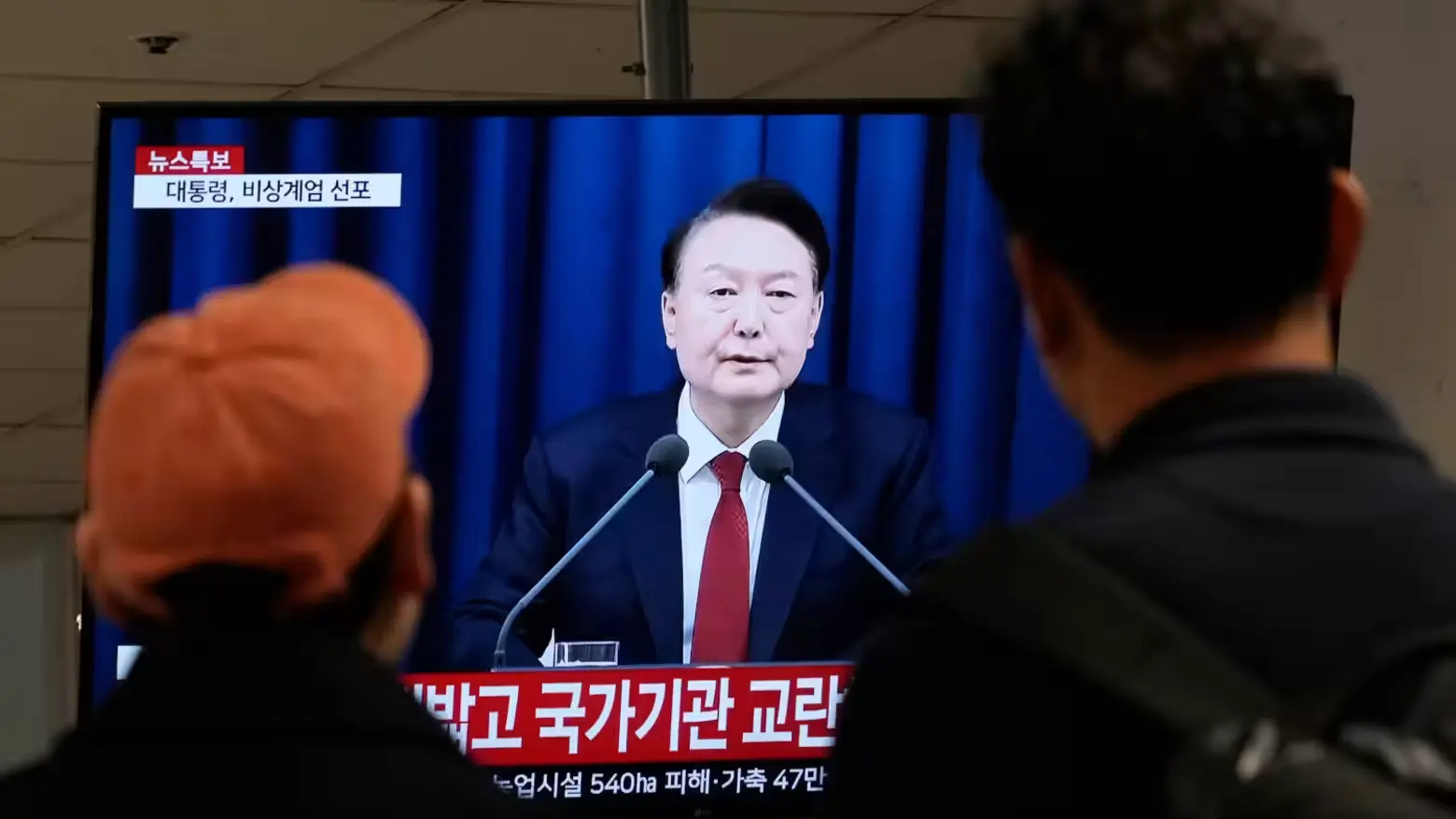
The opposition Democratic Party had recently proposed major budget cuts and attempted to impeach several of Yoon’s cabinet members.
The consequences rippled through South Korean society immediately. Police blocked access to the National Assembly building, trying to prevent lawmakers from voting to overturn the decree. Protesters gathered outside, demanding entry while shouting “No martial law”.
South Korea’s Democracy at the Crossroads: President’s Power Grab Shakes Nation
This crisis matters beyond South Korea’s borders. As Asia’s fourth-largest economy and a key U.S. ally, South Korea’s stability affects regional security and global markets. The South Korean won fell sharply after the announcement, prompting the central bank to prepare intervention measures.
The situation echoes South Korea’s authoritarian past, when martial law was last used in 1980 to suppress pro-democracy protests. Today’s crisis tests whether the country’s democratic institutions can withstand executive overreach.
Opposition leader Lee Jae-myung captured the stakes clearly when he declared: “From this moment, Yoon is no longer the president of South Korea”.
National Assembly Votes to Lift Martial Law
The National Assembly responded decisively to the president’s actions. In a late-night emergency session, 190 lawmakers unanimously voted to lift the martial law declaration. This swift response demonstrated the parliament’s commitment to preserving democratic norms.
National Assembly Speaker Woo Won Shik played a crucial role in mobilizing the legislative response. He called for all lawmakers to gather at the National Assembly building. Woo urged military and law enforcement to remain calm and maintain their positions.
The scene outside the National Assembly was tense. Police officers blocked the entrance, while armed soldiers stood guard. Military helicopters were seen landing within the Assembly grounds. These actions heightened concerns about potential conflict between branches of government.
This article was produced by The Rio Times’ automated newsroom system. How we use AI · Report an error
Read More from The Rio Times