South Africa’s Pivotal Election: ANC at a Crossroads
South Africans are gearing up for a critical election on May 29, marking the nation’s seventh vote since apartheid ended in 1994.
The ruling African National Congress (ANC), after 30 years in power, faces the risk of losing its majority.
Analysts predict ANC may not secure 50% of 400 National Assembly seats, possibly resulting in a coalition government.
This shift comes as the ANC’s support has steadily declined from 62.5% in 1994 to 57.5% in 2019.
In their final campaign efforts, various parties, including the Economic Freedom Fighters (EFF), led by Julius Malema, and the Democratic Alliance (DA), are vigorously canvassing for votes.
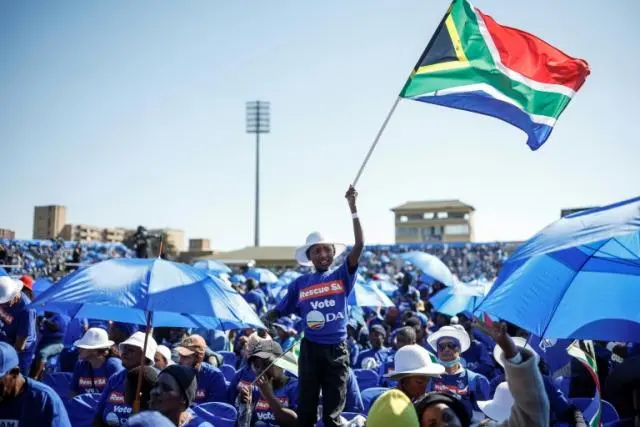
The ANC, under President Cyril Ramaphosa’s leadership, campaigns with the promise of continuity, while the DA pushes for change, claiming it can rescue South Africa.
The election is shadowed by significant challenges like a 33% unemployment rate, which escalates to 45.5% among youth.
Additionally, frequent power outages, rising crime rates, and persistent corruption scandals further complicate the situation.
These issues have eroded the ANC’s popularity to record lows, stirring public demand for change.
South Africa’s Complex Political Landscape
South Africa’s diverse political landscape raises uncertainty about a non-ANC government despite potential coalition scenarios.
Fear of coalitions with controversial figures such as Malema or former president Jacob Zuma might sway undecided voters toward the ANC, despite frustrations.
Provinces like KwaZulu-Natal and Gauteng, where the ANC faces significant challenges, are key battlegrounds that could dictate the election’s direction.
As South Africans vote, global attention highlights the election’s impact on the nation’s future and international standing.
More: South Africa news in English, every day from The Rio Times.
This article was produced by The Rio Times’ automated newsroom system. How we use AI · Report an error
Part of our ongoing coverage
Africa: The New Scramble — the great-power contest over the continent.
Read More from The Rio Times