Somalia’s Cabinet Backs Party-List Voting
The draft rewrites two election laws to match the revised constitution, but Parliament has yet to vote and the opposition has not agreed to the framework.

Brief: Somalia Politics
Somalia’s Cabinet approved changes to the country’s election laws on Tuesday 24 November 2026 that would let parties, rather than individual candidates, win seats in parliament. Prime Minister Hamza Abdi Barre chaired the extraordinary session, and the draft still needs a vote in Parliament.
Mogadishu is pressing ahead before any deal with the opposition has been struck. Puntland and Jubaland, two federal member states, reject the government’s electoral process.
Key Facts
- Who. Prime Minister Hamza Abdi Barre’s Cabinet, Somalia’s federal government.
- What. Closed party lists for parliament; 10 percent of votes to qualify as a national party.
- Where. Mogadishu, ahead of parliamentary elections planned for April 2027.
- As of. 25 November 2026, 12:00 GMT
The draft rewrites two election laws to match the revised constitution, but Parliament has yet to vote and the opposition has not agreed to the framework.
Under a closed list, each party ranks its candidates before the vote. Voters choose a party, and its seats go to the candidates in that order.
The Cabinet changed 23 articles of the National Elections Law, which Parliament passed in November 2024, and eight articles of the Law on Political Organisations and Parties. A government statement said the aim was to bring both laws into line with the revised Constitution, because they predate it.
A political organisation that wins at least 10 percent of the vote in a federal-level election would count as a national party. The National Independent Electoral and Boundaries Commission (NIEBC), the federal body that runs elections, would be allowed to adopt procedures and technology to ease registration and voting.
Citizens would vote directly for local councils, the assemblies of the federal member states and both houses of the Federal Parliament. Those bodies would then choose every officeholder up to the president, so the head of state would not be elected by popular vote.
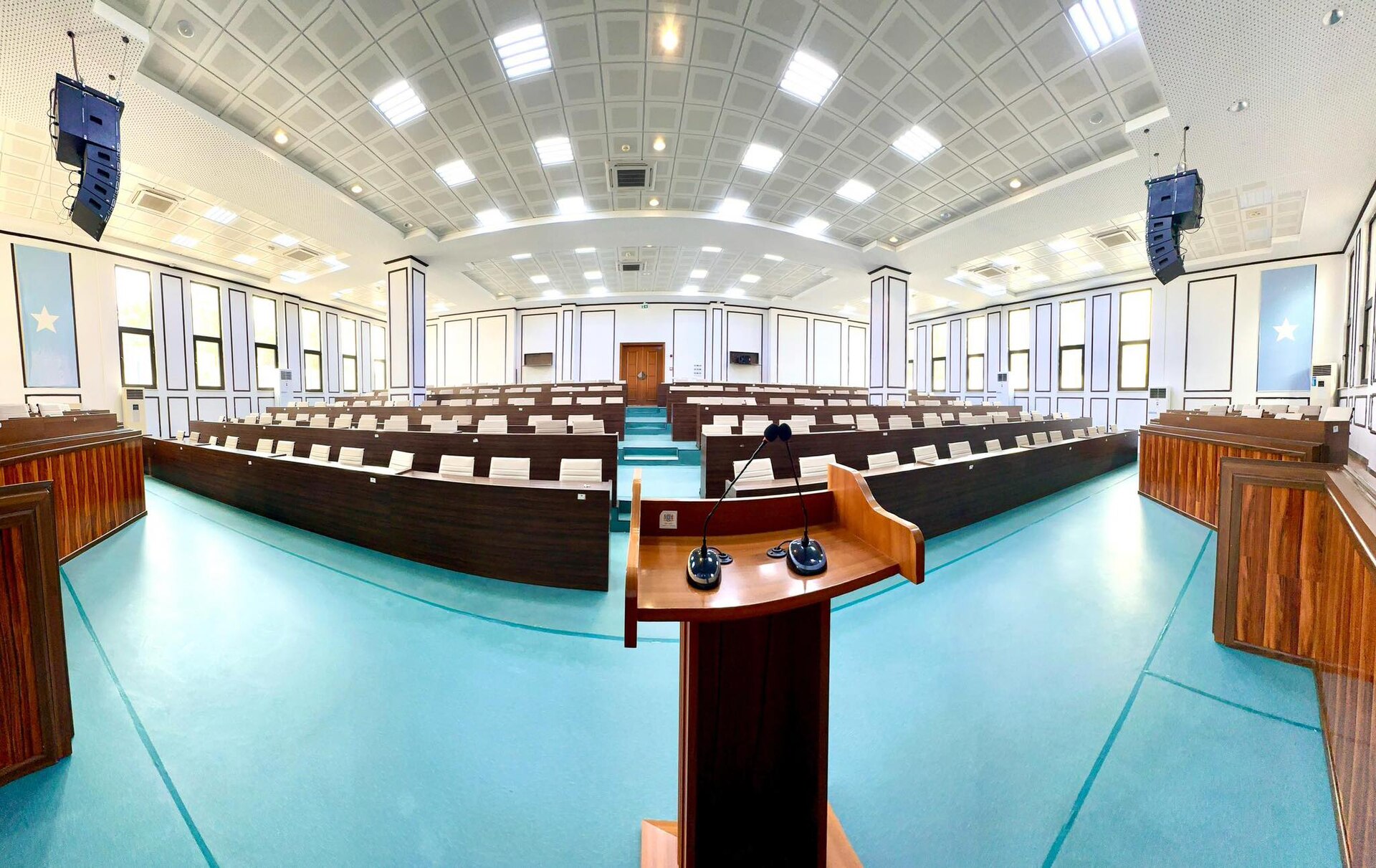
The National Independent Electoral and Boundaries Commission announced on Thursday 15 October 2026 that parliamentary elections would be held on Thursday 15 April 2027 and the presidential vote on Saturday 15 May 2027. The closed list would apply to the first of those two votes.
On Thursday 5 November 2026 the Constitutional Division of the Supreme Court ruled that the terms of Parliament and the government had run out on 14 April 2026 and the president’s on 15 May 2026. It gave the parties 30 days, until Saturday 5 December, to agree an electoral model and 90 days to hold elections.
The case was brought by Sharif Sheikh Ahmed, a former president, who challenged the March 2026 constitutional changes. The court declared the March 2026 amendments, including the extension of terms from four to five years, null and void.
Opposition leaders say any framework must come from negotiation, not from a Cabinet decision. The government says the amendments only bring the laws into line with the revised constitution.
Parliament must approve the amendments before they become law. Whether the opposition will take part in that process is not yet known.
The next fixed date is Saturday 5 December, when the Supreme Court’s 30-day window closes. The NIEBC’s timetable keeps Thursday 15 April 2027 for the parliamentary vote.
Frequently Asked Questions
What does a closed list mean for voters?
Voters would back a party, not a named person. The party decides who sits in parliament by the order of its list.
Is the law final?
No, the amendments still need approval in Parliament. The opposition and two member states reject the process, so the outcome is open.
Sources
Government statement on the Council of Ministers session of 24 November 2026 · Supreme Court Constitutional Division ruling of 5 November 2026 · NIEBC election timetable announced 15 October 2026 · National Elections Law No. 28 of November 2024
Connected Coverage
Somalia news · Somalia Sets Elections for 15 April, 15 May · Somalia Extends Party Registration Deadline · Supreme Court Says Presidential Term Expired
This article was produced by The Rio Times’ automated AI newsroom. Editorial responsibility: Matthias Camenzind, Publisher and Editor-in-Chief. The Rio Times also runs Ask Rio Times, which answers from 100,000+ of our own articles, the daily Latin America Power Map, and prediction-market odds on elections and markets.. How we use AI · Report an error
Horn of Africa and the Red Sea
- Horn of Africa 2026: Why It Matters and Who Backs Whom
- Ethiopia’s Neighbors Explained, Ports, Eritrea, Somalia
- Eritrea Explained 2026, a Red Sea Country Guide
- Somalia Explained: Al-Shabaab, Somaliland, the Ports and the Fight Over a 2026 Vote