Seaweed Could Cut Cattle Methane. The Famous 98 Percent Figure Rests on Five Steers
SOUTH AFRICA · AGRICULTURE
Key Facts
- —The local angle In Cape Town, the start-up Bahari Labs is developing a seaweed feed supplement. It is pre-commercial.
- —The famous number 98 percent came from 20 Brangus steers, five per dose group, over 90 days, in a study published in 2020.
- —The pooled number A meta-analysis of twelve cattle trials published in February 2026 found 44 percent.
- —The decay An Iowa trial in April saw the reduction fall from 66 percent to negligible within nine weeks.
- —The regulator No national regulator is known to have authorised Asparagopsis as a methane-reducing feed additive. California registered one product provisionally in 2022.
- —The catch Feed intake falls with the dose. In dairy trials that took milk yield down with it.
The number everyone quotes rests on five animals in an Australian feedlot. A meta-analysis this February put the real effect at 44 percent, and two trials in April found it decays.
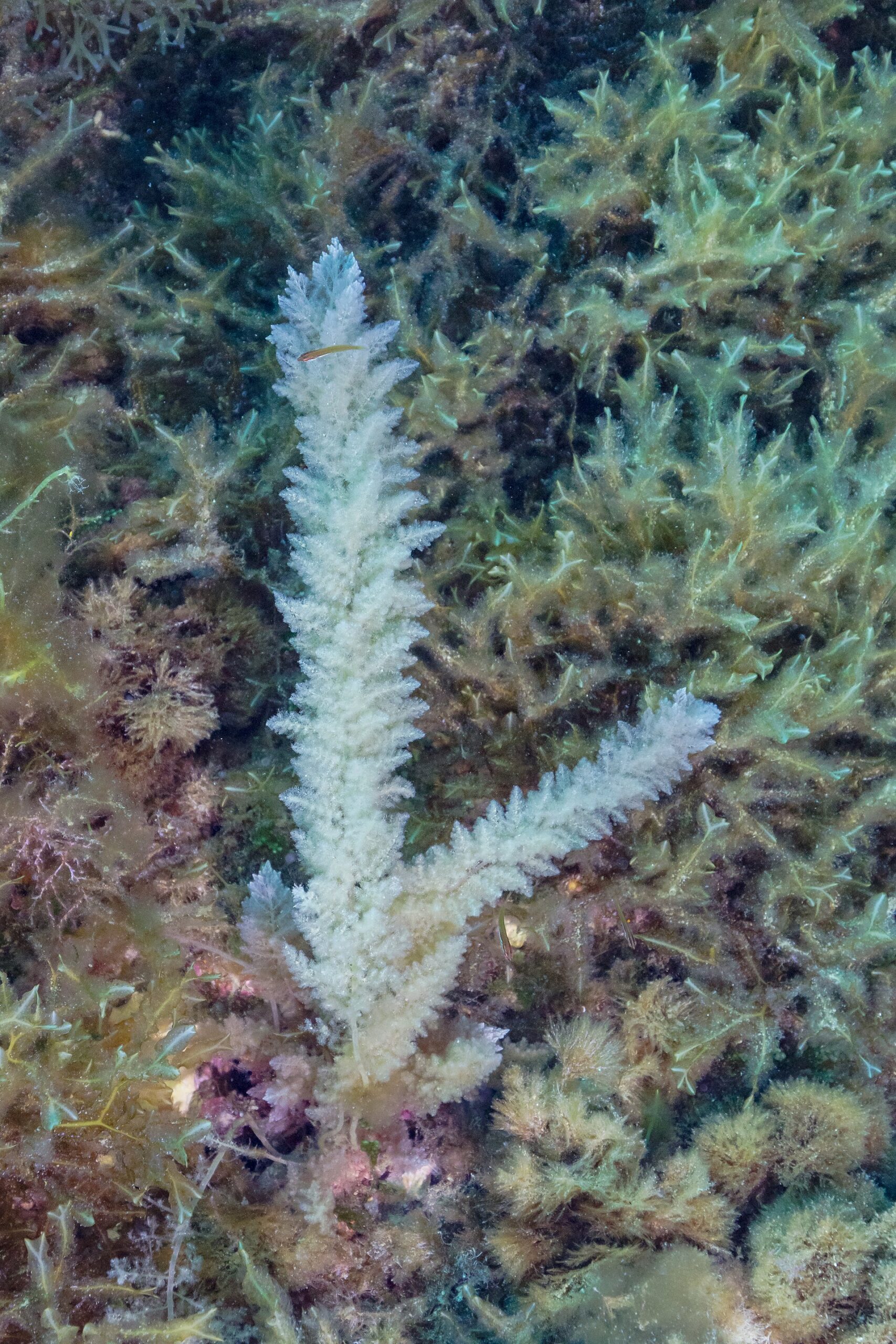
A Cape Town company is developing red seaweed as a feed supplement to cut methane from livestock. The science behind the seaweed headline numbers is far weaker than those numbers suggest.
Bahari Labs was founded in 2023 and is based at the University of Cape Town. Its three founders are Jay van der Walt, Kathryn Morrissey and Andrea Plos.
The company has not said publicly which seaweed species it uses. In 2023 it described itself as working with species other than Asparagopsis, the seaweed behind the headline figures in this article.
It is pre-commercial, and its website describes its supplement as upcoming.
Where the 98 Percent Comes From
The figure appears everywhere and it comes from one Australian study published in 2020. It used 20 Brangus steers over 90 days.
Brangus is a single crossbreed of Brahman and Angus. Accounts that describe separate Brahman diets and Angus diets have invented a distinction that does not exist in the paper.
What the study found was a dose ladder in one group of animals. Inclusion at 0.05, 0.10 and 0.20 percent of dietary organic matter produced reductions of 9, 38 and 98 percent.
Five animals sat in each dose group. That is the entire evidential base for the number that sells this technology.
The other famous figure is 82 percent, attributed to a Californian study of 2021. The paper itself reports 45 and 68 percent across the full 147 days.
The 82 percent came from the university’s press announcement and describes one diet phase rather than the trial average. Feed intake in the high-dose group fell 14 percent.
What the Field Now Knows
A meta-analysis published in February 2026 pooled twelve cattle trials of seaweed. The combined reduction was 44 percent.
It also identified a threshold in the active compound beyond which reductions plateau and the risk of overestimating them rises. The doses behind the headline figures sit above it.
A dairy meta-analysis of 218 studies in November 2024 put the reduction in daily methane at about 30 percent. That is statistically indistinguishable from the synthetic additive already on the market.
Two trials published in April 2026 are worse for the technology. A Pennsylvania group found daily methane down as much as 30 percent, but feed intake down as much as 22 percent.
Because intake fell with emissions, there was no effect at all on methane per kilogram of feed. Milk fat yield fell 13 percent and energy-corrected milk 14 percent.
An Iowa State trial of 48 cows found intake down between 32 and 46 percent. The cows sorted the pellets out of the feed and ate far less than they were dosed.
The seaweed effect also faded. It fell from 66 percent to 36 percent by weeks six to nine.
At the standard dose rate it became negligible in the final week. The product’s own bromoform content fell 23 percent during the trial.
Why It Fades
A study in 2024 identified the mechanism. One group of methane-producing microbes recovered by breaking down bromoform, the active compound, through reductive dehalogenation.
That is acquired resistance. The authors concluded the effects appear short-lived.
Seaweed performs worse on grass than in feedlots in any case. A trial of 24 grazing steers published in December 2024 found about 38 percent, roughly half the feedlot figure.
At herd level the numbers shrink again. A lifecycle analysis published in September 2025 found real-world reductions of 4 to 10 percent, and under 3 percent in beef systems.
That study also found that freeze-drying and transport can completely offset the methane saving. Temperate-water species deliver about 10 percent, and the tropical species does not grow in cool water.
No National Approval
No national regulator is known to have authorised Asparagopsis as a methane-reducing feed additive. The United States food and drug regulator has not approved it, and in the European Union it has no feed-additive authorisation, although seaweed may be sold there as an ordinary feed material.
The nearest thing to an approval is at US state level. In May 2022 California’s agriculture department granted provisional registration to one Asparagopsis product, Brominata, whose maker reports label approvals in other states since.
Australia’s pesticides and veterinary medicines regulator said in 2023 that such products are not strictly veterinary chemicals and fall outside its remit. It added that products which improve, or are claimed to improve, livestock growth rates would need its approval.
A published quality standard for the product is not an approval. Anyone citing one as approval has misread it.
In South Africa, livestock feed falls under Act 36 of 1947, the law on fertilisers and farm feeds. A farm feed may not be sold unless it is registered under that act, which excludes unground hay and straw from its definition of farm feed.
On safety the evidence is mixed but currently reassuring. The international cancer agency does not classify the compound, while the United States environmental agency calls it a probable human carcinogen.
A 2025 assessment found residues in milk near background levels and negligible risk to consumers. Meat carried none in any meaningful quantity.
Handling it in the laboratory is a different matter. One marine ecologist has said it can knock people out in the lab.
The Competitor Is Ahead
A synthetic additive from a European chemicals group achieves about 30 percent in dairy. That is the same as the pooled seaweed figure for dairy.
It was authorised in the European Union in February 2022 and cleared by the United States regulator in May 2024. It costs roughly 40 to 50 United States cents per animal per day.
Seaweed costs under a dollar a day per animal on the best public figures, which are Australian and four years old. The synthetic product is a defined molecule with consistent dosing and no residue question.
Seaweed has the opposite problem. Bromoform content varies between batches and degrades in storage, which one April trial measured at 23 percent over the trial period alone.
And There Is No Money In It Here
This is the part that decides whether any of it matters in South Africa. Agriculture is exempt from the carbon tax, and the exemption continues under the second phase that began in January 2026.
Enteric methane is untaxed and unincentivised. The climate legislation of 2024 imposes no obligation on livestock producers.
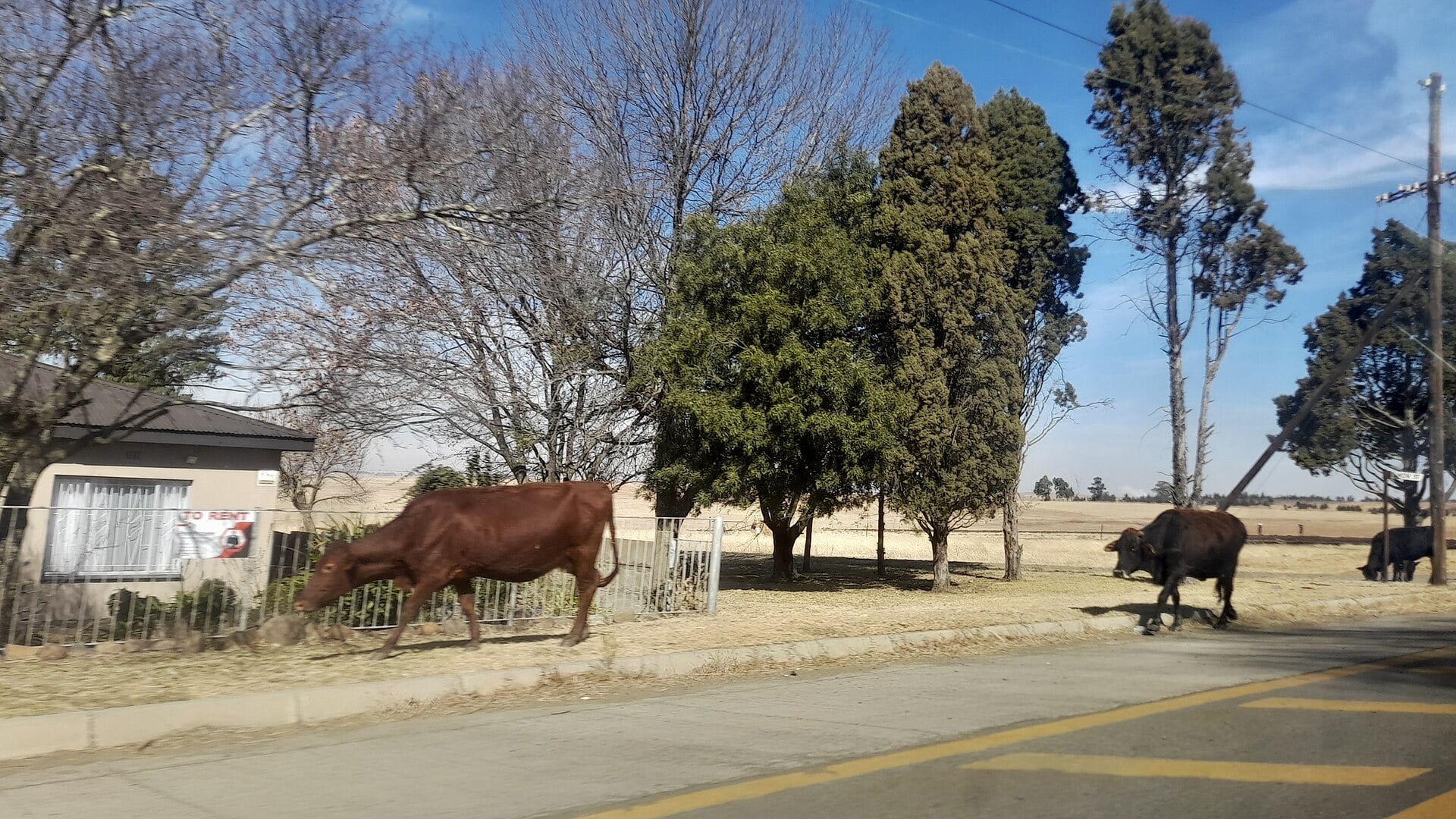
The national herd is about 12 million cattle and between 40 and 50 percent is communally held and extensively grazed. Daily in-feed dosing is impractical for roughly half the country’s animals.
One claim made for seaweed feed deserves a direct answer: that it lowers feed costs. That suggestion rests on a single growth result.
It came from five animals per group and has never been replicated. Nothing since has reproduced it.
Every trial since has found intake unchanged or sharply down. In dairy the mechanism that cuts feed cost is the same one that cuts milk.
The claim also ignores what the seaweed itself costs. That cost is real and the saving is not.
The honest summary is that the gap between 98 percent and 4 to 10 percent is the story. The idea is sound, the chemistry works, and the published figures the industry markets on do not describe a farm.
Correction, 30 September 2026: An earlier version of this article said that no regulator anywhere had approved an Asparagopsis feed additive; in 2022 California’s agriculture department granted one product provisional registration. It said that no such product is registered in South Africa and so could not lawfully be sold there, which could not be independently verified. It described Australia’s pesticides and veterinary medicines regulator as having declined to regulate the seaweed at all, omitting that products which improve livestock growth fall within its remit. It did not say that Bahari Labs has described itself as working with seaweed species other than Asparagopsis. Its headline called the steers in a study published in 2020 cows, and a key fact dated that study’s trial to 2020.
More: Africa news in English, every day from The Rio Times.
Frequently Asked Questions
Does seaweed really cut cattle methane by 98 percent?
That figure comes from five animals in one dose group of a 2020 Australian feedlot study. A meta-analysis of twelve trials in February 2026 found 44 percent.
What happens over time?
It fades. An Iowa State trial in April 2026 saw the reduction fall from 66 percent to negligible within nine weeks, as microbes broke down the active compound.
Is it approved anywhere?
No national regulator is known to have authorised it as a feed additive. The United States food and drug regulator has not approved it and the European Union has not authorised it as one; in Australia it is sold as a feed material without the veterinary medicines regulator’s approval, and California granted one product provisional registration in 2022.
Does it save on feed?
There is no good evidence for it. Recent trials found feed intake unchanged or sharply reduced, and in dairy that came with lower milk yield.
Is there an incentive to use it in South Africa?
No. Agriculture is exempt from the carbon tax through the phase that began in January 2026, and enteric methane is untaxed.
Sources: Kinley et al. Journal of Cleaner Production 2020, Roque et al. PLOS ONE 2021, Honan et al. BMC Agriculture 2026, Martins et al. Journal of Dairy Science 2024, Wasson et al. and Omale et al. Journal of Dairy Science April 2026, Indugu et al. mBio 2024, Meo-Filho et al. PNAS 2024, Grondahl et al. Scientific Reports 2025, Department of Agriculture.
This article was produced by The Rio Times’ automated newsroom system. How we use AI · Report an error · Editorial responsibility: Matthias Camenzind, Editor-in-Chief