São Tomé and Príncipe’s Diplomatic Dance with Global Powers
Prime Minister Patrice Trovoada of São Tomé and Príncipe recently highlighted his country’s commitment to diverse international collaborations, including a notable military agreement with Russia.
This agreement, primarily focused on military training and disposing of outdated Soviet-era ammunition, aims to bolster the nation’s defense capabilities.
It seeks to achieve this in a balanced manner without tilting towards any geopolitical bloc.
Despite some international concern, particularly from Portugal, about increasing Russian influence, Trovoada reassured us that the agreement does not encompass espionage activities.
Instead, it represents a step towards modernizing the nation’s military assets while maintaining its sovereign decision-making in foreign affairs.
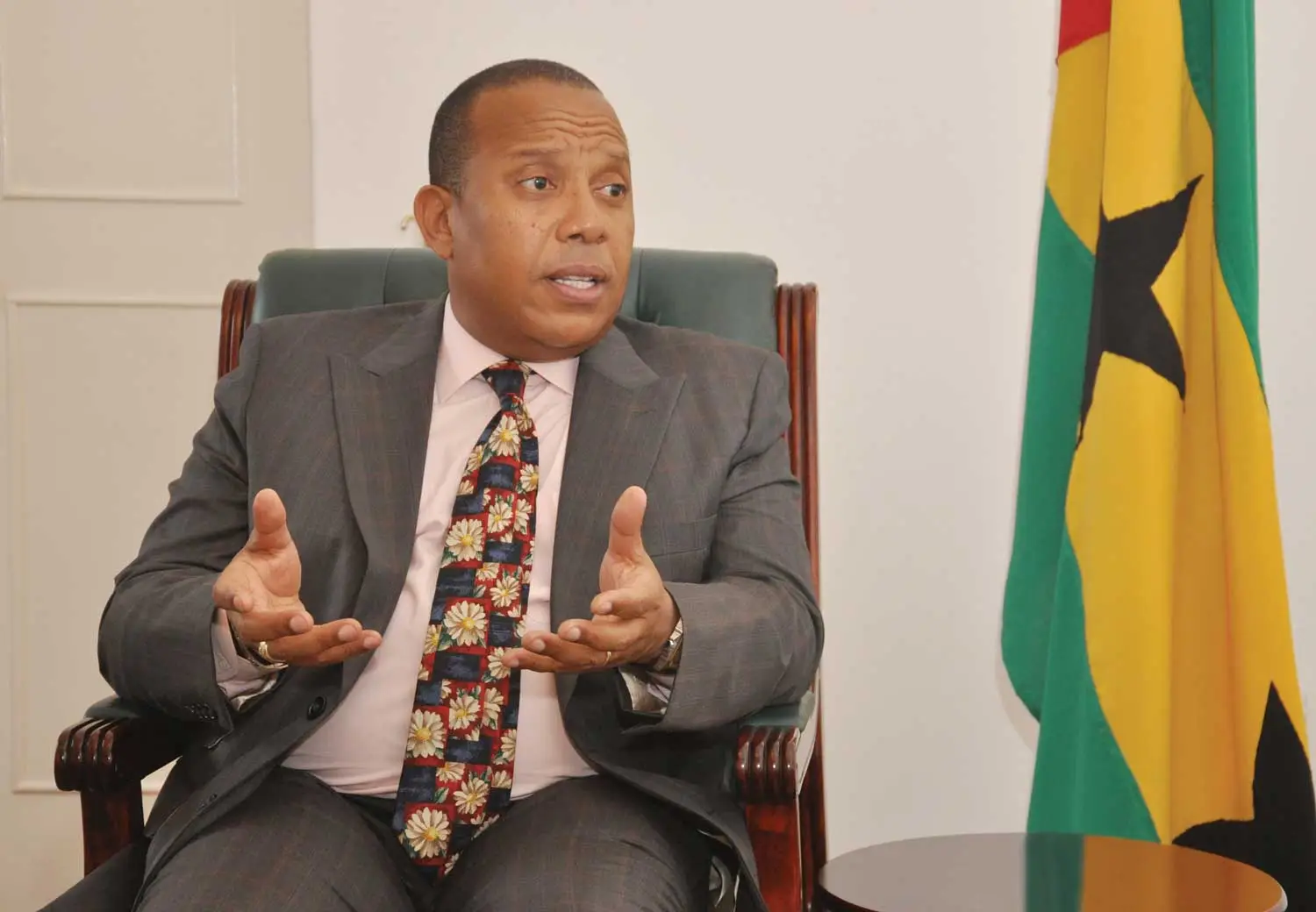
Moreover, Trovoada addressed broader concerns regarding the Russian presence in Africa, specifically through the Wagner Group in West and Central Africa.
He challenged European nations to reconsider their approach towards African countries experiencing growing Russian engagement.
Here, Trovoada called out perceived double standards among NATO countries, which continue trading with Russia amidst geopolitical tensions.
Internally, the Prime Minister voiced frustrations over inadequate support from Western allies for modernizing military equipment.
This issue arises amidst broader socio-economic challenges within São Tomé and Príncipe, such as poverty and the need for infrastructure improvements.
Trovoada prioritizes these concerns over historical grievances like reparations.
Diplomatic Strategy and Geopolitical Navigation
Trovoada’s diplomatic stance illustrates São Tomé and Príncipe’s strategic navigation through complex international dynamics.
His approach underscores the island nation’s efforts to engage with multiple global actors pragmatically.
This strategy not only seeks to secure São Tomé‘s interests but also positions it as a proactive player amid the rapidly evolving geopolitical landscape of Africa.
Trovoada’s leadership thus reflects a delicate balance between national sovereignty and the realities of global diplomacy.
It makes a compelling case for the strategic autonomy of smaller states in a multipolar world.
This article was produced by The Rio Times’ automated newsroom system. How we use AI · Report an error
Part of our ongoing coverage
Africa: The New Scramble — the great-power contest over the continent.
Read More from The Rio Times