Putin Floats Partial Withdrawal for Full Control of Donetsk in Call With Trump
In a call lasting more than two hours on October 16, Vladimir Putin reportedly floated a swap: Russia might withdraw from unspecified parts of the southern Kherson and Zaporizhzhia regions if Ukraine recognized full Russian control over Donetsk—possibly Luhansk, too, though that point remains unclear.
No maps or written terms were released. The idea matters because it nudges Moscow away from its public line since 2022 that all four regions it claimed—Donetsk, Luhansk, Zaporizhzhia, and Kherson—are irrevocably part of Russia under its constitution.
Even hinting at giving up any portion of the south is a notable shift in tone. On the ground, Russia controls roughly a fifth of Ukraine, with the fiercest fighting and the Kremlin’s priority concentrated in Donetsk.
Kyiv’s response was blunt: no land for peace. President Volodymyr Zelensky has repeatedly said Ukraine will not trade away territory seized by force. That stance reflects both principle and security logic—conceding land now could invite new offensives later.
The story behind the story is leverage. By spotlighting Donetsk while being vague about the south, Moscow tests where Western unity and Ukrainian resolve might bend.
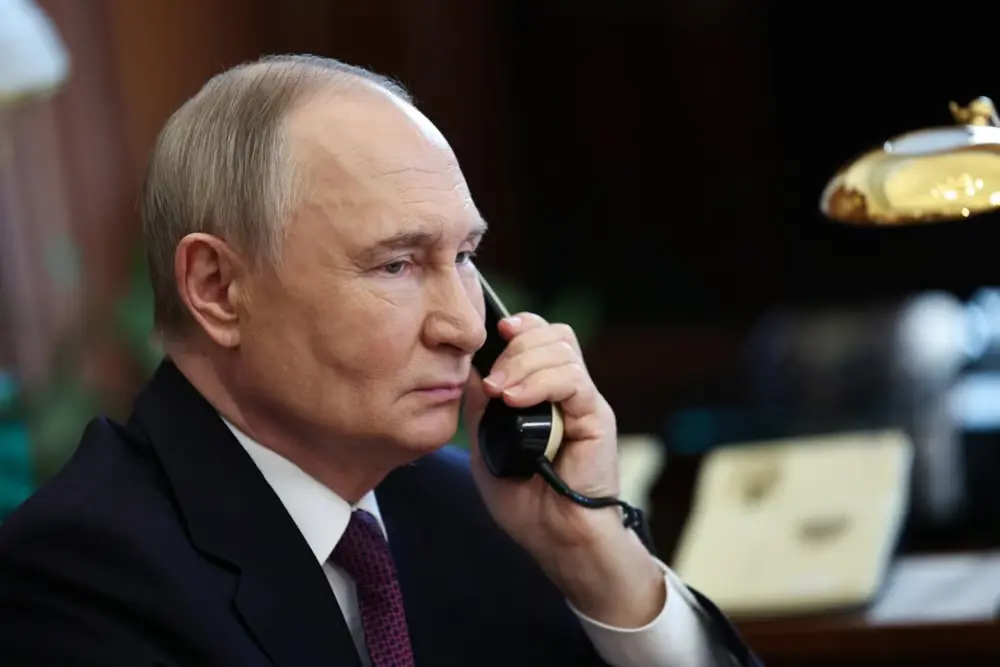
Russia Floats Ambiguous Ceasefire to Test the West
It also inserts itself into U.S. politics: the call was with former U.S. president Donald Trump, and any hint that Washington could press Kyiv toward concessions would shift the dynamics of military aid, timelines, and negotiating power.
Ambiguity is the point. No one defined which southern areas would be vacated or what security guarantees would follow.
That vagueness keeps options open for the Kremlin, pressures Kyiv to say “no” on principle, and fuels debate in Western capitals about what a ceasefire could look like.
Why readers outside the region should care is simple: this war shapes global energy and grain flows, insurance and shipping costs, and inflation far from the front.
A deal that locks in new borders by force would set a precedent others might try to copy. A failed “trial balloon” could just as easily presage heavier fighting.
This article was produced by The Rio Times’ automated newsroom system. How we use AI · Report an error
Read More from The Rio Times