Panama Columnist Pitches Santiago Rebuild
Santiago’s schools are coming down and its churches are propped up. A columnist’s plan to remake the centre still waits for an official answer.

Disaster Recovery: Panama
Santiago de Veraguas, the capital of Panama’s Veraguas province, is still demolishing and repairing after the earthquake of Friday 9 October 2026, and the government’s announced reconstruction steps so far cover schools, heritage sites and emergency contracts, not a plan for its centre. On 27 November a Panamanian columnist, Carlos Eduardo Rodríguez, filled that gap with five proposals of his own, which no authority has adopted.
The city lies on the Pan-American Highway, west of Panama City, in a country where the US dollar is legal tender. Most of what has been decided so far concerns schools, shelters and heritage buildings, not the centre as a whole.
Key Facts
- Who. Carlos Eduardo Rodríguez, a Panamanian columnist, proposed five themes to rebuild central Santiago de Veraguas.
- What. A magnitude 7.7 earthquake struck on 9 October 2026; his ideas are opinion, not state policy.
- Next. Schools in Veraguas are being demolished first; no date is set for a plan for the centre.
- As of. 28 November 2026, 10:00 GMT.
- Power Index. Panama ranks 11th of 14 in The Rio Times Latin America Power Index, with 33.3 points (November 2026 edition).
Santiago’s schools are coming down and its churches are propped up. A columnist’s plan to remake the centre still waits for an official answer.
The US Geological Survey (USGS), the American federal earthquake agency, recorded a magnitude 7.7 quake at 17:56 UTC on 9 October 2026, about 12:56 local time, 10 km west-southwest of Pitaloza Arriba. Rodríguez writes that the epicentre lay in the neighbouring province of Los Santos and says the shaking brought down parts of buildings in Santiago.
Panama’s civil protection agency, Sinaproc, counted in its bulletin of 16 October 192 damaged schools, 22 damaged health centres, seven government buildings and ten churches in Veraguas province. Its national total was 619 damaged schools, and its figures are not broken down by city.
Veraguas carried the heaviest sheltering load: the Pan American Health Organization (PAHO), the World Health Organization’s regional office, reported, citing Sinaproc, that it held 2,672 of the 3,827 people in shelters nationwide, or 69.8%. Housing damage, by contrast, was concentrated in Los Santos and Herrera, which held 74% of the homes assessed.
Schools are the first part of the centre to change. A technical commission of the Ministry of Education (Meduca) declared the Escuela Anexa El Canadá, one of Santiago’s oldest schools, a total loss, and regional director María Pimentel said on 12 November that dismantling had begun at about eight Veraguas schools, including this one.
Edwin Gordón, Meduca’s director general of education, said in November that about 193,000 students in Veraguas, Herrera, Los Santos and Coclé still lack in-person classes. He said 48 schools had been demolished and were being rebuilt for the first quarter of 2027, and that the ministry plans to intervene in 1,058 schools in all.
Money is the open question. The cabinet of President José Raúl Mulino approved draft Resolution 147-26, published on 28 October, which amends its emergency Resolution 108 of 10 October; up to US$100 million for emergency contracts goes through a trust at the state-owned Banco Nacional de Panamá, and the government has not said what share, if any, will reach Santiago’s centre.
Heritage work is slower. The Ministry of Culture (MiCultura) listed the Catedral Santiago Apóstol among the sites under evaluation on 27 October, when 14 of 38 assessed sites nationwide were closed, and on 20 November its special projects director, Yamileth Stanziola, said 14 of about 40 emergency contracts had Economy Ministry approval and awaited endorsement by the state audit office, the Comptroller General.
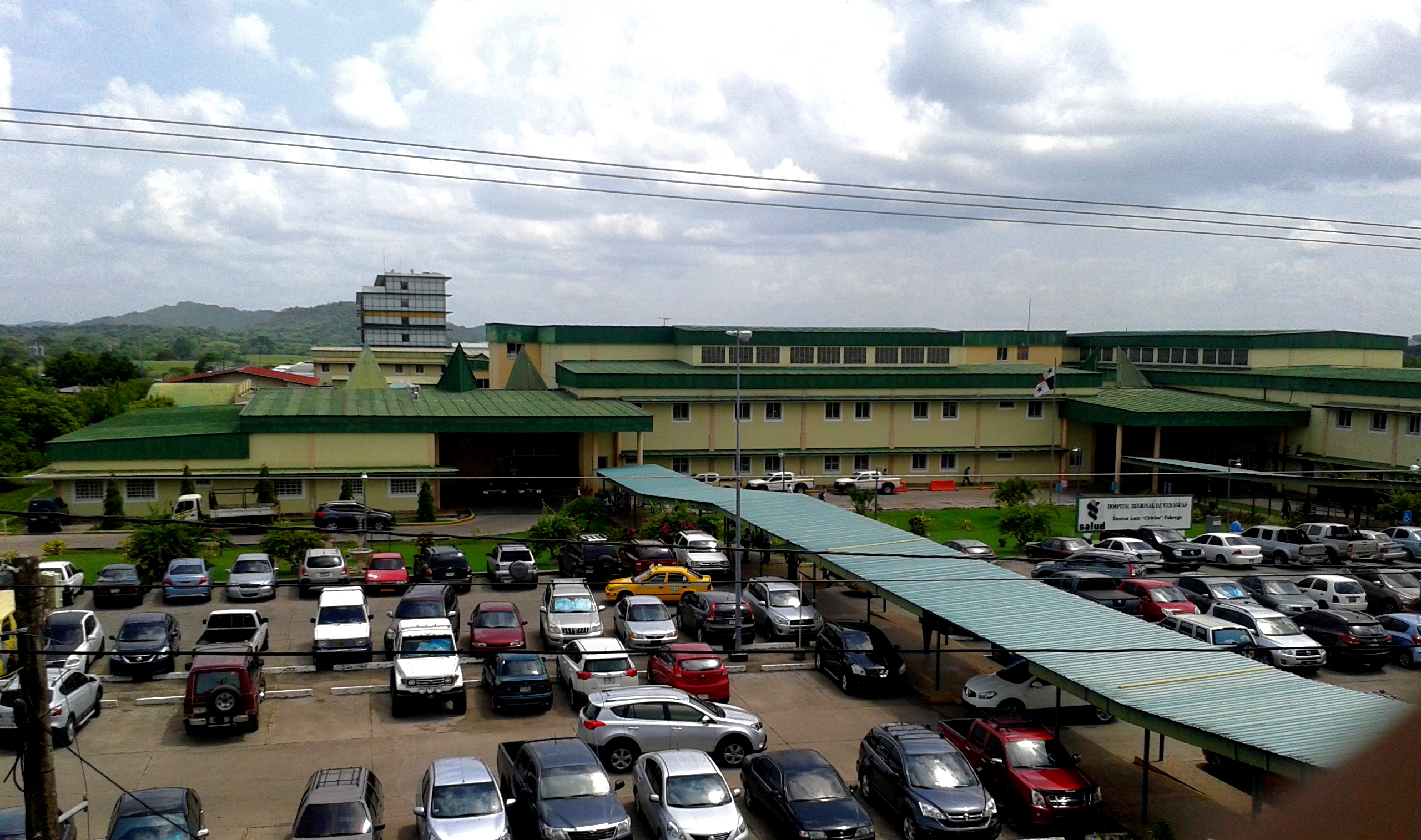
Rodríguez’s first theme is public buildings: he argues that new schools should meet modern safety standards, and that the ruins of the old Santiago hospital could host outpatient clinics instead of sending patients to Atalaya, the district where the general hospital stands. The province’s main hospital, Luis “Chicho” Fábrega, was operating with no structural damage reported, according to the health ministry list in the PAHO report.
His second theme is a walkable civic axis linking the Mercado Público (public market), the Placita San Juan de Dios, the Plaza de la Catedral and Avenida Central, with trees, lighting and street furniture. He adds that the site of the old municipal gym and pool, demolished 15 years ago, is now a car park, and says the city has never held enough public consultation on its future.
The third theme is shade and water, with more trees and restored streams such as the Zanja Madre; the fourth is transport, with a more active state role in bus services and a rethink of the 1980s bus terminal, which the column says is now too small. The fifth is new, better-designed premises for the mayor’s office, the municipal council and the provincial governor’s office.
His central point is a quote (our translation): “Living urban centres are needed, with resident population, economic activity and services that work all day.” He also writes that recovery “cannot be limited to rebuilding what the earthquake destroyed”.
The strongest counter-weight is the official order of priorities. MiCultura says its emergency contracts aim first at protecting lives and structural elements and notes that available resources are limited (our translation), while the education ministry’s own plan already covers 1,058 schools, and no funder or deadline has been announced for Rodríguez’s agenda.
The next dated markers are official ones: classes in the affected provinces were due to end on Friday 11 December, according to Gordón, and the church and heritage contracts still await the Comptroller General’s endorsement, with no date given. The date for any plan for Santiago’s centre is not confirmed.
Frequently Asked Questions
Has Panama approved a rebuilding plan for Santiago’s centre?
No. The cabinet’s decisions so far cover emergency contracts and trusts, and the five themes are one columnist’s proposals.
Is Santiago’s main hospital working?
Panama’s health ministry listed it as operating, with no structural damage reported. The old hospital ruins are a separate site.
Who pays for rebuilding?
The state emergency trust at Banco Nacional de Panamá is the first channel. No share has been assigned to the city centre.
Sources
USGS event page us6000u18k · Sinaproc Official Communiqué 14, 16 October 2026 · PAHO Situation Report 3, October 2026 · Cabinet statement on Resolution 147-26, 28 October 2026 · MiCultura, 27 October 2026 and 20 November 2026 · Meduca and its Veraguas regional directorate (meduca.gob.pa), statements of 12 and 17 November 2026 · Carlos Eduardo Rodríguez, opinion column, 27 November 2026
This article was produced by The Rio Times’ automated AI newsroom. Editorial responsibility: Matthias Camenzind, Publisher and Editor-in-Chief. The Rio Times also runs Ask Rio Times, which answers from 100,000+ of our own articles, the daily Latin America Power Map, and prediction-market odds on elections and markets.. How we use AI · Report an error
Connected Coverage
Panama news · Panama Quake Rebuild Gets 2 Trusts · Panama Quake Families Get 70 Temporary Homes