Ortega and Murillo’s Assault on Judicial Independence in Nicaragua: A Police-State Power Grab
A leaked police circular from May 2025 reveals Nicaragua’s President Daniel Ortega and Co-President Rosario Murillo stripping judges of authority, subordinating courts to the National Police.
This move consolidates their authoritarian rule, alarming businesses reliant on legal stability. The directive mandates police approval for court-ordered property seizures, evictions, or arrests tied to financial crimes.
The circular, issued by police chief Francisco Díaz, Ortega’s son-in-law, requires judges to seek permission from Victoriano Ruiz Urbina, head of the notorious El Chipote prison.
This violates Nicaragua’s Constitution, which demands judicial rulings bind all authorities. By overriding judges, the police now act as a political filter, deciding which orders to enforce based on regime loyalty.
Ortega and Murillo’s broader strategy emerges clearly. In February 2025, they pushed constitutional reforms, making the judiciary an executive-controlled “organ.” A new Judicial Career Law, passed days after the circular, eliminated merit-based judicial appointments.
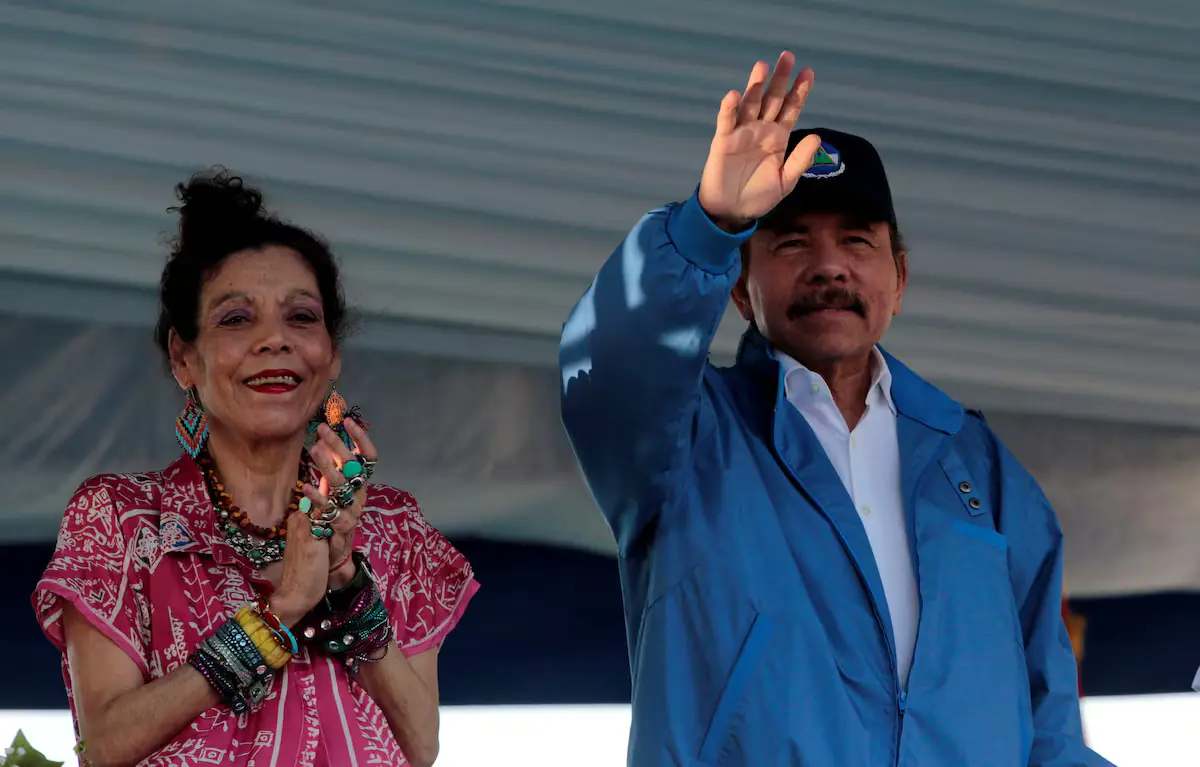
Nicaragua’s Judiciary Collapse Alarms Investors
These changes ensure loyalists dominate courts, threatening property rights and contract enforcement critical for commerce. Since 2018, when police and paramilitaries killed over 350 protesters, the regime has intensified repression.
Property confiscations target dissidents, with police now holding unchecked power to seize assets. Over 2,000 officials face U.S. sanctions for human rights abuses, signaling risks for foreign investors.
The UN reports ongoing torture and arbitrary detentions, further destabilizing the business climate. Nicaragua’s alignment with China and Russia, including Huawei deals in April 2025, offers economic lifelines amid Western isolation.
However, centralized control and legal unpredictability deter mercantile confidence. Businesses face a regime prioritizing political survival over economic stability, with courts now extensions of police power. This power grab underscores Ortega and Murillo’s intent to eliminate checks on their rule.
The judiciary’s collapse into a police-controlled tool threatens Nicaragua’s legal framework, raising red flags for trade and investment. As the regime tightens its grip, businesses must navigate a landscape where law serves power, not justice.
More: Latin America news in English, every day from The Rio Times.
This article was produced by The Rio Times’ automated newsroom system. How we use AI · Report an error
Read More from The Rio Times