Moldova’s EU Referendum Passes by Razor-Thin Margin Amid Controversy
On October 20, 2024, Moldova held a crucial referendum on European Union membership alongside its presidential election.
The small Eastern European nation, with 2.6 million citizens, voted on amending its constitution to declare EU integration a strategic goal.
The referendum results were incredibly close. With over 99% of votes counted, the “yes” camp narrowly won with 50.39% support. This slim margin represented just 8,000 votes out of 1.4 million ballots cast.
Voter turnout reached 50%, surpassing the 33% threshold for validity. In the concurrent presidential election, pro-EU incumbent President Maia Sandu led with 42.37% of the vote.
Her main challenger, Alexandr Stoianoglo, a former prosecutor general with pro-Russian leanings, received 26% support. A runoff election is scheduled for November 3.
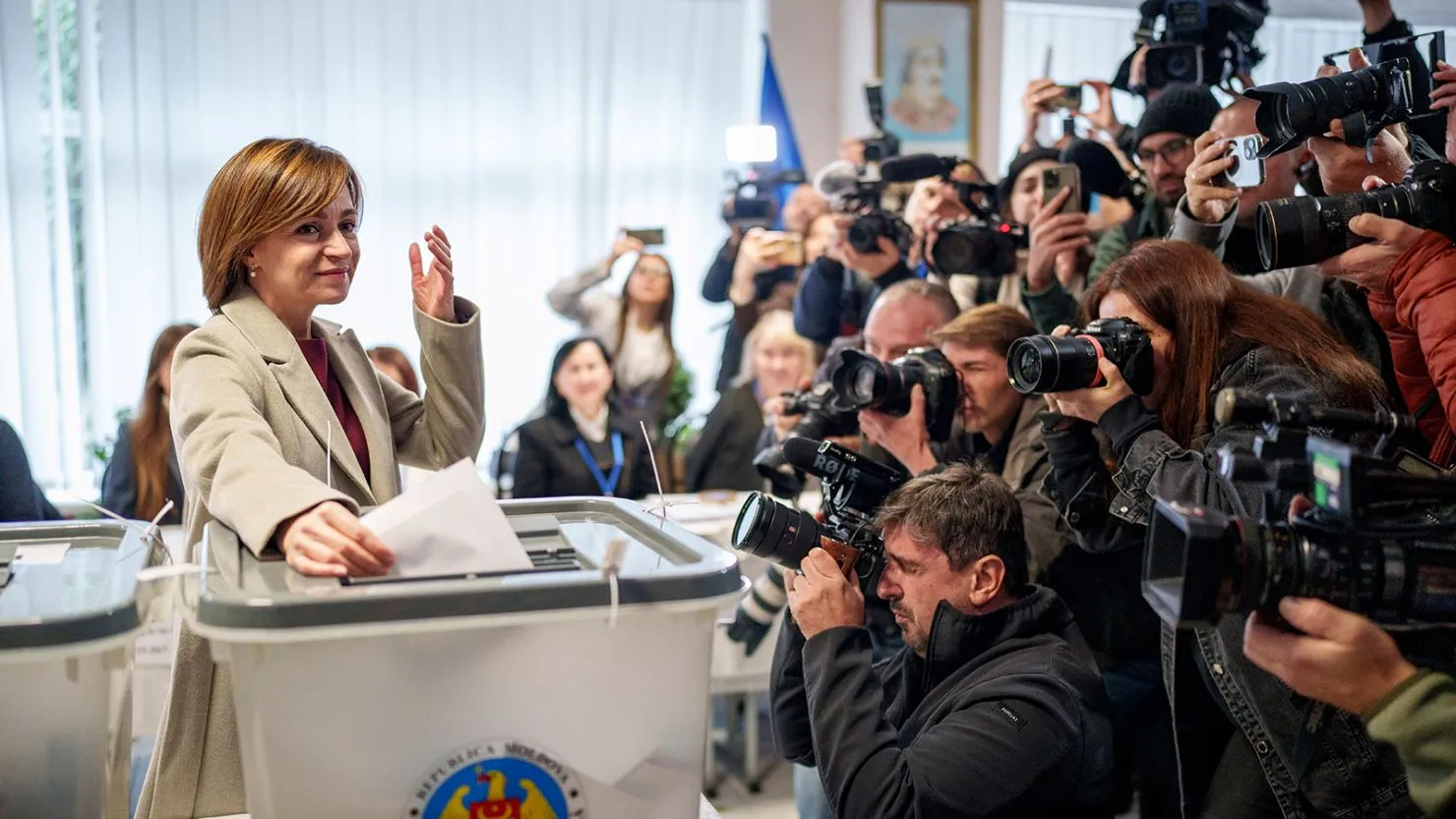
The voting process was marred by controversy. President Sandu and Moldovan authorities accused Russia of orchestrating an “unprecedented” campaign to interfere with the votes.
Allegations included vote-buying schemes, disinformation campaigns, and attempts to incite civil unrest. The European Union supported these claims.
Spokesperson Peter Stano stated that the vote occurred “under unprecedented interference and intimidation by Russia and its proxies.” Russia firmly denied all accusations, calling on President Sandu to provide evidence of election interference.
Moldova’s EU Aspirations
Moldova applied for EU membership in 2022 following Russia’s invasion of neighboring Ukraine. The country began formal accession talks in June 2024 and aims to join the bloc by 2030 under Sandu’s leadership.
The close referendum result and upcoming presidential runoff highlight Moldova’s deep divisions between pro-EU and pro-Russia factions.
This political schism poses significant challenges for Moldova’s future direction and its relationships with both the EU and Russia. The outcome of these votes has substantial implications for Moldova’s geopolitical orientation.
A weakened mandate for President Sandu could complicate Moldova’s EU integration efforts and necessary reforms for membership.
As a former Soviet republic, Moldova’s strategic location makes it a focal point in the ongoing contest for influence between Russia and the West. As Moldova navigates this critical juncture, the international community watches closely.
The final results of the presidential runoff and the implementation of the referendum’s outcome will shape Moldova’s trajectory for years to come.
In short, the country’s ability to balance its EU aspirations with its historical ties to Russia remains a delicate and consequential challenge.
This article was produced by The Rio Times’ automated newsroom system. How we use AI · Report an error
Read More from The Rio Times