Moderate Independence Party Wins Greenland Elections Amid Trump’s Annexation Interest
Official results released Wednesday show Greenland’s center-right Demokraatit party won Tuesday’s parliamentary election with 29.9% of votes.
The pro-business party tripled its previous electoral performance, surpassing predictions by political analysts across the Arctic region. Led by 33-year-old Jens-Frederik Nielsen, Demokraatit advocates gradual independence from Denmark.
The populist Naleraq party secured second place with 24.5%, supporting more immediate separation from Denmark. Both ruling parties suffered significant losses, with Inuit Ataqatigiit and Siumut collecting only 36.1% combined.
U.S. President Donald Trump‘s statements about acquiring Greenland heavily influenced voter sentiment. Trump recently told Congress America would get Greenland “one way or another” for security reasons. Nielsen has firmly responded that “Greenland is not for sale.”
“We want change. We want business to improve our welfare,” Nielsen told reporters after results emerged. “We don’t want independence tomorrow; we want a solid foundation.”
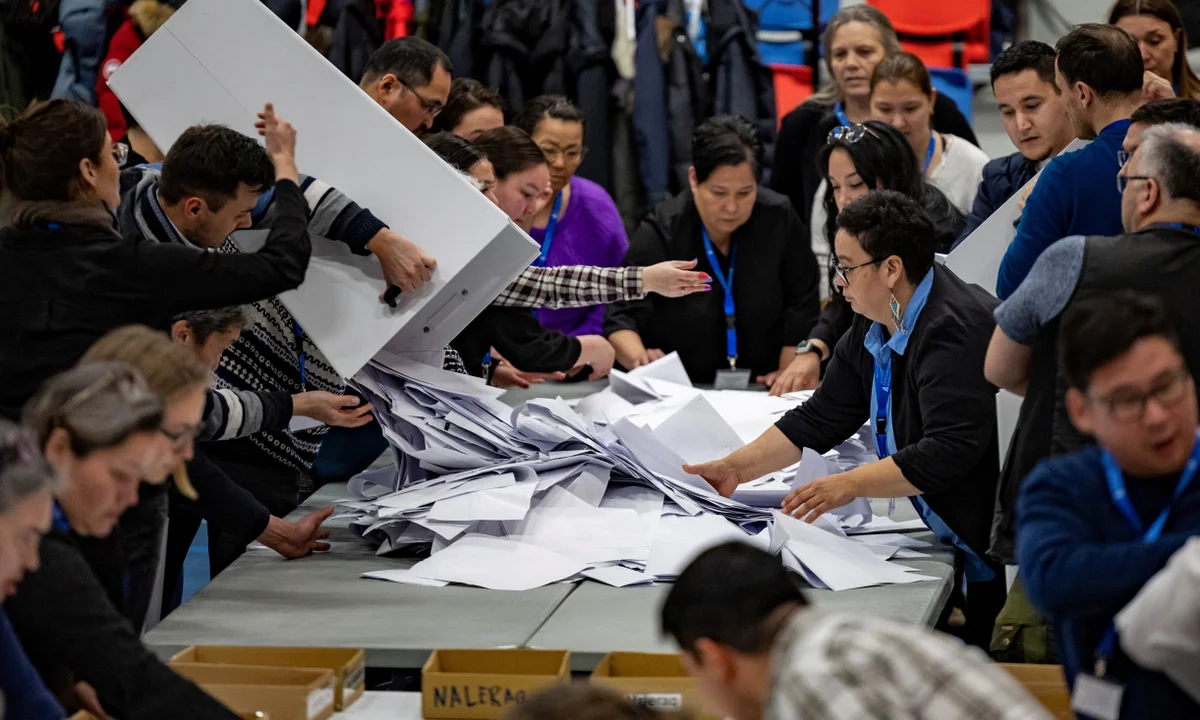
The election marks the first time neither traditional powerhouse—Siumut or Inuit Ataqatigiit—has won. Nielsen must now negotiate with other parties to form a coalition government in the 31-seat parliament.
Greenland’s Economic Struggles and Opportunities
Greenland faces substantial economic hurdles despite its strategic importance. Denmark provides annual subsidies of approximately $525 million, covering half of Greenland‘s public budget. The economy currently depends heavily on fishing and government employment.
Labor shortages plague multiple sectors despite unemployment issues among the 56,000 residents. Population projections show a decline to around 40,000 by 2050, further complicating economic development.
Greenland possesses vast mineral wealth, including rare earth elements essential for technology manufacturing. Climate change has created new opportunities in tourism and shipping as Arctic ice retreats. These sectors could potentially diversify the economy beyond traditional industries.
Voter turnout remained high across the 72 polling stations throughout the territory. Officials extended voting by 30 minutes due to strong participation from the 40,500 eligible voters, demonstrating the election’s perceived importance for Greenland’s future.
This article was produced by The Rio Times’ automated newsroom system. How we use AI · Report an error
Read More from The Rio Times