Colombia’s Flower Festival Gets FBI Task Force Security
Binational Security Operation
Key Facts
—The Task Force. Medellín and US agencies including the FBI launched Task Force Medellín 2026, operating from 28 July to 10 August.
—The Objective. The binational force targets transnational crime and the protection of children during Colombiamoda and the Feria de las Flores.
—The Tools. Officers will use US systems like Angel Watch and NCMEC to screen foreign nationals in real time at Medellín’s airports.
—The Precedent. Arrests linked to sexual abuse and exploitation rose over 1,000% between the 2021-2023 and 2024-2026 periods under the task force model.
—The Local Complement. Over 2,700 national police officers will also deploy across the city for ground-level security during the festivities.
Medellín has integrated US federal agencies into its Feria de las Flores security plan, creating a binational task force to block transnational offenders during Colombia’s peak tourism week.
A Binational Shield for Peak Tourism
Mayor Federico Gutiérrez announced the creation of Task Force Medellín 2026 on 27 July, a formal joint operation with the US Department of Justice, FBI, Homeland Security Investigations (HSI), and US Marshals. The force will operate from 28 July to 10 August, directly overlapping with Colombiamoda and the Feria de las Flores.
This is not a simple information-sharing agreement. It places US federal agents and systems inside Colombia’s primary tourist gateway, working alongside Interpol, Migración Colombia, and the National Police.
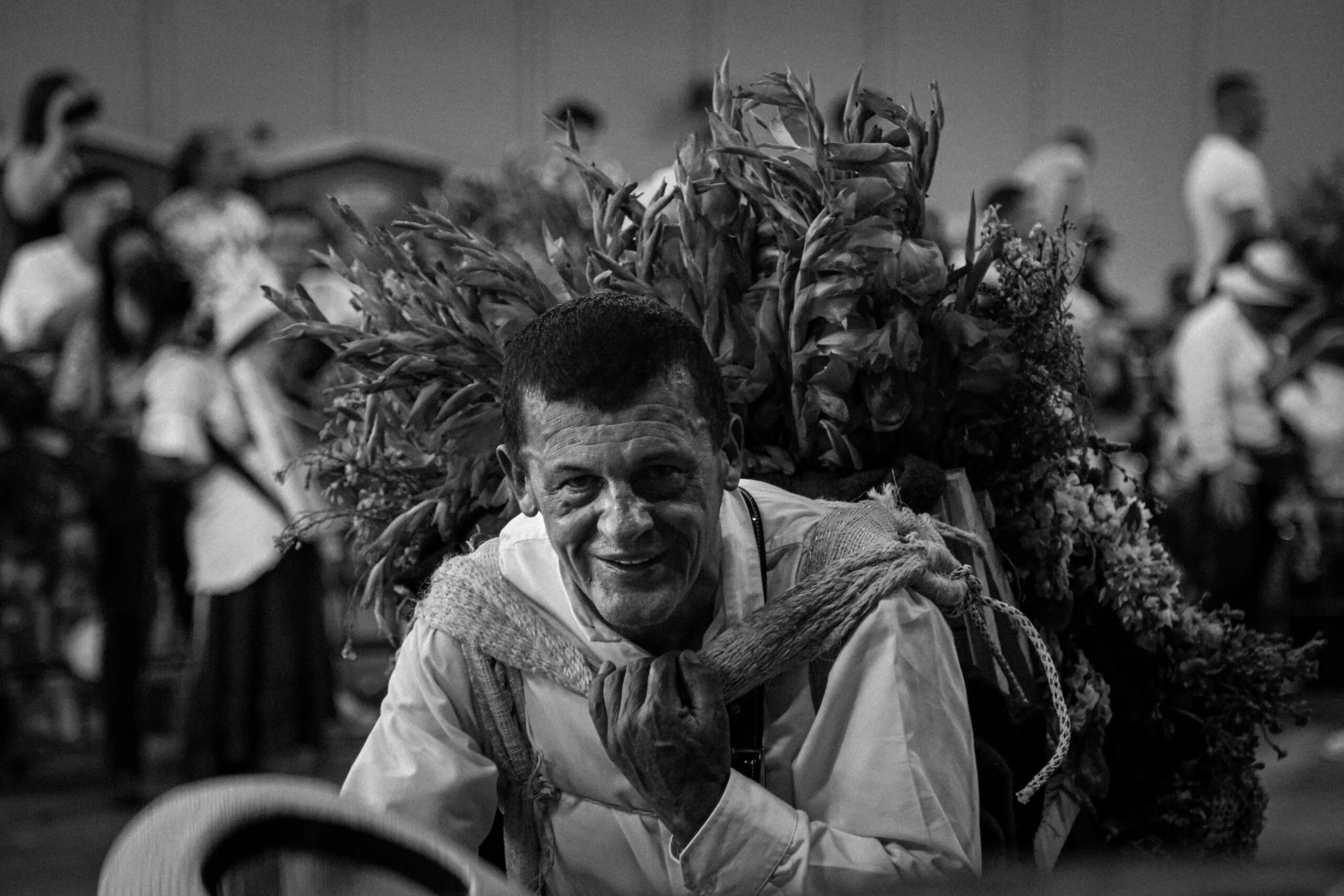
For foreign readers unfamiliar with the local calendar, Colombiamoda is Colombia’s most important fashion trade fair, drawing international buyers and designers to the city. The Feria de las Flores, or Flower Festival, is Medellín’s signature cultural event, a week-long celebration rooted in the region’s flower-growing heritage that fills streets with parades, concerts, and the famous silleteros carrying elaborate floral arrangements on their backs.
Together, these two events create the single busiest tourism window of the year, compressing a huge volume of foreign arrivals into a short period and raising the stakes for border screening.
The Core Mission: Protecting the Vulnerable
The task force’s stated priority is the prevention of sexual abuse and exploitation, particularly of children and adolescents. Authorities will use the US Angel Watch system to flag registered sex offenders travelling abroad, and the National Center for Missing & Exploited Children (NCMEC) database to monitor digital environments.
Officers at José María Córdova International Airport will cross-check passengers in real time against these systems and Interpol databases. The goal is to identify and deny entry to high-risk individuals before they can access the city.
Angel Watch is a US Immigration and Customs Enforcement programme designed specifically to alert authorities when a convicted sex offender attempts to travel internationally. NCMEC serves as a national clearinghouse for reports of missing children and child exploitation, operating a cyber tipline that receives tips from technology companies and the public.
By plugging these tools directly into Medellín’s airport screening, the task force creates a filter that operates before a visitor ever reaches Colombian streets, rather than relying solely on after-the-fact investigations.
A Proven Model with Stark Results
The task force model has already delivered a dramatic increase in enforcement. Authorities reported 34 arrests of people linked to sexual abuse and exploitation between 2024 and 2026, compared to just 3 cases in the 2021–2023 period—an increase of more than 1,000%.
During the Feria de las Flores 2025 alone, the task force monitored 284 international flights and screened 447 foreign nationals. It detected 48 alerts for child sexual exploitation material, checked 415 people via Interpol, and denied entry to four foreign citizens, including three US nationals flagged on Angel Watch.
The jump from three arrests to 34 across the two periods is not simply a reflection of more crime. It points to a structural shift in detection capacity.
Before the task force, screening at the airport relied primarily on domestic watchlists and Interpol notices, which often lack the real-time detail of US databases on sex offenders. The integration of Angel Watch and NCMEC effectively closes a gap that transnational offenders had previously exploited, turning the airport into a hard checkpoint rather than a porous entry point.
How Feria de las Flores Security Layers Up
The US-linked task force is the international, high-tech layer of a much larger security deployment. The National Police will deploy over 2,700 uniformed officers across Medellín, supported by helicopters, drones, and license-plate recognition cameras.
Operations will include fixed and mobile checkpoints, patrols in key tourist zones like Santa Elena and Pueblito Paisa, and inspections of hotels and gourmet areas. The combined force aims to prevent theft, fraud, and extortion while guiding tourists with safety recommendations.
Santa Elena is the rural district outside Medellín famous as the home of the silletero flower carriers, and it becomes a focal point during the festival. Pueblito Paisa is a replica traditional Antioquian village perched on a hilltop in the city, offering panoramic views and drawing large crowds.
Securing these sites means managing dense pedestrian flows where petty crime can flourish, making the visible police presence as much a deterrent as a reassurance measure.
The Read-Through for Investors and Expats
For the international business community, the task force signals that Medellín is willing to embed US law enforcement directly into its tourism infrastructure to manage risk. This level of binational coordination is rare in Latin America and speaks to the city’s strategic priority of protecting its reputation as a hub for digital nomads and foreign capital.
The crackdown also targets the informal tourism economy. During the 2025 fair, authorities inspected 34 tourist accommodations and suspended activities in three establishments for legal non-compliance, a signal that the city is tightening oversight of short-term rental markets popular with expats and visitors.
For expats and investors, the broader significance lies in the precedent this sets for institutional cooperation. When a Latin American city invites US federal agents to operate jointly on its soil, it sends a message about governance priorities: protecting the tourism brand outweighs nationalist sensitivities about foreign law enforcement presence.
That calculus matters for anyone assessing long-term stability and the local government’s willingness to take unconventional steps to safeguard its economic strategy.
What to Watch Next
The task force’s results will be measured in real time. The number of denied entries, digital alerts, and arrests during the 2026 fair will indicate whether the model is becoming more effective or simply maintaining its current tempo.
A longer-term question is whether this level of US integration becomes a permanent feature of Medellín’s security architecture, extending beyond the fair to year-round operations. For now, the city is betting that international collaboration is its strongest card for a safe Feria de las Flores.
Observers should also watch whether other Colombian cities or Latin American tourist hubs begin to replicate this model. The combination of US databases, joint operations, and airport-based screening is unusual in the region, and its success or failure in Medellín could influence how neighbouring countries approach the security of their own peak tourism seasons.
Another open question is how the task force’s presence affects the behaviour of travellers who are not flagged by any database but who may still pose risks, and whether the visible international cooperation itself acts as a deterrent beyond the specific screening tools deployed.
More: Colombia news in English, every day from The Rio Times.
Frequently Asked Questions
What is Task Force Medellín 2026?
It is a binational security force combining Medellín authorities with US agencies including the FBI, Homeland Security Investigations, and US Marshals. It operates during Colombiamoda and the Feria de las Flores to screen foreign nationals and block transnational offenders.
How does the US task force screen travellers in Medellín?
Officers use the Angel Watch system to flag registered sex offenders and the NCMEC database to detect child exploitation material. These are cross-checked with Interpol databases in real time at Medellín’s international airport to deny entry to high-risk individuals.
Is the Feria de las Flores safe for tourists in 2026?
Authorities have layered international screening with a local deployment of over 2,700 police officers, drones, and checkpoints. The task force model has already produced a significant increase in arrests and entry denials, signalling a high level of coordinated security for the event.
Connected Coverage
Ecopetrol Chairman: Luis Felipe Henao Takes Board Helm
Colombia and US Tighten Immigration Security for Major Festivals
Sources: Mayor Federico Gutiérrez; US Department of Justice; FBI.
This article was produced by The Rio Times’ automated newsroom system. How we use AI · Report an error · Editorial responsibility: Matthias Camenzind, Editor-in-Chief