Lula Edges Flávio Bolsonaro in Poll, Runoff Still Tied 13 Days Out
Brazil · Elections
Key Facts
- —What happened A BTG/Nexus survey released on 21 September 2026 gives President Lula 46% and Senator Flávio Bolsonaro 45% in a runoff.
- —Why it matters Brazil votes in the first round on 4 October 2026, 13 days after the survey’s release.
- —The catch The one-point gap is inside the two-point margin of error, so the survey cannot say who leads.
- —The first-round picture Lula has 40% and Flávio 37%, followed by the writer Augusto Cury on 6% and Ronaldo Caiado on 5%.
- —How voters rate the government Half disapprove of Lula’s government and 46% approve. A week earlier 49% disapproved and 47% approved.
- —The race for São Paulo Real Time Big Data puts Governor Tarcísio de Freitas on 53% and Fernando Haddad on 38% in the first round.
Brazil’s president and the eldest son of his convicted predecessor are level in the latest BTG/Nexus survey. In São Paulo, Governor Tarcísio de Freitas holds a wide lead over Fernando Haddad.
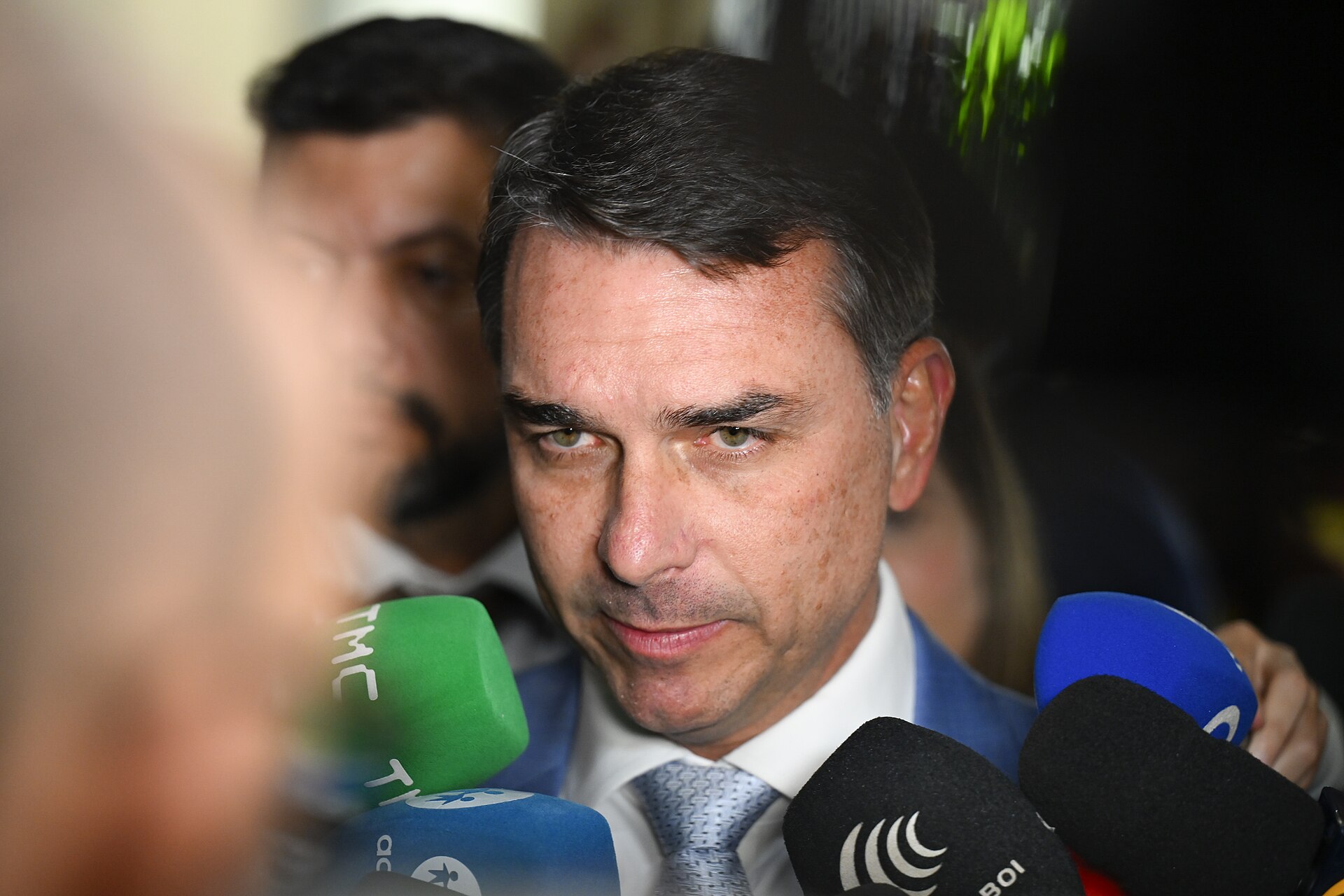
A new Lula and Flávio Bolsonaro poll shows Brazil’s presidential runoff as close as it has been all month. President Luiz Inácio Lula da Silva has 46% against 45% for Senator Flávio Bolsonaro, according to BTG/Nexus.
The survey was released on Monday 21 September 2026, 13 days before the first round on 4 October. The one-point gap sits well inside its margin of error of two percentage points.
The polling firm Nexus carried out the survey for the investment bank BTG Pactual. It interviewed 2,006 voters aged 16 and over by telephone from 18 to 20 September 2026.
The survey is registered with the Superior Electoral Court, Brazil’s election authority, under number BR-00485/2026. Its confidence level is 95%.
A tie that has held for weeks
Brazilian pollsters call a result like this a technical tie, because the gap is smaller than the margin of error. In the runoff scenario, 7% would vote blank, spoil the ballot or back neither man.
The previous BTG/Nexus round, released on 14 September 2026, had Lula on 47% and Flávio on 46%. Both slipped one point this week, Nexus said.
The round released on 8 September 2026 had put Flávio numerically ahead, 46% to 45%. The newspaper Gazeta do Povo reported that it was the first time in the series he had led.
That lead lasted one week. Every BTG/Nexus runoff reading this month has fallen within the margin of error.
The first round: a narrower lead for Lula
In the first-round scenario, where voters choose from a list of names, Lula has 40% and Flávio 37%. A week earlier, Nexus had Lula on 42% and Flávio on the same 37%.
The writer Augusto Cury of the Avante party has 6%, and Ronaldo Caiado, a former governor of Goiás state, has 5%. Renan Santos of the Missão party has 3%, and former Minas Gerais governor Romeu Zema has 1%.
A candidate who wins more than half of the valid votes on 4 October is elected outright. Otherwise the top two meet again in a runoff on 25 October 2026.
Rejection is split almost as evenly. Half of respondents said they would never vote for Flávio, and 49% said the same of Lula.
A government slightly under water
Asked whether they approve of Lula’s government, half of respondents said no and 46% said yes. A week earlier the split was 49% to 47%, according to Metrópoles.
Asked to rate the administration, 45% called it bad or terrible and 35% good or excellent. Another 18% rated it average.
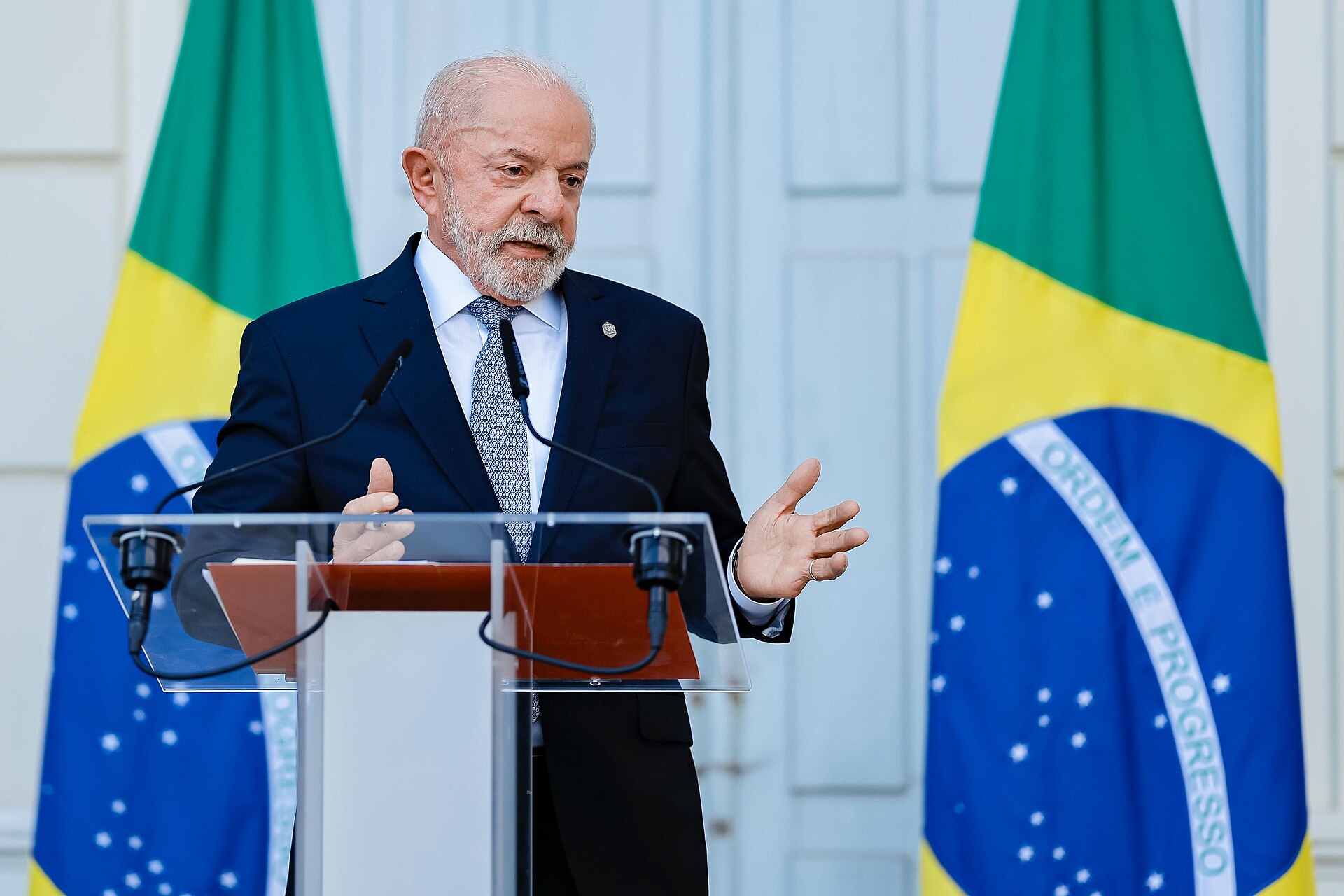
Lula, 80, of the Workers’ Party (PT), is seeking a fourth term. He governed from 2003 to 2010 and returned to office in January 2023.
Who Flávio Bolsonaro is
Flávio Bolsonaro, 45, is the eldest son of former president Jair Bolsonaro, who governed from 2019 to 2022. He has represented Rio de Janeiro in the federal Senate since February 2019, for the Liberal Party (PL).
Before that he spent 16 years in the Rio de Janeiro state legislature. He is running for president because his father cannot.
In June 2023 the Superior Electoral Court barred Jair Bolsonaro from running for office for eight years, until 2030. It found he had abused political power and misused the media at a July 2022 meeting with foreign ambassadors.
At that meeting, held in the presidential residence, he attacked Brazil’s electronic voting system.
The Supreme Court later convicted him of plotting a coup and sentenced him to 27 years and three months in prison. Justice Alexandre de Moraes moved him to house arrest in Brasília on health grounds in March 2026.
In July Justice Moraes barred Flávio from visiting his father for 90 days, until 11 October. The senator had read a letter from him on a livestream.
São Paulo: a wide lead for the governor
A Real Time Big Data survey released the same day shows a different race in São Paulo, Brazil’s most populous state. Governor Tarcísio de Freitas of the Republicanos party has 53% against 38% for Fernando Haddad of the PT.
Haddad was Lula’s finance minister until March 2026, when he stepped down to run. His former deputy, Dario Durigan, now runs the ministry.
In a runoff between the two, Tarcísio has 57% and Haddad 39%. Counting only valid votes, the governor has 58% in the first-round scenario.
The firm interviewed 2,000 voters from 16 to 19 September 2026, with a margin of error of two points. It paid for the survey itself and registered it with the electoral court as SP-07495/2026.
A week earlier, the same pollster had Tarcísio on 53% and Haddad on 36%.
What the numbers do and do not say
Polls are snapshots of opinion during their fieldwork, not forecasts. With a one-point gap and a two-point margin, this Lula and Flávio Bolsonaro poll cannot name a runoff leader.
It does suggest a hardening electorate. Among respondents who picked a first-round candidate, 84% said their mind was made up, up from 83% a week earlier, Nexus said.
That leaves a small pool of persuadable voters for the final 13 days. Nine in ten Lula voters and 92% of Flávio voters called their choice final.
More: Brazil coverage, every day from The Rio Times.
Frequently Asked Questions
What does the latest Lula and Flávio Bolsonaro poll show?
The BTG/Nexus survey released on 21 September 2026 gives Lula 46% and Flávio Bolsonaro 45% in a runoff. The margin of error is two percentage points, so the race is a technical tie. In the first-round scenario Lula has 40% and Flávio 37%. Nexus interviewed 2,006 voters by telephone from 18 to 20 September 2026.
Why is Flávio running instead of Jair Bolsonaro?
Jair Bolsonaro cannot run. In June 2023 the Superior Electoral Court barred him from office until 2030 for abusing political power at a meeting with ambassadors. The Supreme Court later convicted him of plotting a coup, and he is serving his sentence under house arrest. His eldest son, a senator for Rio de Janeiro, is the Liberal Party candidate.
When does Brazil vote?
The first round is on Sunday 4 October 2026, 13 days after this survey was released. If no candidate wins more than half of the valid votes, the top two meet in a runoff on 25 October 2026. Voters also choose governors, senators and federal and state deputies.
Is Tarcísio de Freitas ahead in São Paulo?
Yes, by a wide margin in the Real Time Big Data survey released on 21 September 2026. The governor has 53% against 38% for Fernando Haddad, the former finance minister, in the first-round scenario. In a runoff the figures are 57% and 39%, with a margin of error of two points.
Sources: Nexus release on the 21 September 2026 survey, Exame on the first round, rejection and approval, Exame on the runoff scenarios, Metrópoles on government approval, Exame on the 14 September round, Gazeta do Povo on the 8 September round, Exame on the Real Time Big Data São Paulo survey, Gazeta do Povo on the survey’s method and funding, Agência Brasil on Jair Bolsonaro’s ineligibility, Agência Brasil on his house arrest, Reuters via InfoMoney on Haddad’s exit from the Finance Ministry
This article was produced by The Rio Times’ automated newsroom system. How we use AI · Report an error
Read More from The Rio Times