Judicial Review of Trans Rights in a Shifting Legal Landscape in the U.S.
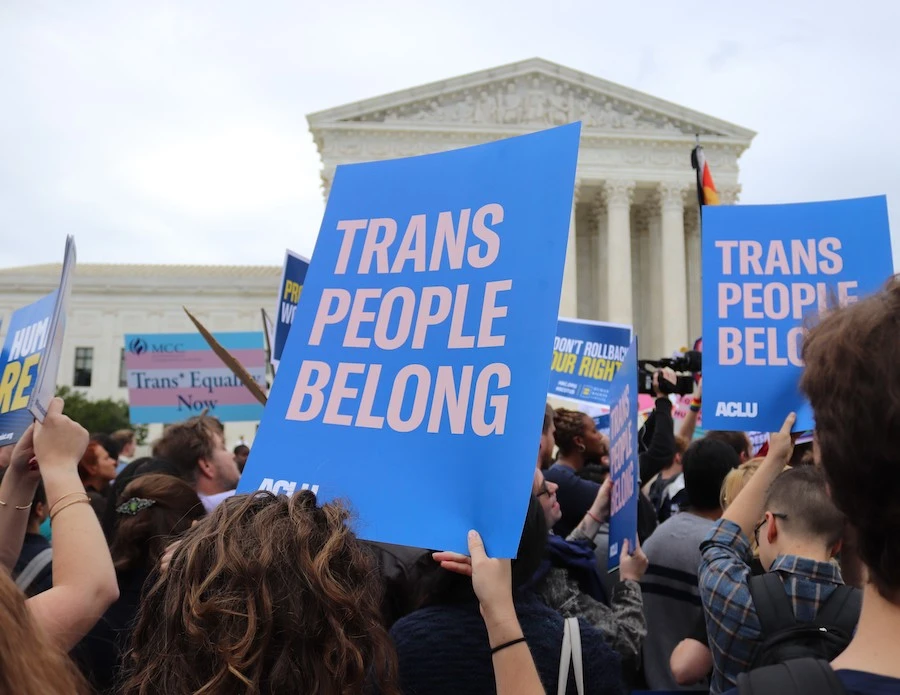
In the United States, a pivotal legal review looms as the Supreme Court prepares to address bans on gender-affirming care for transgender minors.
The Biden administration, advocating for the rights of these youth, has pushed to overturn restrictions enacted by states such as Tennessee and Kentucky.
These states limit access to essential treatments such as puberty blockers and hormone therapy.
These practices have been supported by numerous medical bodies for their proven benefits over the years. The Court’s decision to take up this case coincides with other pressing legal questions.
These range from the scope of presidential immunity after leaving office to the regulation of digital platforms and the expansive powers of federal agencies.
The debate over presidential immunity, exemplified by Trump‘s legal defenses for his actions in office, poses crucial questions. These have direct implications for his ongoing legal challenges.
Also under scrutiny is the Justice Department’s use of obstruction charges stemming from the January 6 Capitol riot.
A potential ruling that favors the accused might alter numerous sentences and hint at overreaching by the government.
Simultaneously, the justices are examining whether the federal government unduly influenced social media platforms to curtail misinformation.
This could have far-reaching consequences for how online content is managed.
Legal and Social Transformations
States like Texas and Florida have come under the justices’ gaze for laws that could impede social media companies from moderating content based on users’ political views.
These cases question the balance between free expression and a platform’s editorial rights, potentially transforming how digital spaces operate.
Parallel to the U.S. discourse, Europe is also experiencing a shift in the recognition of transgender rights.
Germany, for instance, seeks to simplify the legal recognition of gender identity, echoing the more liberal approaches seen in places like Argentina.
This global reevaluation underscores a broader, more inclusive effort to acknowledge and support transgender individuals.
These diverse cases underscore the Supreme Court‘s critical role in navigating complex legal landscapes that affect both national and international spheres.
They shape critical policies impacting personal freedoms, government authority, and fundamental individual rights.
This reflects the ongoing evolution of societal norms and legal frameworks worldwide.
This article was produced by The Rio Times’ automated newsroom system. How we use AI · Report an error
Read More from The Rio Times