Japan and China’s Complex Path to Economic Collaboration
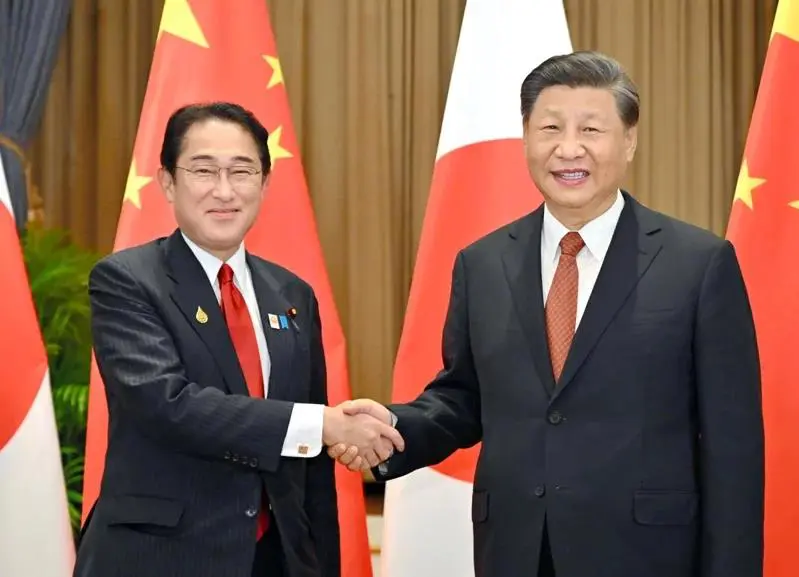
The recent San Francisco summit between Japanese Prime Minister Fumio Kishida and Chinese President Xi Jinping marked a pivotal moment in Japan-China relations.
This was their first meeting since November 2022. They focused on economic cooperation despite unresolved issues.
In the past year, tensions between Japan and China have risen. Before the summit, officials like Japanese adviser Takeo Akiba and Chinese Minister Wang Yi held talks.
They agreed to focus on the economy. The leaders planned to restart a high-level economic dialogue that stopped in 2019.
They also initiated a new framework for discussing export controls on critical goods like semiconductors.
However, some contentious issues remained unresolved. Kishida expressed concerns about the safety of legitimate business activities.
This was a veiled reference to the detention of Japanese nationals in China.
For instance, an executive from Astellas Pharma’s Chinese branch was arrested. Kishida called for his release, but there was no progress.
Xi maintained a ban on Japanese seafood imports. This was in response to Japan’s release of treated wastewater from Fukushima.
The leaders agreed to refer this issue to experts for a solution.
Security topics also surfaced in the discussions. Kishida raised concerns about Chinese activities near the Senkaku Islands, which China claims.
He urged Beijing to remove a buoy near these islands.
Xi’s meeting followed a conciliatory discussion with U.S. President Joe Biden. Xi aimed to stabilize the region and counter U.S. influence.
The relationship between Beijing and Tokyo is complex.
This includes historical and territorial disputes and the sensitive Taiwan issue. Xi urged Japan to respect past commitments on Taiwan.
Despite differences, Kishida and Xi agreed to build stable relations. They pledged to hold talks on economic issues.
Yet, fundamental changes in their relationship remain difficult.
Experts like Liu Jiangyong and Shi Yinhong suggest that strategic and ideological oppositions hinder major breakthroughs.
In summary, while a step towards cooperation, the Japan-China summit highlighted persistent challenges in their relationship.
It underscores the need for continued dialogue and careful management of differences.
This article was produced by The Rio Times’ automated newsroom system. How we use AI · Report an error
Read More from The Rio Times