IBOV 185,020.29 ▼ 0.52% IPSA 11,381.18 ▲ 1.30% IPC MEX 63,873.32 ▲ 0.58% MERVAL 3,044,594 ▼ 0.55% COLCAP 2,539.81 ▲ 0.71% BVL PERÚ 60,023.65 ▼ 0.38% USD/BRL5.16▲ 0.55% USD/MXN17.21▲ 0.23% USD/CLP959.20▼ 0.29% USD/COP3,198▲ 2.10% USD/PEN3.35▼ 0.80% USD/ARS1,511▲ 0.03% USD/UYU40.16▲ 2.90% USD/PYG5,906▲ 2.95% USD/BOB9.75▼ 8.44% USD/DOP58.83▲ 0.22% USD/CRC444.45▲ 2.49% USD/GTQ7.63▲ 3.03% USD/HNL26.85▲ 0.38% USD/NIO36.62▲ 0.26% USD/VES846.42▼ 0.13% USD/PAB1.00— 0.00% USD/BZD2.00— 0.00% USD/JMD 157.28 — 0.00% USD/TTD6.75▲ 2.57% EUR/BRL5.91▲ 0.09% BRENT 88.88 ▼ 0.03% WTI 83.11 ▼ 0.11% IRON ORE 161.91 — — COPPER 6.61 ▲ 0.03% GOLD 4,461 ▲ 1.78% SILVER 65.59 ▲ 1.26% SOY 1,184 ▲ 3.20% CORN 480.50 ▲ 10.02% WHEAT 655.00 ▲ 3.93% COFFEE 317.25 ▼ 5.51% SUGAR 16.43 ▼ 1.79% ORANGE JUICE 138.55 ▼ 0.47% COTTON 85.03 ▲ 2.33% COCOA 5,719 ▲ 3.18% BEEF 223.60 ▼ 3.93% CATTLE 339.10 ▼ 3.16% LITHIUM 75.20 ▲ 1.47% PETR4 41.64 ▼ 0.05% VALE3 72.97 ▲ 0.83% ITUB4 38.60 ▼ 1.03% BBDC4 16.85 ▲ 0.36% ABEV3 14.89 ▼ 0.80% BBAS3 19.37 ▲ 0.47% B3SA3 14.26 ▼ 0.21% WEGE3 47.59 ▲ 0.49% PRIO3 59.14 ▼ 0.19% SUZB3 41.33 ▲ 2.35% RENT3 34.68 ▼ 0.09% AZZA3 15.89 ▼ 2.63% CSAN3 3.22 ▼ 1.83% RAIZ4 0.25 — 0.00% PCAR3 2.75 ▼ 0.36% GMAT3 3.65 ▼ 1.08% PSSA3 48.13 ▼ 0.54% CVCB3 1.33 ▼ 2.92% POSI3 3.36 ▲ 2.44% SLCE3 13.34 ▲ 0.30% NATU3 8.14 ▼ 0.73% IBOV 185,020.29 ▼ 0.52% IPSA 11,381.18 ▲ 1.30% IPC MEX 63,873.32 ▲ 0.58% MERVAL 3,044,594 ▼ 0.55% COLCAP 2,539.81 ▲ 0.71% BVL PERÚ 60,023.65 ▼ 0.38% USD/BRL 5.16 ▲ 0.01% USD/MXN 17.06 ▼ 0.24% USD/CLP 913.98 ▲ 0.04% USD/COP 3,140 ▲ 0.03% USD/PEN 3.36 ▼ 0.66% USD/ARS 1,493 ▲ 0.10% USD/UYU 40.27 ▲ 1.24% USD/PYG 5,939 ▲ 1.68% USD/BOB 11.64 ▼ 0.76% USD/DOP 58.34 ▲ 1.25% USD/CRC 445.92 ▲ 0.89% USD/GTQ 7.62 ▲ 2.21% USD/HNL 26.79 ▲ 1.57% USD/NIO 36.62 ▲ 0.69% USD/VES 762.44 ▼ 0.13% USD/PAB 1.00 — 0.00% USD/BZD 2.00 — 0.00% USD/JMD 157.28 — 0.00% USD/TTD 6.70 ▲ 0.61% EUR/BRL 5.95 ▲ 1.01% BRENT 88.88 ▼ 0.03% WTI 83.11 ▼ 0.11% IRON ORE 161.91 — — COPPER 6.61 ▲ 0.03% GOLD 4,461 ▲ 1.78% SILVER 65.59 ▲ 1.26% SOY 1,184 ▲ 3.20% CORN 480.50 ▲ 10.02% WHEAT 655.00 ▲ 3.93% COFFEE 317.25 ▼ 5.51% SUGAR 16.43 ▼ 1.79% ORANGE JUICE 138.55 ▼ 0.47% COTTON 85.03 ▲ 2.33% COCOA 5,719 ▲ 3.18% BEEF 223.60 ▼ 3.93% CATTLE 339.10 ▼ 3.16% LITHIUM 75.20 ▲ 1.47% PETR4 41.64 ▼ 0.05% VALE3 72.97 ▲ 0.83% ITUB4 38.60 ▼ 1.03% BBDC4 16.85 ▲ 0.36% ABEV3 14.89 ▼ 0.80% BBAS3 19.37 ▲ 0.47% B3SA3 14.26 ▼ 0.21% WEGE3 47.59 ▲ 0.49% PRIO3 59.14 ▼ 0.19% SUZB3 41.33 ▲ 2.35% RENT3 34.68 ▼ 0.09% AZZA3 15.89 ▼ 2.63% CSAN3 3.22 ▼ 1.83% RAIZ4 0.25 — 0.00% PCAR3 2.75 ▼ 0.36% GMAT3 3.65 ▼ 1.08% PSSA3 48.13 ▼ 0.54% CVCB3 1.33 ▼ 2.92% POSI3 3.36 ▲ 2.44% SLCE3 13.34 ▲ 0.30% NATU3 8.14 ▼ 0.73%
since 2009
Friday, September 18, 2026

Pacific China

Is the Philippines Ready to Pull the Trigger with U.S. Aid?

By · August 28, 2024 · 2 min read

The LatAm Brief

One email, every weekday morning. What moved in Latin American markets, politics and expat life.

Yesterday’s subject line: “Brazil raised welfare 15% — seventeen days before the vote”

Free. We send a confirmation link first — nothing arrives until you click it. Unsubscribe with one click in any edition. If you stop opening us for 30 days we stop sending by ourselves, as we assume the interest is no longer there. See our privacy policy. We never share your email.

In the contentious waters of the South China Sea, recent confrontations between Chinese and Philippine vessels underscore a simmering geopolitical rivalry.

Amidst this standoff, a pertinent question arises: when, if ever, should the Philippines call upon its Mutual Defense Treaty (MDT) with the United States?

On Monday near Sabina Shoal, a clash between the coast guards of the two nations resulted in damage to two Philippine ships.

This incident adds to a series of aggressive interactions. These include the harassment of Philippine vessels by Chinese coast guards using water cannons and physical ramming.

The United States, reinforcing its commitment to the MDT, stated it would respond to any armed attacks against Philippine forces in the region.
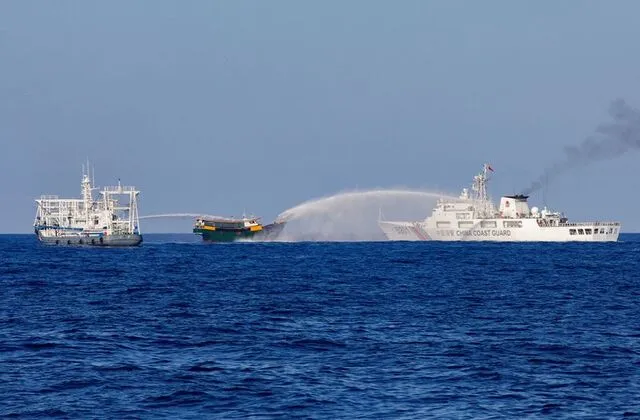
Is the Philippines Ready to Pull the Trigger with U.S. Aid?
One-stop reference
Company Intelligence
Every listed company in Latin America — financials, ownership and structure for 1,450+ companies across 26 exchanges, in one place.
Browse the directory →
RT
Ask Rio Times
17 years of Latin America reporting, on demand.
Open the full Ask Rio Times →

This stance was reiterated by top officials, including President Joe Biden and Admiral Samuel Paparo, head of the US Indo-Pacific Command.

Paparo even suggested that American ships could escort Philippine vessels, highlighting the treaty’s provision for collective defense.

However, Philippine military chief Romeo Brawner emphasizes a preference for independence unless absolutely necessary. This stance reflects a desire to manage their maritime disputes autonomously.

This stance is part of a broader strategy to maintain sovereignty without escalating conflicts to full-scale military engagements.

Navigating Tensions in the South China Sea

The tensions in the South China Sea are not just isolated incidents but part of China’s broader strategy to assert control over this strategically vital region.

China often employs “grey zone” tactics—actions that are coercive but below the threshold of war. These tactics aim to test the Philippines’ resolve and the durability of its alliance with the United States.

Despite these provocations, calls to activate the MDT are met with caution. The threshold for such a significant military response requires an armed attack—a criterion not yet met, according to geopolitical analysts.

Instead, the focus remains on enhancing military capabilities and diplomatic channels. Philippine officials continue to advocate for peaceful dialogue, urging China to return to constructive discussions.

The importance of the South China Sea extends beyond these immediate confrontations. It is a crucial artery for global trade, rich in resources and strategic military significance.

How the Philippines navigates its relationship with China and the United States in this volatile maritime environment will be crucial. It will impact both regional stability and the assertion of its national sovereignty.

As the situation evolves, the international community watches closely. They know these tensions will significantly impact global maritime norms and the Asia-Pacific power balance.

The Philippines’ balanced approach, seeking to strengthen alliances while asserting independence, reflects a nuanced strategy. This strategy is crucial in a region where power dynamics are continually in flux.

This article was produced by The Rio Times’ automated newsroom system. How we use AI · Report an error

Read More from The Rio Times

The Rio Times · Power Map
See who really holds power in Latin America
Click to open the Power Map

Rotate for Best Experience

This report is optimized for landscape viewing. Rotate your phone for the full experience.