Vale Shares Fall 6.8% to a 12-Month Low | Iron Ore Wrap, Nov 16
Key Facts
- Vale: Vale’s New York shares fell 6.77% to US$10.46, their lowest close in 12 months.
- Peak: They are 41.3% below the April high of US$17.82 and down 28.3% over 60 sessions.
- Sector: Rio Tinto’s US shares fell 3.50% to US$80.05, a third straight down day.
- Cause: Traders expect the Federal Reserve to raise rates; the 10-year Treasury yield is 5.14%.
- China: China’s industrial output rose 4.8% in October (consensus 5.3%); fixed-asset investment fell 8.1% year to date.
- Prediction markets: Polymarket, a real-money prediction market, prices a 0.25-point Federal Reserve rate rise in December at 91.5% (US$35.7 million traded, 9:10 p.m. ET, 16 November).
Today’s Focus
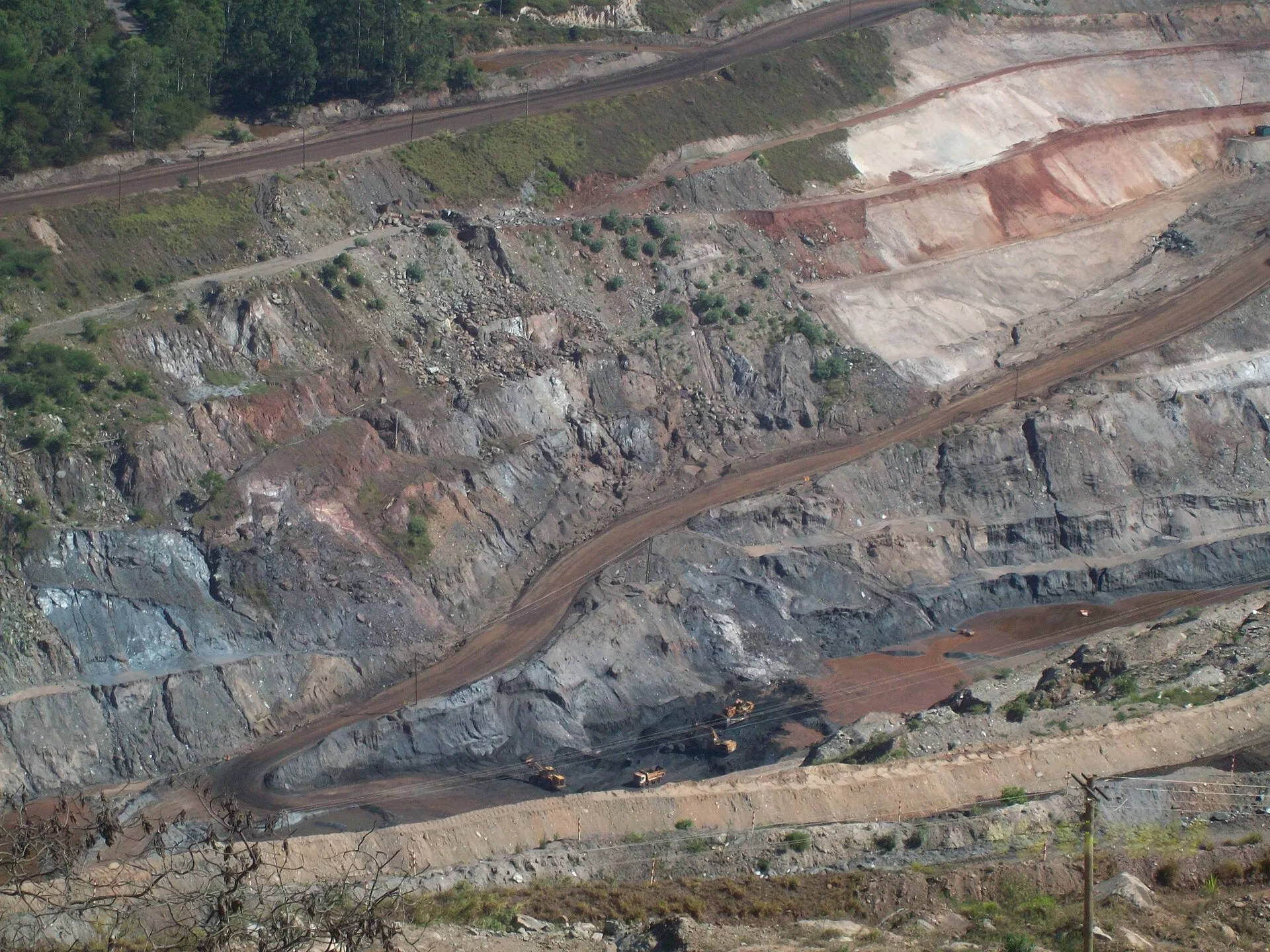
Vale, Brazil’s mining giant and one of the world’s largest iron ore producers, saw its New York shares drop to the lowest close in a year. Because the iron ore price itself is not on our spot feed, these shares are our best stand-in for it.
The main suspect is a global retreat from risk. Bond yields have climbed, the dollar has strengthened and US stocks fell, which hurts cyclical commodity producers first.
Weak Chinese steel demand is the older wound. China’s property slump has long reduced the need for the steel that iron ore feeds, so any wider shock lands on a market with few buyers.
What matters today. A 12-month low for Vale’s shares shows investors are pricing weaker Chinese steel demand, and that squeezes Brazil’s exports, dividends and the real.
01 The session in one read
Vale’s New York shares fell hardest among our miners on Monday, November 16, 2026, and closed at the lowest level in 12 months. It was the third straight down session, which turns a bad day into a slide.
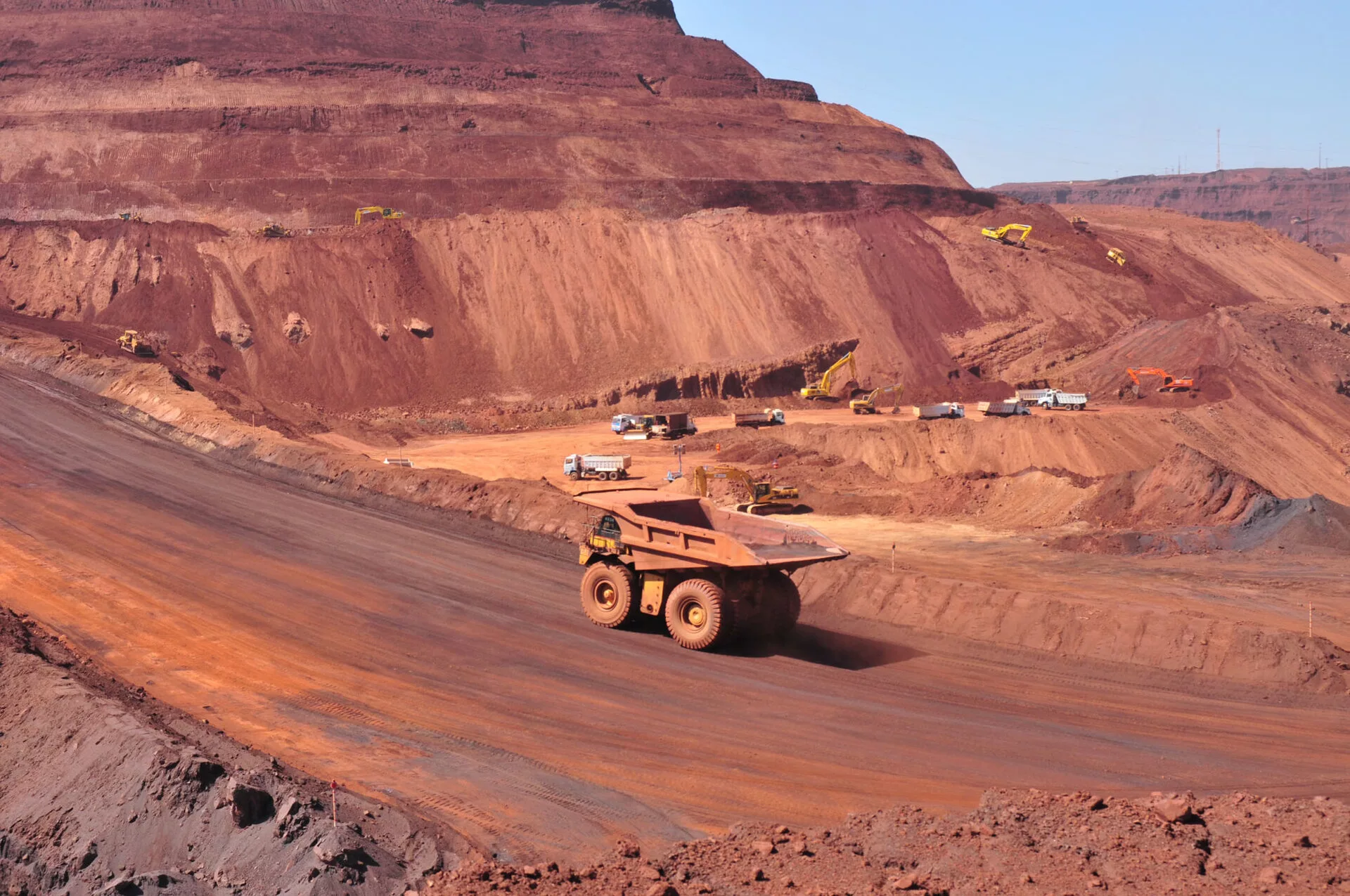
Why it matters: iron ore is Brazil’s biggest mining export, and Vale is its largest producer, so these shares act as a daily vote on the country’s commodity income.
The best-supported reading is that a US rate-hike scare hit a market already weakened by Chinese property woes, with the macro shock deciding the size of the day’s fall. Monday’s weak Chinese output and investment data support the China link; the variable to watch is the US 10-year yield.
02 The board
Rio Tinto, Vale’s Anglo-Australian rival, fell in step and also closed at its lowest in at least six months. When two giants on different continents drop together, the cause is the market rather than one company.
CSN Mineração, the iron-ore mining arm of Brazilian steelmaker CSN, was the exception and rose. After falling sharply over the previous five sessions, that looks like bargain hunting rather than good news.
| Asset | Level | Change |
|---|---|---|
| Iron ore (Vale) | US$10.46 | -6.77% |
| CSN Mineração | R$4.73 | +1.94% |
| Rio Tinto | US$80.05 | -3.50% |
Source: RT close, 2026-11-16. Where a commodity has no spot feed, an exchange-traded tracker or leading producer is shown as a labelled proxy.
Live Market IntelligenceThe live market board
Rio Times · Live Market Intelligence
Latin America — Cross-Market Board
| Instrument | Last | Change | YoY | Prev. | High | Low | Volume |
|---|---|---|---|---|---|---|---|
| IBOV | 169,295.41 | -1.83% | +7.84% | 172,457.76 | — | — | — |
| IPSA | 10,525.26 | -1.27% | — | 10,660.26 | 10,698 | 10,499 | — |
| IPC MEX | 71,204.98 | -0.84% | +13.87% | 71,811.20 | 71,981 | 71,044 | 149,701,210 |
| MERVAL | 2,848,945 | — | — | 2,848,945 | — | — | — |
| COLCAP | 2,452.46 | -0.02% | — | — | — | — | — |
| USD/BRL | 5.78 | +2.05% | +9.22% | 5.67 | 5.79 | 5.78 | — |
| EUR/BRL | 6.36 | +1.74% | +3.67% | 6.25 | 6.37 | 6.35 | — |
| USD/MXN | 18.51 | +0.01% | +1.12% | 18.51 | 18.52 | 18.50 | — |
| USD/CLP | 997.53 | +0.27% | +8.63% | 994.88 | 997.53 | 997.53 | — |
| USD/COP | 3,319 | +0.51% | -10.32% | 3,303 | 3,319 | 3,319 | — |
| USD/PEN | 3.41 | +0.10% | +3.18% | 3.40 | 3.41 | 3.40 | — |
| USD/ARS | 1,550 | +0.37% | +10.11% | 1,544 | 1,550 | 1,550 | — |
| USD/UYU | 40.61 | +0.05% | +3.47% | 40.59 | 40.61 | 40.61 | — |
| USD/PYG | 6,186 | -0.16% | -10.74% | 6,196 | 6,186 | 6,186 | — |
| USD/BOB | 11.59 | +0.00% | +72.10% | 11.59 | 11.59 | 11.59 | — |
| USD/DOP | 60.36 | -0.38% | -5.22% | 60.59 | 60.36 | 60.32 | — |
| USD/CRC | 442.56 | -0.04% | -9.48% | 442.74 | 442.56 | 442.56 | — |
| USD/GTQ | 7.64 | -0.05% | +2.01% | 7.64 | 7.64 | 7.64 | — |
03 Why it moved
Cause one, the heaviest: fear of higher interest rates. Gold slid as investors bet the US Federal Reserve will raise rates.
The numbers fit. The dollar index rose 1.94% over five sessions to 103.63, the VIX fear gauge jumped 18.70% in a day to 22.91, and the gold fund GLD lost 7.01% over five sessions. Confidence: medium to high.
Cause two: China’s steel appetite. Chinese mills buy most seaborne iron ore, and years of property weakness have kept their orders cautious. China reported weaker October data on Monday: industrial output up 4.8% against a consensus of 5.3%, retail sales up 0.4% against 0.8%, and fixed-asset investment down 8.1% in the year to October against −7.0% expected (RT economic calendar). China’s unemployment rate eased to 5.1% from 5.2%, and retail sales for January to October rose 1.04% from a year earlier (previous 1.13%). Confidence: medium.
Cause three: a falling oil fund, USO, which dropped 3.81% on the day, points to worries about global growth. That is a weaker signal, and confidence is low.
The signals do not all agree. Gold normally rises in a panic, yet it fell, which suggests investors were selling whatever they could, not hiding in safe assets.
04 The trend behind it
This is a continuation, not a new phase. Vale’s shares are down 12.61% over five sessions and 20.21% over 20, and the April peak now looks a long way off.
Rio Tinto tells the same story: 24.0% lower over 60 sessions, though still 16.4% above its 12-month low of US$68.78 from November 2025.
Our own archive, back to 2007, offers a sober base rate. In 29 earlier cases where Vale fell 20.2% in 20 sessions, it was higher 20 sessions later in 15, a 52% share, but the worst case was a further 43.4% drop. For Rio Tinto, in 60 comparable cases it was higher in 27, or 45%, with a median change of -0.3%. History is not a forecast.
05 What it means for Latin America
Brazil feels this first. Weaker iron ore means fewer export dollars, smaller dividends from Vale, which many Brazilian pension and retail investors own, and less support for the real.
Chile and Peru, whose economies lean on copper rather than iron ore, are exposed only if China’s slowdown spreads to other metals. Mexico is largely insulated, although higher US yields raise borrowing costs across the region.
06 The names to watch
Vale is the main gauge: the November 16 low is the level to defend, and with nothing beneath it on the 12-month chart, a close below would signal a new leg down. Resistance is far away, at the April high.
CSN Mineração’s support is its May low of R$4.08, and resistance is its September high of R$6.99, so today’s close is 32.3% below that peak. Rio Tinto’s floor is US$68.78.
07 What would end it
The slide stops when US yields stop rising. A calmer bond market, a softer dollar and a lower VIX would let miners recover, and the next US inflation and jobs reports and the Federal Reserve’s coming meeting are the events that decide that.
The other trigger is Chinese stimulus aimed at housing or steel output. Without one of the two, expect more choppy trading near these lows.
08 What to watch
- US 10-year yield: The 5.14% level is the pressure gauge; further rises would hit miners again.
- Vale’s 12-month low: A close below the November 16 level would confirm a new leg down.
- China steel demand: Property-related stimulus or output data would shift the iron ore outlook.
- CSN Mineração: Watch whether its bounce holds above the May low of R$4.08.
What Prediction Markets Say
Polymarket, where users bet real money, lists a market on the Federal Reserve’s December decision, with US$35.7 million traded as of 9:10 p.m. ET, 16 November 2026. It prices a 0.25-point rise at 91.5%, a 0.5-point or larger rise at 4.7%, no change at 3.2%, a 0.25-point cut at 0.4% and a 0.5-point or larger cut at 0.2%.
These prices are bets, not polls. They show traders expect the Fed, the US central bank, to raise interest rates again in December, which is the main pressure on miners such as Vale.
Why we show this: prediction markets turn real-money bets into a live probability that moves within minutes of the news, which is why investors, campaigns and newsrooms in the United States now follow them closely. We show them next to polls and official results, never instead of them.
Frequently Asked Questions
Why does Vale stand in for iron ore?
Iron ore is Vale’s main product, so its New York shares usually track the price. They are a proxy, not the spot price.
Why did iron ore stocks fall on Monday, November 16, 2026?
The best-supported reason is fear of US rate rises, which lifted the dollar and bond yields, on top of weak Chinese steel demand.
Is Vale’s slide likely to continue?
Our history since 2007 shows Vale rose 20 sessions later in 52% of comparable cases, so the outcome is genuinely uncertain.
How does this affect Brazil?
Lower iron ore cuts export income and Vale’s dividends, and it can weigh on the real.
Market data: The Rio Times
This article was produced by The Rio Times’ automated AI newsroom. Editorial responsibility: Matthias Camenzind, Publisher and Editor-in-Chief. The Rio Times also runs Ask Rio Times, which answers from 100,000+ of our own articles, the daily Latin America Power Map, and prediction-market odds on elections and markets.. How we use AI · Report an error
LatAm Markets: Live Signals → — real-time movers, turnover leaders and FX across Latin America.