GUYANA · NEIGHBOURS
Key Facts
- —The country Guyana is South America’s only English-speaking country, with about 836,000 people in 2025 and a fast-growing offshore oil industry.
- —The neighbours Guyana neighbours Venezuela to the west, Brazil to the south and Suriname to the east. French Guiana, part of France, lies beyond Suriname.
- —The big dispute Venezuela claims Essequibo, more than two-thirds of Guyana’s land. The World Court heard the case in May 2026 and has not yet ruled.
- —The smaller dispute Suriname claims the New River Triangle, which it calls Tigri, in Guyana’s far south-east. Guyana says a 1936 boundary commission settled it.
- —The links A bridge over the Takutu River leads to Brazil, a ferry crosses the Corentyne to Suriname, and direct flights to French Guiana are planned.
- —The regional role Georgetown hosts the headquarters of CARICOM, the Caribbean Community, and Guyana leads the bloc’s drive to grow more of its own food.
- —Still open When the World Court will rule, whether Venezuela will comply, and who will pay for a bridge over the Corentyne River.
Guyana neighbours Venezuela, Brazil and Suriname, and each border now matters to the US oil companies running its offshore boom. Venezuela claims most of its land, Suriname disputes a remote forest corner, and Brazil offers a road into the wider continent.
This guide explains each relationship, from a pending World Court ruling to new air links with French Guiana.

Where Guyana Sits in the Guianas
The Guianas is the traditional name for South America’s north-eastern shoulder, where Britain, the Netherlands and France held colonies. Guyana, the former colony of British Guiana, became independent in 1966.
Its name comes from the word Amerindian peoples used for the land, Guiana, meaning “land of many waters”. The country is still the only English-speaking nation in South America.
On land, Guyana neighbours three countries. Venezuela lies to the west, Brazil wraps around the south and south-west, and Suriname sits across the Corentyne River to the east.
Guyana covers about 215,000 square kilometres, close to the size of Idaho. It had only about 836,000 people in 2025, according to World Bank data.
Oil has transformed the economy, which grew 33.3 per cent in the first half of 2026. Crude oil output averaged about 902,000 barrels a day in that period, the government’s mid-year report says.
Language sets Guyana apart on a continent dominated by Spanish and Portuguese. In 2023 the government announced that Spanish would become a compulsory subject in primary schools.
Announcing it, President Irfaan Ali said Guyana is “part of this continent that speaks Spanish”. Ali began a second five-year term in September 2025.
More background sits on the Guyanas hub page and in this explainer on Guyana’s oil boom and politics.
Venezuela and the Essequibo Claim
Venezuela, the oil-rich country to the west, claims Essequibo, the territory west of the Essequibo River. Guyana’s lawyers put that at more than two-thirds of its land.
Britain and Venezuela agreed in 1897 to submit the border to binding arbitration. The tribunal, which included the top judges of the United States and Britain, issued its award on 3 October 1899.
Venezuela accepted the line for more than six decades and took part in marking it on the ground between 1900 and 1905. It challenged the award in 1962, as British Guiana neared independence.
Britain negotiated the Geneva Agreement with Venezuela in 1966 to seek a settlement. Decades of talks failed, and in 2018 the UN secretary-general sent the dispute to the International Court of Justice (ICJ).
Guyana filed its case at the ICJ, the UN’s top court in The Hague, on 29 March 2018. It asks the judges to confirm that the 1899 award and its boundary are valid and binding.
Venezuela argues that the award was the product of fraud and collusion in the colonial era. It says the 1966 agreement replaced the award and requires a negotiated settlement, not a court ruling.
The court ruled in December 2020 that it had jurisdiction, and rejected a further Venezuelan objection in April 2023. Shortly before the May 2026 hearings, Caracas said it rejects the court’s jurisdiction and will not be bound by its ruling.
A Referendum, a New State and Court Orders
On 1 December 2023 the court ordered Venezuela not to change the situation in the disputed territory. Two days later Venezuela held a referendum on its claim, then declared a new state it calls Guayana Esequiba.
In May 2025 the court went further, ordering Venezuela not to hold or prepare elections in the territory. Guyana told the court that Venezuela held them anyway later that month.
The two countries’ presidents met in Argyle, St Vincent and the Grenadines, on 14 December 2023. They agreed not to threaten or use force against each other, with a Brazilian envoy among the mediators.
Hearings Over, Ruling Pending
The court heard both sides on the merits from 4 to 11 May 2026. Guyana’s government expects a judgment between November 2026 and January 2027, but no date has been set.
Venezuela’s leadership changed in January 2026, when a US military operation captured President Nicolás Maduro. As of October 2026, Delcy Rodríguez leads Venezuela as acting president.
At the UN General Assembly in September 2026, Rodríguez urged Guyana to return to talks under the Geneva Agreement. Less than a day later, Ali urged Venezuela to abide by the ruling, “as Guyana will do”.
Caracas called the Geneva Agreement the only path in a statement on 3 October 2026, 127 years after the award. Ali, for his part, said in March 2026 that Maduro’s fall brought “greater stability, less rhetoric”.
Venezuela’s wider web of borders is covered in the Venezuela neighbours explainer.
Suriname, a Close Partner With an Old Quarrel
Guyana neighbours Suriname across the Corentyne River to the east. Suriname, home to about 640,000 people in 2025, became independent in 1975 and, like Guyana, belongs to CARICOM.
The quarrel is over the New River Triangle, a forested area in Guyana’s far south-east. Demerara Waves, a Guyanese news site, puts it at about 15,600 square kilometres.
Suriname calls it Tigri, and its foreign minister said in June 2026 that the issue dates back to independence. Guyana says the matter was settled in 1936.
That year a British, Dutch and Brazilian commission fixed the point where the three territories meet: the source of the Kutari River.
In late November 2024, Suriname’s foreign minister summoned Guyana’s ambassador to protest plans for an airstrip and a school in the area. Guyana says it is serving communities that already live there.
The same minister said a joint border commission, set up in 2012, had met more than six times. Guyana’s foreign ministry calls the triangle sovereign Guyanese territory.
The sea boundary, by contrast, is settled. In 2007 a tribunal under the UN Convention on the Law of the Sea drew the line.
The same tribunal found that Surinamese naval action against an oil rig in June 2000 amounted to a threat of force. It awarded Guyana no compensation.
Everyday traffic depends on the MV Canawaima, a ferry across the Corentyne. Suriname’s maritime authority halted it over safety concerns in August 2026.
It sailed again on 28 August, after both governments worked on the fixes.
A Corentyne River bridge is planned as a joint project, to be built and financed by a private partner. When Suriname’s public works minister said his country would pay for it alone, Ali said in July 2026 that it remains joint.
Guyana also lodged a formal protest in March 2026 against new Surinamese charges on Guyanese operators using the Corentyne River.
Relations at the top are warm. Suriname’s President Jennifer Geerlings-Simons, elected in 2025, met Ali in Nieuw Nickerie in September 2025 to push trade, energy and the bridge.
In September 2026, at the UN, she endorsed Guyana’s candidate to become the next UN secretary-general.
Suriname’s own oil era is a few years behind. TotalEnergies, the French energy group, approved the US$10.5 billion GranMorgu offshore project in October 2024, with first oil expected in 2028.
The gap in scale is large. World Bank data put Guyana’s 2025 economy at about US$27.1 billion, roughly six times Suriname’s US$4.5 billion.
Brazil, the Giant to the South
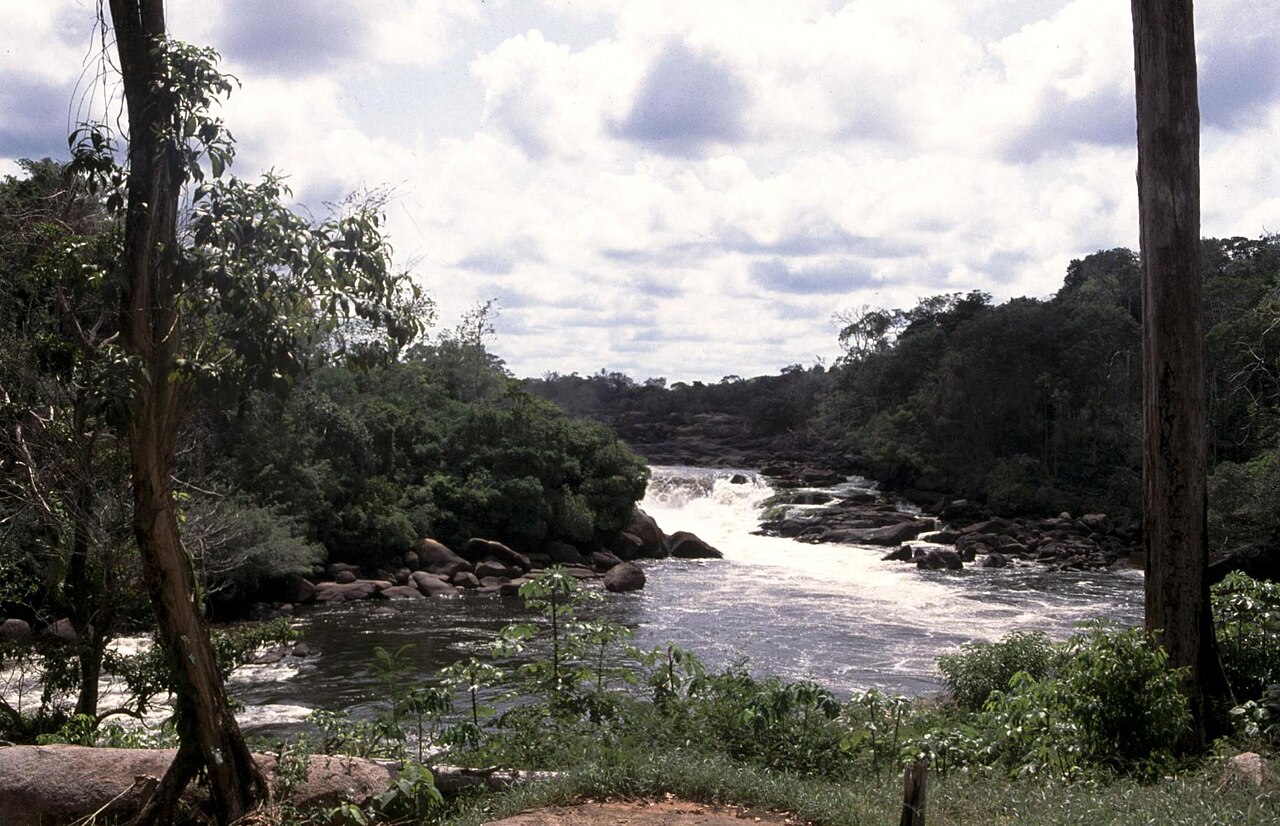
Guyana neighbours Brazil, Latin America’s largest country, along a southern frontier of savannah and forest. The main crossing is a bridge over the Takutu River between the Guyanese town of Lethem and Bonfim in Brazil.
Beyond Bonfim lies Boa Vista, capital of the Brazilian state of Roraima. In March 2025 a Guyanese trade mission met Roraima’s governor there, who said his state was ready to expand trade.
The weak link is inside Guyana, where the road from Linden, south of Georgetown, to Lethem is being rebuilt in stages. The government says it could not afford the project for more than 30 years.
A Brazilian builder, Construtora Queiroz Galvão, signed a US$190 million contract in 2022 for the first 121 kilometres, to Mabura Hill. Guyana’s public works ministry put that section at 79 per cent complete in September 2026.
Negotiations for the next 30 kilometres, towards Kurupukari, were completed by September 2026. A bridge of 700 to 800 metres over the Essequibo River is planned there.
Officials said in July 2026 that 48 bridges were already finished along the Linden–Lethem corridor.
Trade has jumped too. Brazil’s ambassador says two-way trade rose from about US$58 million in 2020 to about US$1 billion by 2026.
Guyana’s foreign secretary says oil accounts for much of that rise, but the balance still favours Brazil. In 2024 Brazil was Guyana’s fifth-largest source of imports and seventh-largest export market.
Brazil’s president visited Georgetown in February 2024, and Brazil’s envoy helped broker the Argyle talks with Venezuela. Guyana also lists a planned deep-water port and an upgraded Lethem airport as links between the two.
French Guiana, the Neighbour Beyond Suriname
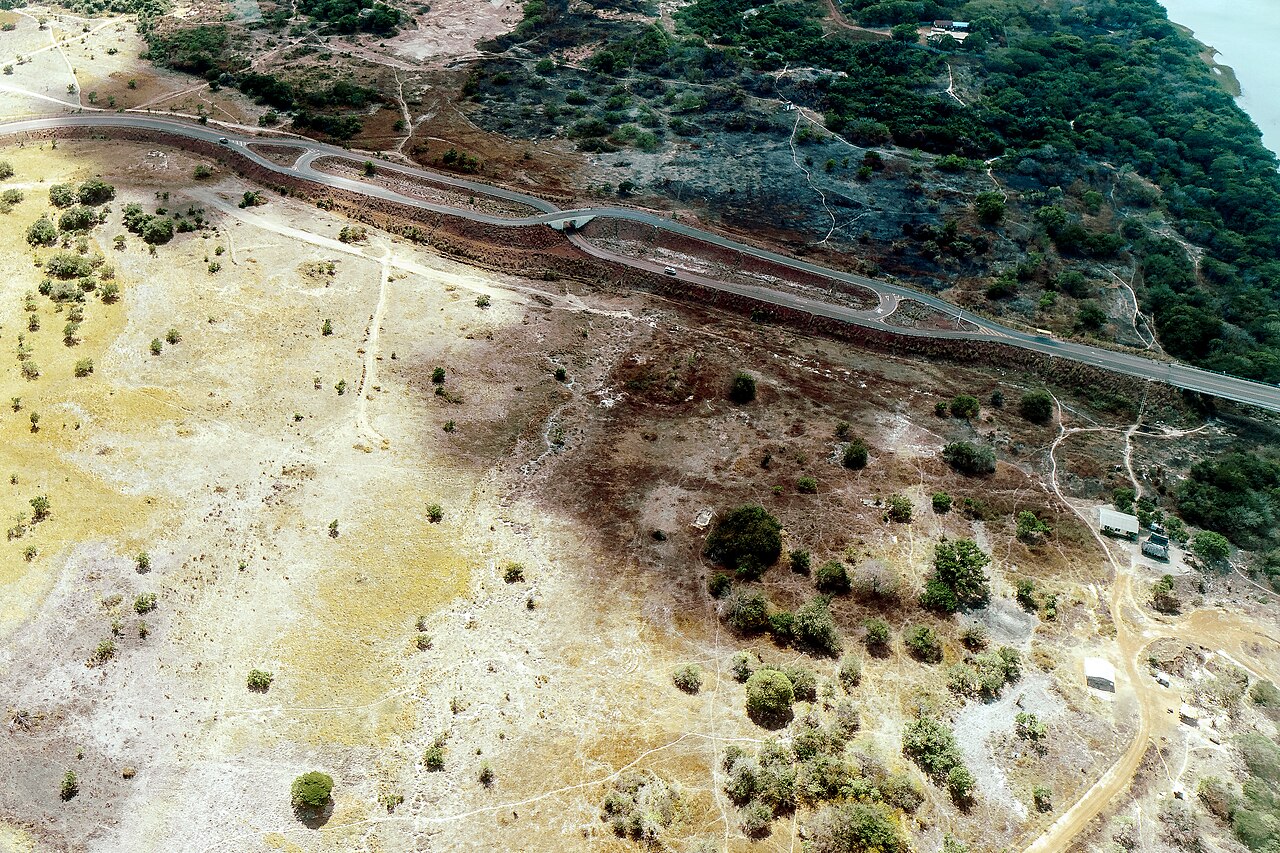
Guyana neighbours French Guiana only at one remove, with Suriname in between. The territory is part of France and one of the European Union’s outermost regions.
Travel between the two has been slow. Guyana’s aviation minister says the overland trip to Cayenne, through Suriname, can take close to a full day or longer.
Guyana and France signed a new air services agreement on 30 September 2026, replacing one from 1976. Trans Guyana Airways, a Guyanese carrier, already has Cabinet approval to fly to Cayenne.
The airline is preparing at least two non-stop flights a week to Cayenne, pending final regulatory steps. It has not announced a start date or fares.
French Guiana is also a CARICOM associate member, a move that pulls France closer to the Caribbean bloc.
Georgetown, Home of CARICOM
CARICOM, the Caribbean Community, groups 15 member states and eight associate members, most of them small island nations. Its secretariat, the bloc’s permanent staff, is headquartered at Turkeyen in Georgetown.
Guyana helped found the bloc, signing the Treaty of Chaguaramas with Barbados, Jamaica and Trinidad and Tobago on 4 July 1973. Suriname joined in 1995.
Guyana champions CARICOM’s push to cut the region’s food import bill by 25 per cent by 2030. Its agriculture minister chairs the ministerial task force that tracks progress.
Guyana’s farm exports to other members rose from US$89.8 million in 2023 to US$120.1 million in 2024, the task force reports.
Guyana also sat on the UN Security Council in 2024 and 2025. It is now campaigning, with CARICOM’s backing, for its UN ambassador, Carolyn Rodrigues-Birkett, to become UN secretary-general.
Trade, Migration and the Oil Factor
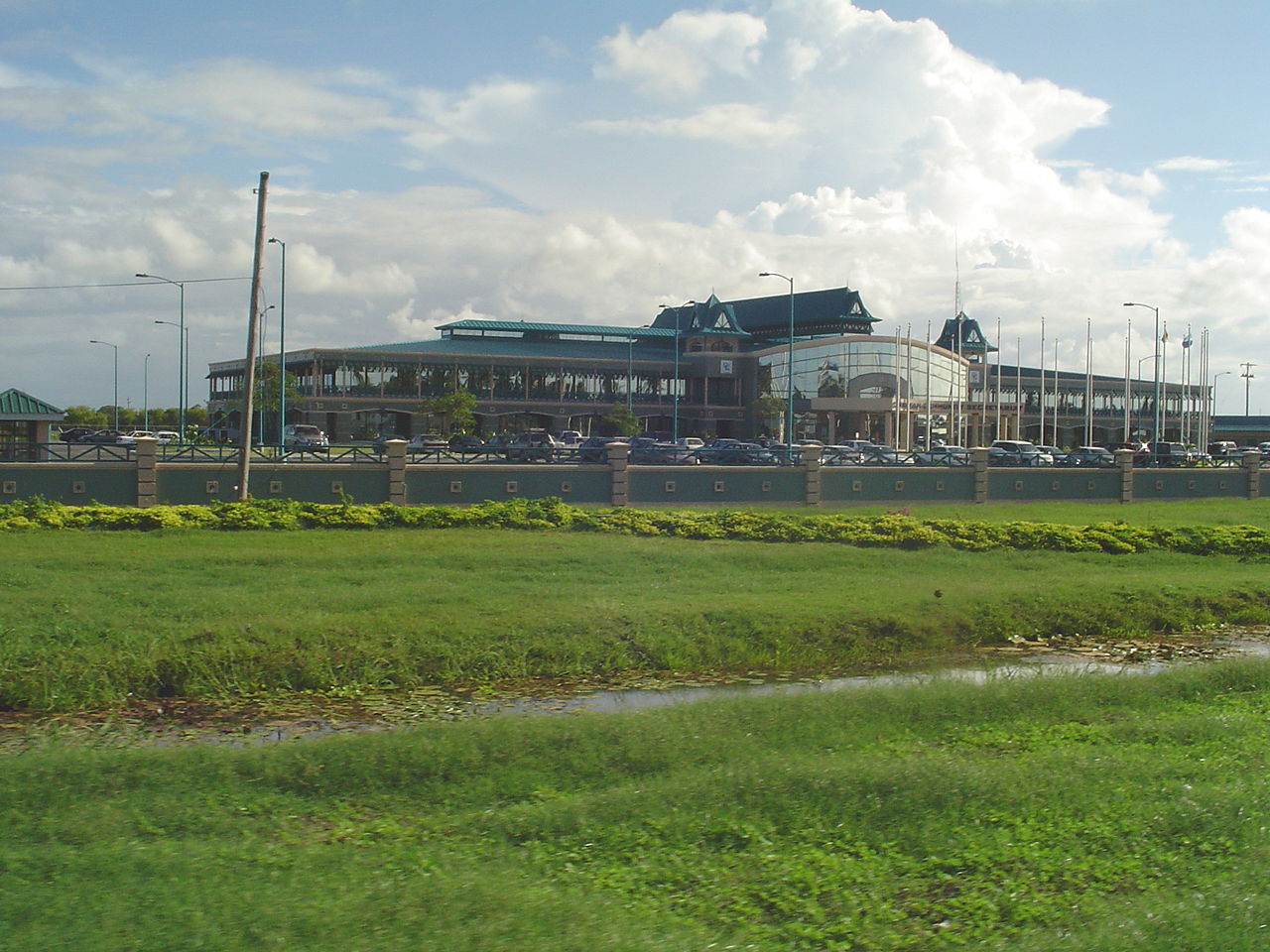
Oil changed how the region sees Guyana. ExxonMobil, the US oil major, announced the first big find, Liza, in May 2015, and production began in 2019.
ExxonMobil operates the Stabroek Block, the main offshore oil area, with a 45 per cent stake as of 2025. Chevron, another US major, holds 30 per cent and China’s CNOOC holds 25 per cent.
Crude exports earned US$15.05 billion in the first half of 2026, government figures show. The government says oil income finances its road and bridge drive, including the links to Brazil and Suriname.
Venezuela’s crisis also pushed people east. Thousands of Venezuelans have crossed into Guyana in recent years, Guyana’s government said in 2025.
Guyana says migrants arriving through official ports are registered. In October 2025 it fast-tracked an electronic ID card that separates citizens from non-citizens, partly to tighten border control.
When US forces captured Maduro in January 2026, Guyana’s prime minister put the security forces on high alert to prevent any spillover. Guyana and Suriname, meanwhile, have agreed to explore joint oil and gas ventures and an electricity link.
What It Means for US Readers
For US investors, the neighbours are part of the oil risk. Two US companies, ExxonMobil and Chevron, hold three-quarters of the Stabroek Block.
Because Guyana neighbours Venezuela, every shift in Caracas reaches Guyana’s western frontier. A ruling in Guyana’s favour would strengthen its legal position, but Venezuela says it does not recognise the court.
Washington has backed the 1899 line in public. A senior State Department official wrote in 2022 that it “should be respected” until a competent legal body decides otherwise.
Security ties are close as well. In 2025 Guyana’s foreign secretary described security cooperation with the US as stronger than ever.
For travellers, the Lethem crossing opens an overland route into Brazil, and planned flights would link Georgetown with Cayenne. A guide to moving to Guyana and a profile of President Irfaan Ali add context.
What Is Not Known
The ICJ has not said when it will rule. Nor is it clear how Venezuela’s acting government would respond in practice to a judgment against it.
There is no public timetable for resolving the Tigri question, which Suriname’s government treats as a national cause.
Financing for the Corentyne bridge is unresolved. Guyana has not given a completion date for the road to Lethem or the Kurupukari bridge.
Trans Guyana Airways has not announced when its Cayenne service will start or what it will cost.
Frequently Asked Questions
Which countries border Guyana?
Guyana neighbours Venezuela to the west, Brazil to the south and south-west, and Suriname to the east. French Guiana, which is part of France, lies beyond Suriname.
What is the Essequibo dispute about?
Venezuela claims Essequibo, the territory west of the Essequibo River and more than two-thirds of Guyana. Guyana says an 1899 arbitral award settled the border and asked the ICJ in 2018 to confirm it.
When will the World Court rule on Essequibo?
No date has been set. The hearings ended on 11 May 2026, and Guyana’s government expects a judgment between November 2026 and January 2027.
Does Suriname claim part of Guyana?
Yes. Suriname claims the New River Triangle, which it calls Tigri, in Guyana’s far south-east. Guyana says a 1936 boundary commission placed the area on its side.
Can you drive from Guyana to Brazil?
Yes. Guyana neighbours Brazil in the south, and a bridge over the Takutu River links Lethem with Bonfim. The road from Linden to Lethem is still being rebuilt in stages.
Is CARICOM based in Guyana?
Yes. The CARICOM Secretariat, which runs the Caribbean Community’s day-to-day work, has its headquarters at Turkeyen in Georgetown.
How do you travel from Guyana to French Guiana?
As of October 2026, the trip runs overland through Suriname and can take close to a full day. Trans Guyana Airways plans at least two weekly non-stop flights from Georgetown to Cayenne.
Sources: International Court of Justice, Arbitral Award of 3 October 1899 (Guyana v. Venezuela), case page, hearings concluded 11 May 2026; Guyana Ministry of Foreign Affairs press release on the merits hearings, 7 May 2026; Government of Guyana press statement on the ICJ judgment timeline, 5 June 2026; Department of Public Information, President Ali at the 81st UN General Assembly, 24 September 2026; Office of the President of Guyana, joint statement of Presidents Ali and Geerlings-Simons, 13 September 2025; Award of the Arbitral Tribunal, Guyana v. Suriname (UN Reports of International Arbitral Awards), award of 17 September 2007; Guyana Ministry of Foreign Affairs letter on the New River Triangle (Jamaica Observer), 18 March 2026; Suriname Herald, 30 June 2026; Department of Public Information, Guyana-Brazil trade, 30 May 2026; Department of Public Information, Guyana-France air services agreement, 3 October 2026; CARICOM Secretariat, Who We Are, accessed 5 October 2026; Department of Public Information, 2026 Mid-Year Report oil figures, 15 September 2026; World Bank, World Development Indicators, 2025 data; TotalEnergies, GranMorgu project, accessed 5 October 2026; Guyana Chronicle, Linden-Mabura road progress, 2 September 2026.
This article was produced by The Rio Times’ automated newsroom system. How we use AI · Report an error · Editorial responsibility: Matthias Camenzind, Editor-in-Chief
Rotate for Best Experience
This report is optimized for landscape viewing. Rotate your phone for the full experience.
You've reached your free article limit
Subscribe to The Rio Times for unlimited access to our news, expat and nomad guides and market intelligence on Latin America and Africa.