Key Facts
- Soybeans edge higher with SOYB closing at 26.28 dollars, up 0.73 percent day-on-day as buyers tested the market ahead of the next China demand signals
- Corn holds broadly steady with CORN settling at 18.30 dollars, down just 0.05 percent day-on-day, suggesting a market still torn between ample supply expectations and cautious import demand
- Wheat leads the downside as WEAT finished at 25.22 dollars, slipping 1.60 percent day-on-day on comfortable global stock estimates and a quiet import tape from key Asian buyers
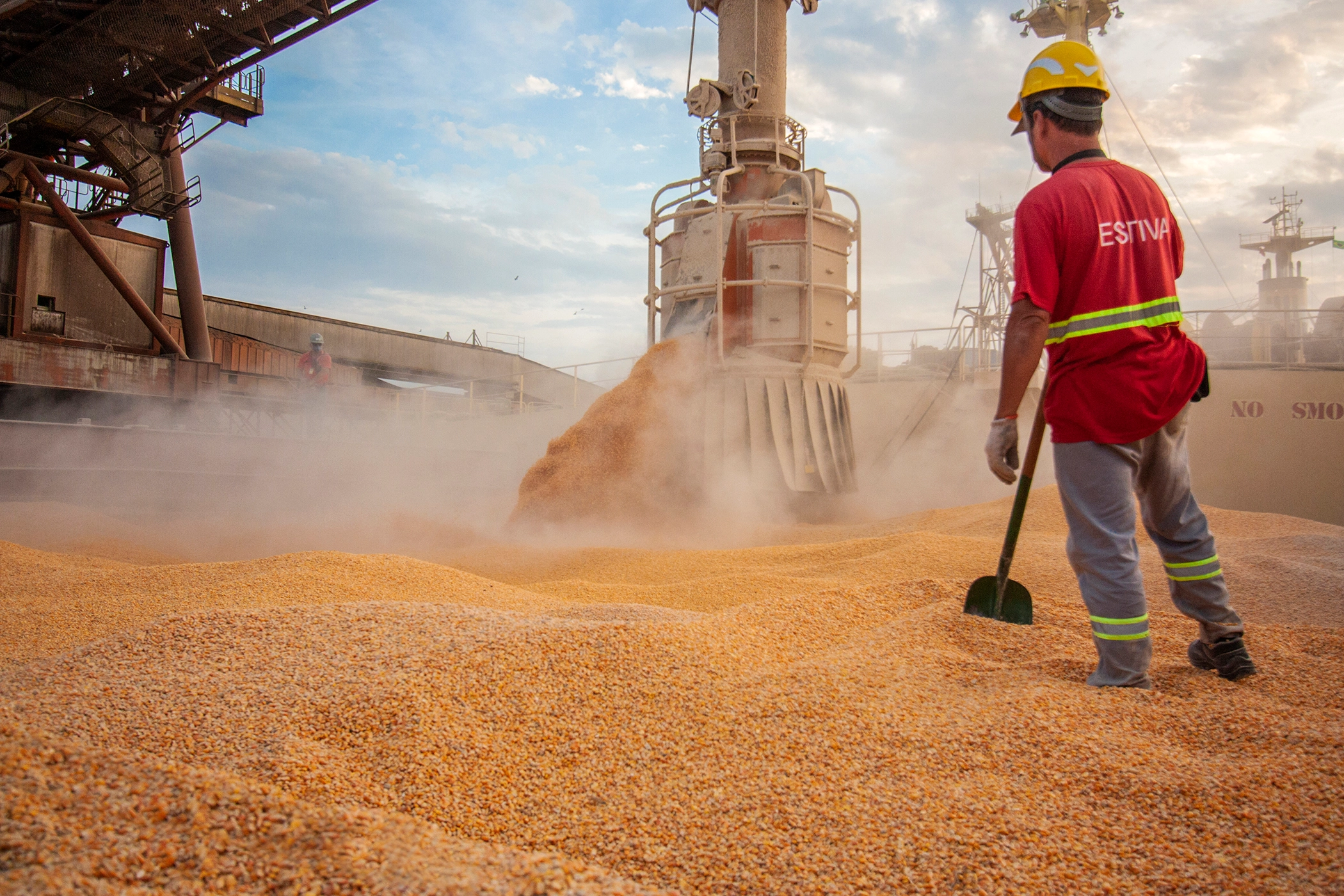
- Brazil and Argentina remain the export engine because their vast farm belts and established export infrastructure keep them central to global soy, corn and wheat flows despite recurring weather and logistics risks
- China’s appetite anchors the soy complex since its role as the world’s largest soybean importer makes every adjustment in its feed and oilseed demand a pivotal driver of futures linked to SOYB
- Currency swings colour the Latin American read as moves in the Brazilian real and Argentine peso against the dollar can quickly reshape local farm revenues and global competitiveness even when grain trackers like CORN and WEAT are quiet
Today’s Focus
Soybeans are nudging higher, corn is effectively flat and wheat is under modest pressure, giving grain investors a split board to start the week.
The common thread is Latin America: Brazil and Argentina remain the world’s export engine for soy, corn and wheat, so their weather, politics and ports still frame global prices.
China’s still-strong but more selective demand, the march of the Northern Hemisphere harvest and choppy currency moves together explain why soy is firming while wheat softens.
For a hurried reader, the story is that soybeans are finding support while corn treads water and wheat eases, with Brazil and Argentina’s export power and China’s buying pattern the key to what happens next.
What matters today. What matters now is whether China’s next buying wave and Latin American currency swings reinforce the current pattern of firm soybeans and softer wheat or flip the board in the weeks ahead.
01 The session in one read
The latest settled session left soybeans slightly higher, corn almost unchanged and wheat noticeably softer, a pattern that hints at divergent expectations across the main food and feed markets. For foreign readers, this is the compass for how the world’s grain trade is pricing the balance between demand from Asia, supply from the Americas and the currency backdrop tying it all together.
The grain tape is sending a nuanced signal: soybeans are attracting cautious support, corn is marking time and wheat is absorbing selling on comfortable supply narratives, all with Brazil and Argentina still setting the export tone for foreign investors watching Latin America. The variable to watch is China’s next round of import decisions.
02 The board
On the soy side, the SOYB tracker closed at 26.28 dollars, up 0.73 percent day-on-day, a move that suggests traders are still willing to pay up modestly for protein-rich beans even as they watch China’s import rhythm and Brazil’s export pace for confirmation. Corn told a different story, with CORN settling at 18.30 dollars, down just 0.05 percent day-on-day, effectively a flat line that reflects a market comfortable enough with expected harvest supplies to avoid a rally, but not yet convinced that demand is weak enough to warrant a deeper sell-off. Wheat was the underperformer, with WEAT ending at 25.22 dollars, down 1.60 percent day-on-day, as plentiful global stock expectations and steady flows from the Black Sea and the Americas encouraged sellers, leaving importers in no rush to chase prices higher.
| Asset | Level | Change |
|---|---|---|
| Soybeans (SOYB) | 26.28 $ | +0.73% |
| Corn (CORN) | 18.30 $ | -0.05% |
| Wheat (WEAT) | 25.22 $ | -1.60% |
Source: RT close, 2026-07-24. Where a commodity has no spot feed, an exchange-traded tracker or leading producer is shown as a labelled proxy.
Live Market IntelligenceThe live market board
Rio Times · Live Market Intelligence
Latin America — Cross-Market Board
| Instrument | Last | Change | YoY | Prev. | High | Low | Volume |
|---|---|---|---|---|---|---|---|
| IBOV | 205,082.56 | +0.47% | +21.85% | 204,120.12 | 168,310 | 167,142 | — |
| IPSA | 10,746.36 | -0.31% | — | 10,780.31 | 11,210 | 10,984 | 1,513,213,483 |
| IPC MEX | 69,879.62 | -0.01% | +12.17% | 69,889.73 | 66,121 | 65,405 | 108,886,187 |
| MERVAL | 3,017,221 | — | +30.51% | 3,022,485 | 3,042,365 | 2,991,150 | — |
| COLCAP | 2,540.10 | +0.46% | — | 9.04 | 9.05 | 9.02 | 4,133 |
| BVL PERÚ | 57,021.19 | +0.13% | — | — | — | — | — |
| USD/BRL | 5.16 | +0.01% | -5.13% | 5.16 | 5.18 | 5.14 | — |
| EUR/BRL | 5.95 | +1.01% | -5.83% | 5.89 | 5.98 | 5.94 | — |
| USD/MXN | 17.06 | -0.24% | -8.58% | 17.10 | 17.08 | 17.01 | — |
| USD/CLP | 913.98 | +0.04% | -5.67% | 913.65 | 915.11 | 906.68 | — |
| USD/COP | 3,140 | +0.03% | -22.04% | 3,139 | 3,141 | 3,105 | — |
| USD/PEN | 3.36 | -0.66% | -4.82% | 3.38 | 3.38 | 3.35 | — |
| USD/ARS | 1,493 | +0.10% | +12.96% | 1,491 | 1,494 | 1,480 | — |
| USD/UYU | 40.27 | +1.24% | +1.80% | 39.77 | 40.27 | 40.23 | — |
| USD/PYG | 5,939 | +1.68% | -19.54% | 5,841 | 5,939 | 5,925 | — |
| USD/BOB | 11.64 | -0.76% | +72.04% | 11.73 | 11.72 | 11.64 | — |
| USD/DOP | 58.34 | +1.25% | -3.44% | 57.62 | 58.34 | 58.04 | — |
| USD/CRC | 445.92 | +0.89% | -9.71% | 441.97 | 448.50 | 445.92 | — |
03 What moved it
Soybeans found mild support because the market still prices in steady Chinese demand for animal feed and vegetable oil, even as buyers stretch out their tenders and consider diversifying origins between Brazil, Argentina and the United States. That combination of solid underlying use but more tactical purchasing leaves soy futures responsive to any hint of stronger Chinese buying or to disruptions in Latin American export channels.
Corn’s near-unchanged finish reflects a tug-of-war between expectations of ample upcoming harvests in the Northern Hemisphere and ongoing demand from livestock producers and biofuel makers, whose buying gives a floor but not a springboard to prices. Wheat’s drop, by contrast, is easier to read: comfortable supply stories from key exporters and a lack of urgent import demand from Asia and Africa left futures exposed, and in a market where bread and noodle makers can afford to wait, prices tend to drift lower rather than spike.
04 The Latin American read
For Brazil and Argentina, the grain board matters because soy, corn and wheat exports remain a cornerstone of their external revenues, tax intake and rural employment, reinforcing their role as the world’s export engine even when prices move only modestly. Investors looking at Latin America see these farm economies as tightly bound to global food demand, with every shift in China’s appetite, European weather or US trade policy echoing through Brazilian and Argentine port towns and currency markets.
The currency link is crucial: a softer Brazilian real or Argentine peso versus the dollar typically makes local farmers more competitive abroad, boosting the attractiveness of their exports in dollar terms, while a stronger currency can squeeze margins and temper shipment volumes. That is why foreign funds tracking SOYB, CORN and WEAT increasingly pair grain analysis with close monitoring of FX screens for USD/BRL and the peso’s moves, knowing that exchange rates can amplify or mute what the price board is already saying.
05 The names to watch
On the demand side, the key name is China, whose import agencies and private crushers decide the timing and scale of soybean, corn and wheat purchases that can quickly tighten or loosen global balances and move trackers like SOYB, CORN and WEAT. Any shift in Chinese feed rations, food price policy or stockpiling strategy tends to ripple straight through Latin American export plans.
On the supply side, Brazil and Argentina remain the names to watch, not just for their vast farm output but for the functioning of their logistics chains, from rural storage to highways, rail and port terminals that underpin their export engine status. For investors scanning Latin America, government decisions on fuel prices, freight regulation and currency policy around these sectors can be just as important as weather forecasts, because they shape how quickly and profitably grains move from inland silos to global buyers.
06 The outlook
Looking ahead, the grain board is likely to remain a three-speed affair until clearer signals emerge from China’s buying desks, the pace of harvest deliveries in the Northern Hemisphere and the policy choices of governments in Brasília and Buenos Aires. Soybeans have the clearest support as long as protein demand holds, corn may stay range-bound unless supply or demand surprises, and wheat needs an import-led catalyst to break out of its defensive tone. Investors who care about Latin America should not treat these trackers in isolation; they are as much a play on currency risk, political stability and cross-border infrastructure as they are a bet on rainfall and crop yields.
07 What to watch
- China’s import tenders: Any fresh purchasing round for soybeans, corn or wheat will tighten global balances quickly, lifting the corresponding tracker and signalling confidence in Asian demand.
- Brazilian real and Argentine peso moves: A sustained slide in either currency against the dollar makes Latin American grain exports cheaper for world buyers, potentially pressuring global prices while boosting local farm revenue.
- Northern Hemisphere harvest pace: The speed and scale of corn and wheat harvests from North America and Europe will either reinforce the current comfortable supply narrative or begin to tighten it, steering CORN and WEAT.
- Latin American logistics and policy shifts: Any disruption at Brazilian or Argentine ports, or sudden changes to fuel and freight regulation, can quickly alter the flow of exports and inject volatility into the grain board.
Frequently Asked Questions
Why did soybeans rise while wheat fell?
Soybeans drew support from steady Chinese protein demand, whereas wheat faced selling pressure because comfortable global stocks and quiet import tenders gave buyers the luxury of waiting.
What role do Brazil and Argentina play in the grain trackers?
They are the world’s export engine, meaning their harvest volumes, port operations and currency swings directly shape global supply, competitiveness and the prices shown on SOYB, CORN and WEAT.
How does China’s demand influence Latin American grain markets?
As the largest soybean importer and a big buyer of corn and wheat, China’s purchasing timing and volume can tighten or loosen global balances, sending immediate ripples through Brazilian and Argentine export revenues.
Why do currency moves matter for grain investors?
A weaker real or peso makes Latin American grains cheaper in dollar terms, boosting exports and often capping rallies, while a stronger local currency can slow shipments and support global prices.
This article was produced by The Rio Times’ automated newsroom system. How we use AI · Report an error · Editorial responsibility: Matthias Camenzind, Editor-in-Chief
LatAm Markets: Live Signals → — real-time movers, turnover leaders and FX across Latin America.