Gold Fund Hits 12-Month Low on Fed Hike Bets | Gold & Silver, Nov 19
The GLD gold fund fell to a 12-month low and spot gold is about 32.5% below January's record, as Fed rate-rise bets lifted the dollar.
Key Facts
- Gold fund: The GLD gold fund fell 1.76% to US$335.18, its lowest close in 12 months.
- Silver: The SLV silver fund fell 2.60% to US$39.64, and spot gold was near US$3,722 an ounce.
- Cause: Talk of a US rate rise in December lifted the dollar, while the S&P 500 fell 2.02%.
- Peak: Spot gold is about 32.5% below its 28 January record of US$5,513.
- Prediction markets: Polymarket, a real-money prediction market, prices a 0.25-point US Federal Reserve rate rise in December at 92.5% (US$43.5 million traded, 7:39 p.m. ET, 19 November).
Today’s Focus
The GLD gold fund closed on Thursday, November 19, 2026 at US$335.18, down 1.76% and its lowest close in at least 12 months, with spot gold near US$3,722 an ounce on our feed. The SLV silver fund lost 2.60%.
The main cause is a rate-rise scare. Minutes of the US Federal Reserve’s October meeting, published on 18 November, showed officials seeing risks that inflation could persist, and traders now price a 0.25-point rise in December at 92.5%, which strengthens the dollar and makes bullion, which pays no interest, less appealing.
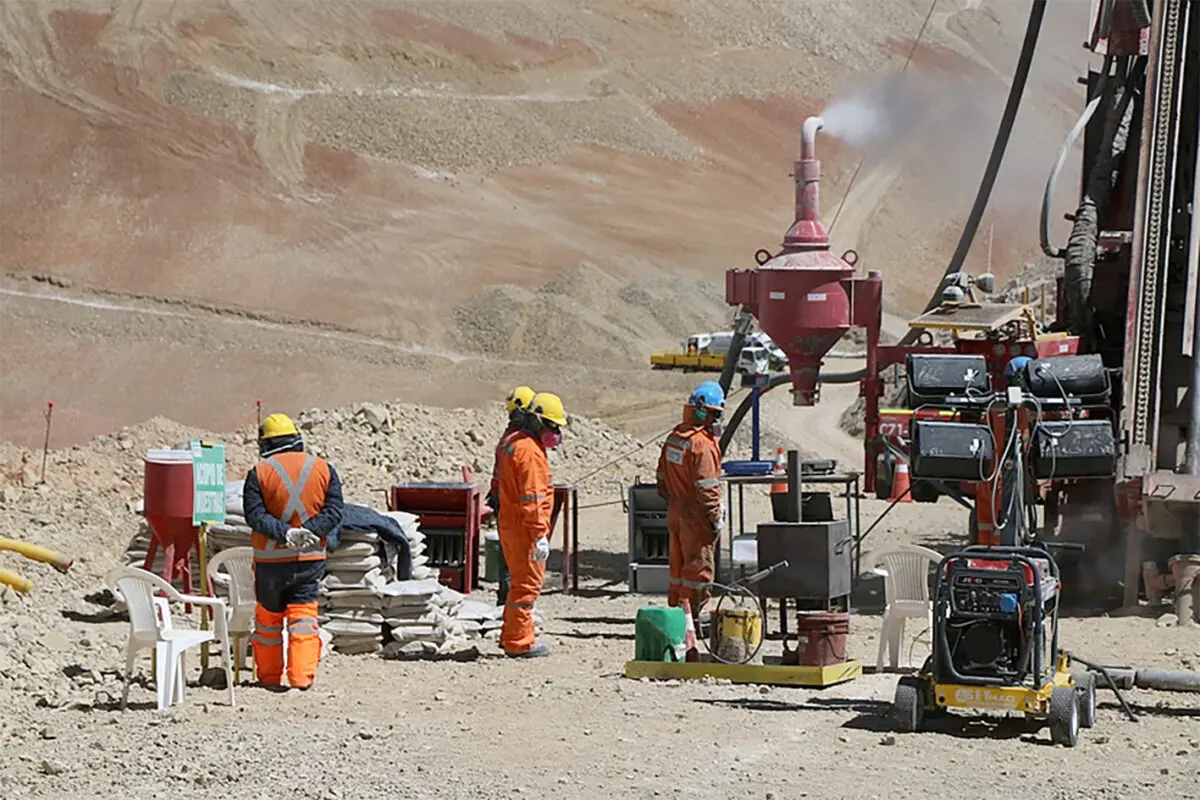
Spot gold is now about 32.5% below its 28 January record of US$5,513. For Latin America’s silver miners and the governments that tax them, that is a very different year from the one that began in January.
What matters today. A metal usually bought for protection is being sold as a source of cash, and only a shift in Fed rate expectations is likely to turn that around.
01 The session in one read
The GLD gold fund, which holds bullion for ordinary investors, fell 1.76% on Thursday, November 19, 2026 and set a 12-month closing low. Spot gold on our feed was near US$3,722 an ounce.
Silver was the sharper story. The SLV silver fund fell 2.60% to US$39.64, and silver is far below its 28 January record of US$114.59, because silver is a smaller, more volatile market that tends to move further than gold in either direction.
The best-supported reading is that investors are selling gold and silver to meet losses elsewhere and to avoid a Fed that is turning hawkish, rather than because they have stopped fearing risk. We hold this view with medium confidence, because the dollar and yield figures do not fully explain the fall. The variable to watch is the Fed’s December decision and the US inflation data that precede it.
02 The board
Gold’s proxy fund, GLD, closed at 335.18 and fell 1.76% in the session. Over five sessions the same fund lost 5.55%, which shows the selling has been broad rather than a single bad day.
The silver fund SLV lost 12.15% over the same five sessions, from 45.12 to 39.64, a larger slide than gold’s. Spot silver’s last confirmed close in our data is US$45.49 on 18 November, down 4.17% that day.
| Asset | Level | Change |
|---|---|---|
| Gold (spot, RT feed) | about US$3,722/oz | — |
| GLD gold fund | US$335.18 | −1.76% |
| SLV silver fund | US$39.64 | −2.60% |
Source: RT close, 19 November 2026. Spot silver for 19 November was not available; the SLV fund is shown as a labelled proxy.
Live Market IntelligenceThe live market board
Rio Times · Live Market Intelligence
Latin America — Cross-Market Board
| Instrument | Last | Change | YoY | Prev. | High | Low | Volume |
|---|---|---|---|---|---|---|---|
| IBOV | 166,376.43 | -0.69% | +7.08% | 167,537.95 | 168,498 | 165,833 | — |
| IPSA | 10,333.80 | -0.28% | — | 10,362.70 | 10,375 | 10,286 | — |
| IPC MEX | 68,891.88 | -0.38% | +10.68% | 69,154.17 | 69,407 | 68,608 | 166,484,958 |
| MERVAL | 2,848,945 | — | — | 2,848,945 | — | — | — |
| COLCAP | 2,452.46 | — | — | — | — | — | — |
| USD/BRL | 5.93 | +0.90% | +11.37% | 5.88 | 5.93 | 5.93 | — |
| EUR/BRL | 6.51 | +2.63% | +6.02% | 6.35 | 6.51 | 6.51 | — |
| USD/MXN | 19.11 | +1.35% | +4.33% | 18.86 | 19.13 | 19.05 | — |
| USD/CLP | 1,015 | +0.73% | +8.96% | 1,008 | 1,015 | 1,015 | — |
| USD/COP | 3,427 | +3.61% | -7.69% | 3,307 | 3,427 | 3,422 | — |
| USD/PEN | 3.45 | +0.37% | +1.98% | 3.43 | 3.45 | 3.45 | — |
| USD/ARS | 1,565 | +0.34% | +11.20% | 1,559 | 1,565 | 1,565 | — |
| USD/UYU | 40.61 | +3.19% | +3.31% | 39.35 | 40.61 | 40.61 | — |
| USD/PYG | 6,212 | +2.85% | -10.37% | 6,040 | 6,212 | 6,212 | — |
| USD/BOB | 11.64 | +3.02% | +72.76% | 11.30 | 11.64 | 11.64 | — |
| USD/DOP | 59.83 | -0.61% | -5.03% | 60.20 | 59.95 | 59.83 | — |
| USD/CRC | 441.73 | +2.49% | -9.50% | 431.01 | 441.73 | 441.73 | — |
| USD/GTQ | 7.64 | +3.23% | +2.03% | 7.40 | 7.64 | 7.64 | — |
03 Why it moved
The first cause, and the heaviest, is the Federal Reserve. Minutes of its 27–28 October meeting, published on 18 November, and comments by Fed governor Christopher Waller about a possible larger rise in December pushed up the dollar; the dollar index closed at 103.92, up 0.06% in the session.
US data on Thursday were mixed. Initial jobless claims came in at 203,000 against 197,000 expected, continuing jobless claims at 1,763 thousand and the four-week average at 197.75 thousand, the Philadelphia Fed factory index at 6.3, down from 20.9, and the Conference Board, a US research group, said its leading index fell 0.3% against no change expected (RT economic calendar).
Weekly USDA export sales, which matter more for grains than for gold, also came out: wheat net sales at 344.8 (previous 182.8), corn 1,588.1, soybeans 1,501, soybean meal 198.1, soybean oil 0.9, pork 32.1, beef 7.1 and upland cotton 118.7, with gross sales of wheat 408.7, corn 1,627, soybeans 1,622.1, pork 36.2, beef 8.8 and cotton 128.4, and marketing-year totals of corn 1,630, soybeans 1,501, soybean meal 199.1 and wheat 344.8, and next-year sales of corn 41.9 and soybean meal 1 (RT economic calendar, thousand tonnes).
The second cause is forced selling. The S&P 500 fell 2.02% in the session and 5.49% over five sessions, while the VIX rose 15.80% and 52.09% over the same periods; when stocks drop this fast, funds often sell their winners and their most liquid holdings, and gold counts as both.
The signals do not all agree. The 10-year Treasury yield edged down to about 5.0%, and a lower yield would normally help gold. That the metal fell anyway points to positioning and cash raising rather than yields, and we put medium confidence on that reading.
Oil, through the USO fund at 138.09, rose 1.45% in the session but is 5.46% lower over five sessions, so energy is not the driver here.
04 The trend behind it
Spot gold is about 32.5% below its 28 January peak of US$5,513, and the GLD fund is 5.55% lower than five sessions ago, a steady slide rather than a single collapse.
Silver’s slide is steeper: it was US$114.59 on 28 January and its last confirmed spot close is US$45.49, about 60% lower. This looks like a continuation of a long unwinding after the January highs, not a fresh phase.
History is not a forecast. A softer Fed tone or a cooler US inflation reading would be the quickest way to stop the slide.
05 What it means for Latin America
Mexico is one of the world’s top silver producers and Peru is another, so a fall of roughly 60% in silver from its January high weighs on their miners and on the tax revenue and jobs tied to them.
Lower prices hurt mining budgets most when volumes are also under pressure, which is why regional governments watch silver closely.
For savers in the region who hold gold as a hedge against local currency weakness, the fall hurts in dollar terms. A strong dollar, however, tends to weaken Latin American currencies too, which cushions the loss for those who measure wealth in pesos or soles.
06 The names to watch
Fresnillo and Peñoles are the Mexican bellwethers for silver, while Buenaventura and Nexa are the Peruvian ones; any production update from them will be read against the weaker prices.
Among funds, GLD is the main way ordinary investors hold gold, and its 5.55% five-session loss is the clearest measure of how much money has left.
07 What would end it
The nearest support is the low itself: the GLD close of US$335.18, the lowest of the past 12 months. If spot gold breaks below US$3,700, the round number of US$3,500 is the next marker.
Resistance for gold is the US$4,000 round number.
The decisive event is the Fed’s December meeting, preceded by the next US inflation report. A softer inflation reading, or a Fed that signals no hike, would remove the main weight on the dollar and on metals; a hike delivered or confirmed would likely extend the fall.
So the honest answer to whether this stops is that a real turn needs the rate story to change.
08 What to watch
- The Fed’s December decision: A confirmed hike would keep the dollar firm and metals under pressure; a pause would remove the main weight.
- US inflation data: Another hot reading would harden hike bets, while a cool one is the quickest way to ease them.
- GLD at US$335.18: This is the 12-month low; a close below it opens the way to US$3,500 for spot gold.
- Silver: The SLV fund at US$39.64 is the proxy to watch until spot silver data for 19 November are confirmed.
What Prediction Markets Say
Polymarket, where users bet real money, lists a market on the US Federal Reserve’s December decision, with US$43.5 million traded as of 7:39 p.m. ET, 19 November 2026. It prices a 0.25-point rise at 92.5%, a 0.5-point or larger rise at 5.1%, no change at 2.9%, a 0.25-point cut at 0.2% and a 0.5-point or larger cut at 0.1%.
Another Polymarket market, on where gold will trade by the end of December, prices a fall to US$3,500 at 57.0% (US$3.0 million traded). These prices are bets, not polls. They show traders expect higher US rates, which would lift the dollar and weigh on gold.
Why we show this: prediction markets turn real-money bets into a live probability that moves within minutes of the news, which is why investors, campaigns and newsrooms in the United States now follow them closely. We show them next to polls and official results, never instead of them.
Frequently Asked Questions
Why is gold falling when markets are nervous?
Investors are selling gold to raise cash as stocks drop, and the dollar and interest rate expectations are working against it. Gold pays no interest, so it loses appeal when a Fed rate rise looks likely.
How far has gold fallen?
The GLD gold fund closed at its lowest in at least 12 months, and spot gold is about 32.5% below its 28 January record of US$5,513.
Why does this matter for Mexico and Peru?
They are among the largest silver producers in the world, so lower prices cut mining revenues, taxes and profits.
Will gold recover?
History is not a forecast. A softer Fed tone or cooler US inflation would help, but a real turn needs the rate story to change.
Market data: The Rio Times
This article was produced by The Rio Times’ automated AI newsroom. Editorial responsibility: Matthias Camenzind, Publisher and Editor-in-Chief. The Rio Times also runs Ask Rio Times, which answers from 100,000+ of our own articles, the daily Latin America Power Map, and prediction-market odds on elections and markets.. How we use AI · Report an error
LatAm Markets: Live Signals → — real-time movers, turnover leaders and FX across Latin America.