Gambia’s Barrow Declares Power Crisis a National Emergency After Blackout Protests
GAMBIA · SOCIETY
Key Facts
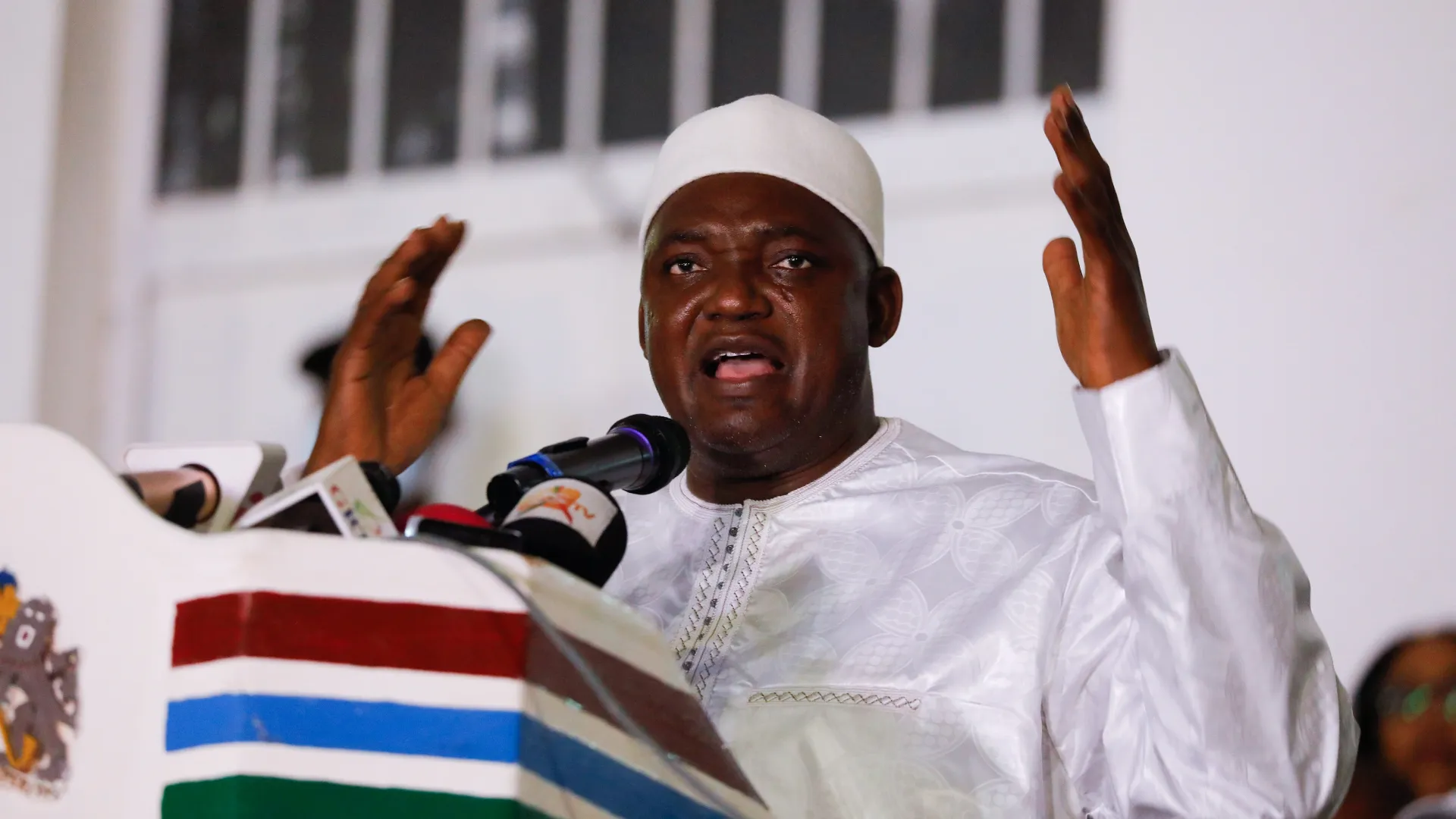
- —The emergency President Adama Barrow has declared The Gambia’s prolonged electricity crisis a national emergency and promised new generation capacity as protests over rolling blackouts intensify.
- —The blackouts Some communities have gone without power for up to 48 hours during the hot season. The state utility, the National Water and Electricity Company (NAWEC), has warned of further interruptions, including in provincial towns.
- —The protests Demonstrators in Banjul and the surrounding urban area burned tyres, blocked roads and demanded Barrow’s resignation. Police used tear gas to disperse crowds near the president’s residence and NAWEC headquarters.
- —The promises Barrow has promised a 24-megawatt generation unit by the end of October and announced plans for a 50-megawatt solar power plant.
- —The explanation The utility blames soaring temperatures, climate change and what it calls geopolitical disruptions that have pushed up fuel costs.
- —The timing The crisis comes about three months before a December presidential election in which Barrow is seeking a third term.
The Gambia’s electricity crisis has moved from the fuse box to the street. After blackouts lasting up to two days in the heat of the dry season, protesters in and around Banjul have burned tyres and demanded the president’s resignation — and Adama Barrow, three months from an election, has declared a national emergency and promised new power plants.
How bad the outages have become
The Gambia, mainland Africa’s smallest country, has suffered from unreliable electricity for decades, but the current hot season has pushed the system to a new low. Some communities have experienced outages lasting up to 48 hours, according to allAfrica’s reporting. APA News reported blackouts of more than 19 hours in parts of urban Gambia in recent weeks, and more than 16 hours in Serrekunda, the country’s biggest town, before Monday’s protests.
The consequences go beyond discomfort. Businesses and hospitals have been hit; APA reported that a patient reportedly died when electricity failed in the middle of an operation. That account has not been independently confirmed, but it captures the level of public anger. NAWEC — the National Water and Electricity Company, the state utility — has issued notices warning of further interruptions, including in provincial towns such as Basse and Bansang.
The night the anger spilled over
On Monday night, large demonstrations spread across the Greater Banjul area. In the capital, hundreds of young people lit candles, chanted slogans against the government and tried to march towards State House, the president’s residence, before police dispersed them with tear gas. Protesters also gathered near NAWEC’s headquarters.
In Serrekunda, APA reported running battles between police and crowds of young people who burned tyres and set up barricades on major roads around Westfield. Similar scenes were reported in Brufut and neighbouring Brusubi, where protesters chanted slogans critical of President Barrow. Demonstrators have demanded a reliable power supply — and, increasingly, Barrow’s resignation.
Barrow’s answer
Barrow’s response is to declare the crisis a national emergency and to put dates and numbers on the fix. He has promised a 24-megawatt generation unit by the end of October and announced plans for a further 50-megawatt solar power plant. To put those figures in context: The Gambia’s entire grid serves a peak demand measured in the tens of megawatts, so 74 megawatts of new capacity, if delivered, would transform supply — but delivery has repeatedly been the weak point of Gambian energy policy.
NAWEC, for its part, attributes the crisis to soaring temperatures and climate change, which drive up demand for cooling while straining ageing equipment, and to what it calls geopolitical disruptions — the elevated cost of the imported fuel on which much of the country’s generation depends. The Gambia has little generation of its own and has historically relied on rented capacity, including a Turkish powership, and imports from Senegal.
Three months before the vote
The timing is politically acute. Gambians vote in a presidential election in December, and Barrow is seeking a third term — itself a contentious issue in a country that emerged from Yahya Jammeh’s 22-year rule only in 2017. Electricity is not an abstract policy area in The Gambia; it is a daily experience, and a government that cannot keep the lights on in the capital region three months before polling day has a visible problem.
What happens next depends on two things: whether the promised 24-megawatt unit actually arrives and is connected by the end of October, and whether the protests become a sustained feature of the campaign. Opposition figures have already signalled they intend to keep the pressure on; the Gambia Action Party, an opposition party, has threatened peaceful action over the crisis, according to the Fatu Network, a Gambian news outlet.
Frequently Asked Questions
Why does The Gambia have blackouts?
The national grid is small and relies heavily on imported fuel and ageing equipment. The utility, NAWEC, blames the current crisis on extreme heat and climate change driving up demand, and on geopolitical disruptions that have raised fuel costs.
What did the protesters in Banjul do?
On Monday night, demonstrators burned tyres, erected roadblocks and demanded President Barrow’s resignation. In Banjul, protesters lit candles and tried to march towards the president’s residence before police used tear gas. There were also confrontations in Serrekunda, Brufut and Brusubi.
What has President Barrow promised?
He has declared the power crisis a national emergency, promised a 24-megawatt generation unit by the end of October and announced plans for a 50-megawatt solar power plant.
What is NAWEC?
The National Water and Electricity Company is The Gambia’s state-owned utility, responsible for electricity and water supply across the country.
When is The Gambia’s presidential election?
In December 2026. President Adama Barrow is seeking a third term, and the power crisis has become a central campaign issue.
Connected Coverage
We have reported on Barrow’s bid for a third term and the stalled Jammeh justice process, and on the migrant boat that left The Gambia and reached Gran Canaria after 27 days — the exodus that shapes the country’s politics from below.
Sources
- allAfrica — Gambia declares power crisis a national emergency
- APA News — Demos over acute energy crisis grip Gambia
- The Fatu Network — ‘We want light, not excuses’: Power crisis sparks mass protests
This article was produced by The Rio Times’ automated newsroom system. How we use AI · Report an error · Editorial responsibility: Matthias Camenzind, Editor-in-Chief