From Neutrality to Repression: U.N. Unveils Nicaraguan Army’s Involvement in Mass Killings
(Analysis) On April 18, 2018, protests erupted across Nicaragua after President Daniel Ortega announced controversial social security reforms.
The measures increased taxes and reduced benefits, sparking outrage. What began as peaceful demonstrations quickly escalated into a nationwide movement demanding Ortega’s resignation.
Over four months, more than 350 civilians were killed, over 2,000 injured, and hundreds detained in what international experts now classify as crimes against humanity.
For years, the Nicaraguan Army claimed neutrality during the unrest. However, a United Nations report released on February 26, 2025, dismantled this narrative.
The UN Group of Experts presented credible evidence implicating the military in the violent repression orchestrated by Ortega and Vice President Rosario Murillo. The report revealed that military leaders actively collaborated with police and paramilitary groups to suppress dissent.
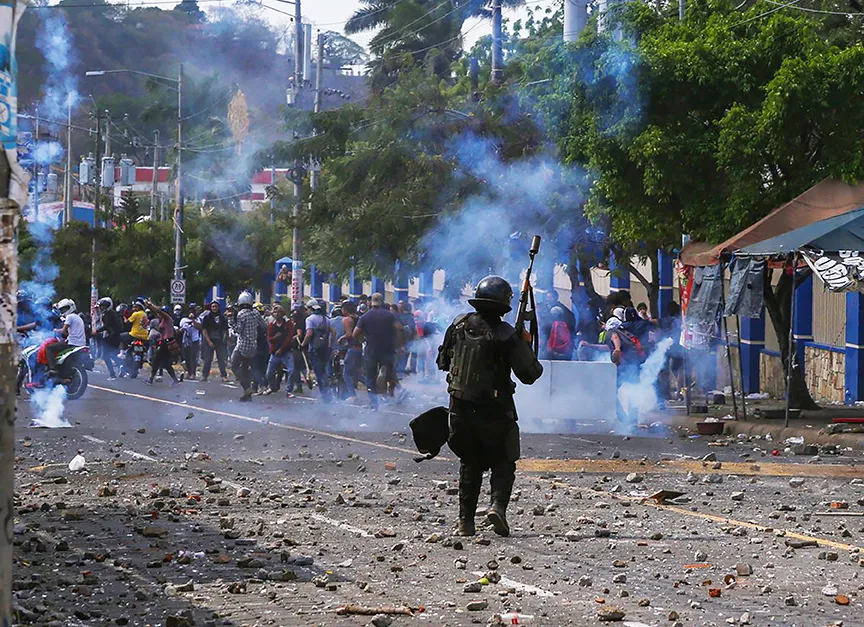
Two days after protests began, high-ranking military officials met to discuss strategies to counter what they labeled a “coup attempt.” Orders from Ortega and Murillo directed the use of lethal force under the directive “go all in,” leading to systematic violence.
A Dark Chapter in the Nation’s History
General Julio César Avilés, the Army’s commander-in-chief, authorized military intervention despite lacking jurisdiction over public security matters. Soldiers disguised as civilians joined paramilitary forces in operations targeting protesters.
The repression was brutal and deliberate. Snipers used military-grade weapons to kill demonstrators, aiming at vital body parts to maximize casualties. Victims included students, women, and children.
The military also provided intelligence to identify protest leaders and coordinated with paramilitary groups known as “Sandinista mobs.” These groups dismantled roadblocks, attacked protesters, and enforced fear through extrajudicial killings.
The economic impact of the unrest was severe. A national lockout organized by businesses opposing the government cost Nicaragua an estimated $20 million to $25 million per day (R$120 million to R$150 million).
Meanwhile, Ortega strengthened his grip on power by institutionalizing paramilitary forces under the guise of “volunteer police.” Despite international condemnation and an arrest warrant issued by Argentina’s justice system against Ortega and Murillo in late 2024, impunity prevails.
The events of 2018 exposed the fragility of Nicaragua’s democracy and marked one of the darkest chapters in its modern history. As calls for justice continue, the regime’s tight control leaves little room for accountability or reform.
More: Latin America news in English, every day from The Rio Times.
This article was produced by The Rio Times’ automated newsroom system. How we use AI · Report an error
Read More from The Rio Times