Researchers have discovered that certain regions are undergoing desertification for the first time in Brazil’s climate history.
The National Center for Monitoring and Early Warning of Natural Disasters (CEMADEN) and the National Institute for Space Research (INPE) did this study.
They sent their findings to the Ministry of Environment and Climate Change. These findings are important. They show a need for plans to stop desertification.
The study shows that climate change and global warming are causing extreme weather in Brazil.
In wet regions, like the South, rains are getting heavier. In dry areas, like the Northeast, it’s getting drier. These changes are alarming.
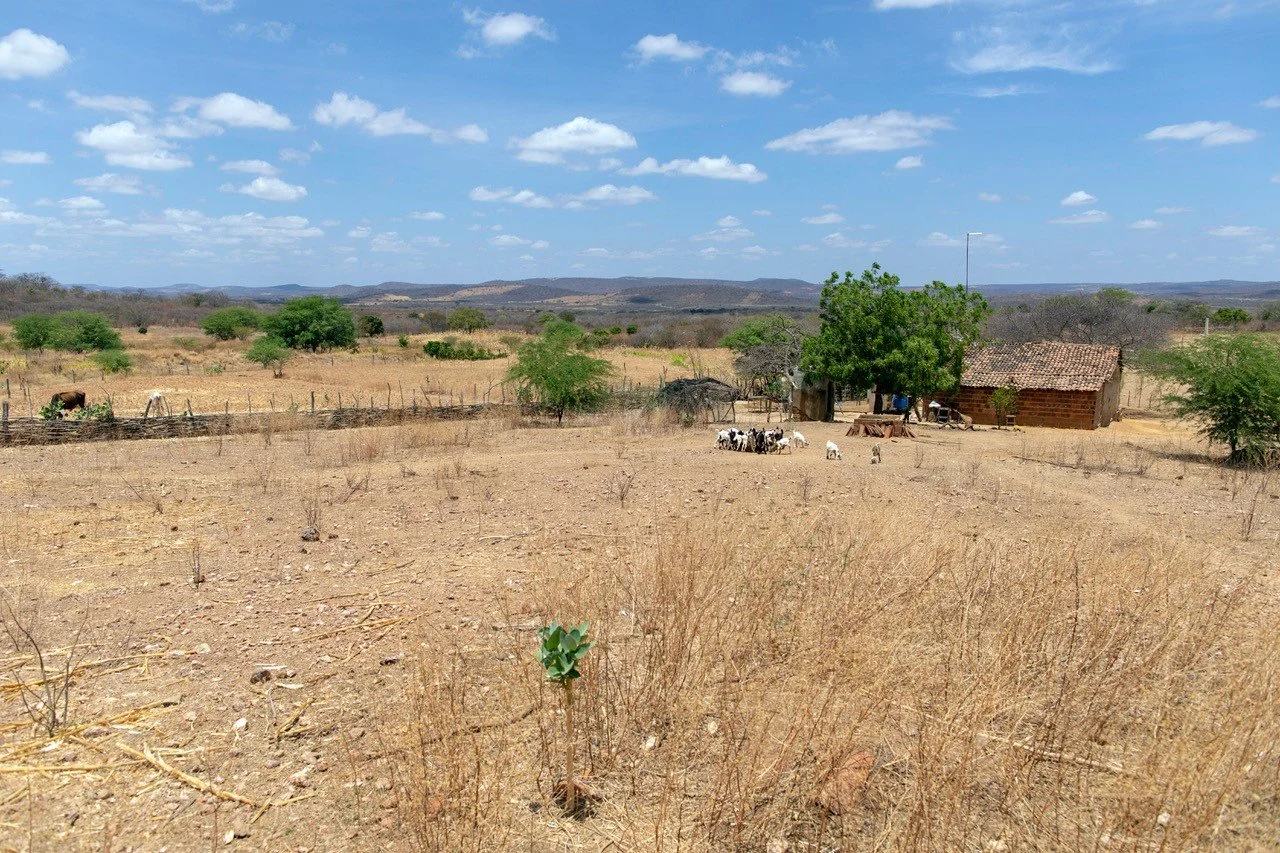
A news source, UOL, shared details from the study. They say that the Brazilian semi-arid area, mostly in the Northeast, is drying up.
This is due to climate change and less vegetation. These areas are now like deserts.
The researchers used data from 1990 to 2020. They looked at rain and evaporation to calculate the aridity index.
This index is from the United Nations Convention to Combat Desertification (UNCCD). It measures how dry a region is.
It looks at water available and water needed to support life. This is done by comparing rainfall and evapotranspiration.
The study found that less rain and more evaporation make the soil drier in places like northern Bahia. This is like desert conditions.
The study also says this desertification is happening all over Brazil, except the South. It’s worst in the semi-arid regions of the Northeast and northern Minas Gerais.
Desertification
The study also talks about the 2023 El Niño event. El Niño usually means less rain in the North and Northeast of Brazil.
This could make desertification worse. CEMADEN also sent a note to the Civil House of the Presidency.
It talks about the bad effects of El Niño in Brazil, especially in the Northeast. It says 140 municipalities in the Northeast are already very dry.
Six in central-northern Bahia are extremely dry.
Climate models predict more problems in the next few months. They expect less rain and much hotter temperatures during summer.
This will likely make the drought and desertification in the Northeast worse.
More: Brazil news in English, every day from The Rio Times.
This article was drafted with automated assistance and reviewed before publication. How we use AI · Report an error
Read More from The Rio Times