Federal Government Accounts End 2019 with R$95 Billion Shortfall
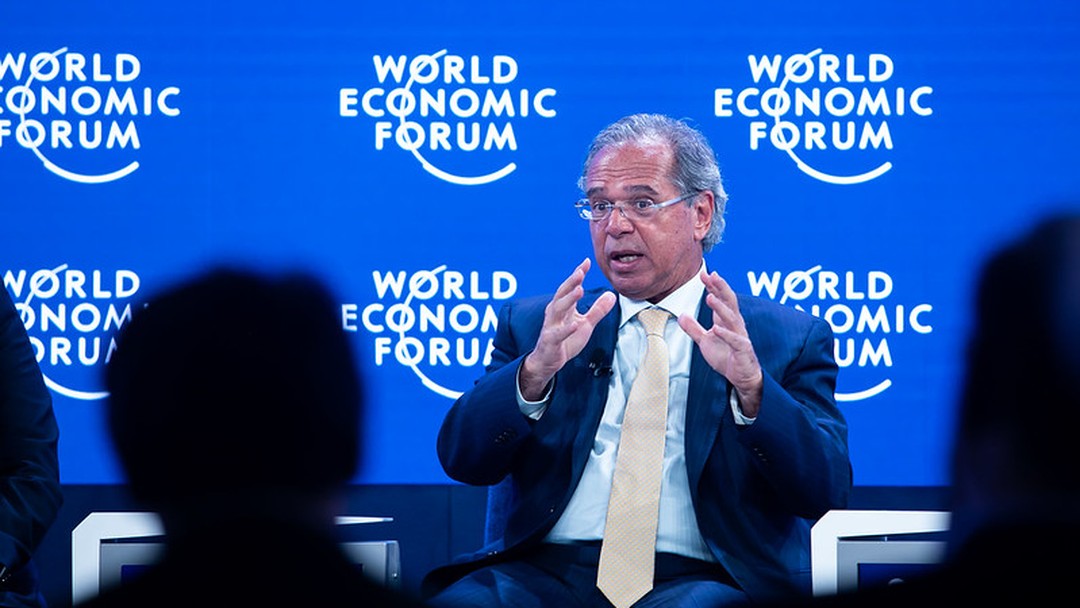
RIO DE JANEIRO, BRAZIL – Under the leadership of Economy Minister Paulo Guedes, the federal government’s accounts ended 2019 with a shortfall of R$95 billion (US$24 billion). This was the sixth consecutive year of primary deficit.

The result is better than in 2018, when the balance was negative by R$120 billion, but is far from Guedes’ pledge to zero the deficit in the first year of Jair Bolsonaro’s administration. The figure was also worse than expected by Treasury Secretary Mansueto Almeida.
The figures released on Wednesday, January 29th, include the National Treasury, Social Welfare and Central Bank accounts.
In October 2018, following Bolsonaro’s election, Guedes initially said it would be feasible to zero the fiscal deficit during the government’s first year.
In January last year, right after taking over the Ministry of Economy, he was adamant that the deficit would be zeroed in 2019 as a result of the Social Welfare reform, privatizations, and oil auctions in an interview with Bloomberg.
Throughout the year, the speech changed. The minister began to say that it was preferable to share federal resources with states and municipalities and, as a consequence, to take a little longer to achieve this public accounts goal.
“What matters is what the minister wrote. And the 2020 LDO (Budget Guidelines Law) shows a primary deficit by the end of this government,” said Treasury Secretary Mansueto Almeida.
Although the pledge has not been fulfilled, the federal government closed the year with a margin against the established goal of a deficit of R$139 billion. The data for 2019, despite being negative, was the best in five years.
Last year’s result was achieved with the help of non-recurring revenues, such as the collection of funds from the oil field exploration concessions (R$93 billion) and the increase in government revenue with dividends paid by state-owned companies (R$21 billion).
Mansueto said he expected a deficit close to R$80 billion in 2019. According to him, the government failed to achieve this result as it decided to capitalize some state-owned companies.
In the year, these capitalizations totaled R$10.1 billion, of which R$7.6 billion were transferred to EMGEPROM (Naval Projects Management Company) for the construction of military vessels.
When asked about government spending decisions and whether the military was prioritized at a time of constrained accounts, the secretary replied that the Navy ships were scrapped and that the government chose to uphold the EMGEPROM project schedule. “Since it had fiscal leeway, it chose to make full capitalization. It was a political decision,” he said.
Mansueto stressed that this spending will not impact the fiscal result for the consolidated public sector, which will be released by the Central Bank this week and includes the accounts of regional and state governments. According to him, the funds contributed by these companies will be accounted for as a surplus of state-owned companies.
The shortfall from the goal was further aided by the difficulty of ministries in spending resources to which they were entitled. Last year, R$ 17.4 billion in funds that could have been used were put aside but were held in the government coffers.
A further R$7 billion in reserves were not claimed by ministerial portfolios. In another point which improved the result, government expenses with payroll were R$5.7 billion below the estimate for December.
Mansueto acknowledged that the difference in estimates is large and could not explain the discrepancy. According to him, the issue should be addressed by other government areas and assessed by the TCU (Federal Audit Court).
The primary result target for the federal government for 2020 is a deficit of R$124.1 billion.
Source: Folhapress
More: Brazil news in English, every day from The Rio Times.
This article was produced by The Rio Times’ automated newsroom system. How we use AI · Report an error
Read More from The Rio Times