Europe Intelligence Brief — Tuesday, November 3, 2026
Executive Summary
Europe Intelligence Brief for November 3: Poland's court standoff and border alert, French student blockades, and a 5 November strike.
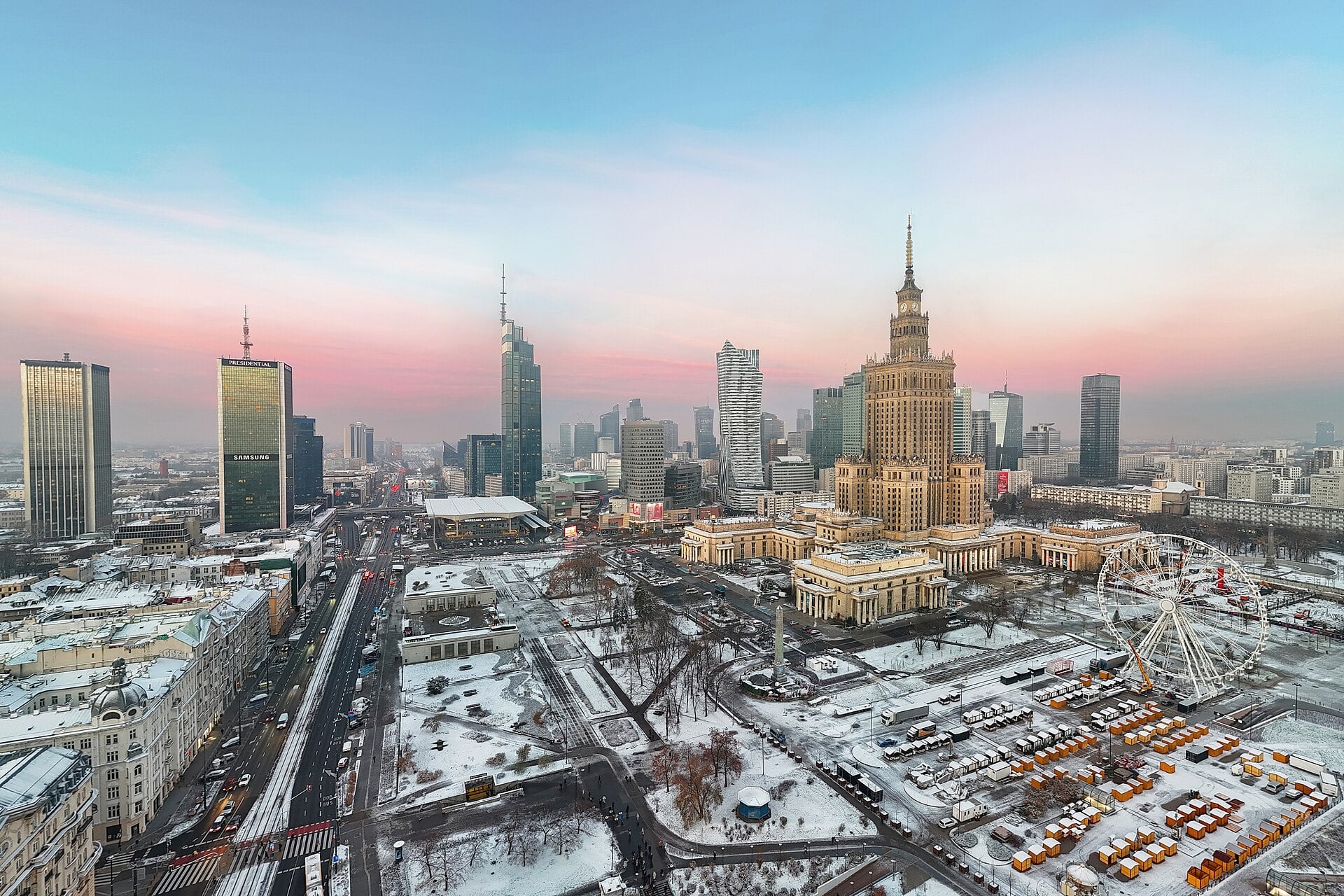
Europe starts the week in a mood of siege and restlessness, with a constitutional fight in Warsaw, a frontier on police alert and teenagers back on the streets in France. The fear is that the institutions meant to steady the continent are being pulled apart from inside while pressure builds from outside.
Leaders speak the language of coups and conscience: Notes from Poland reported on 2 November that Constitutional Tribunal chief justice Bogdan Święczkowski called his suspension a “coup d’état”, and that former ambassador Jakub Kumoch called his resignation “a matter of conscience”. Publics answer with action rather than argument, as franceinfo reported on 1 November that student groups were calling a fresh round of blockades for 3 November.
The through-line is a continent in which legitimacy itself is contested, whether over who may lead a court or who deserves a gesture on wages. Brussels meanwhile keeps its calendar of defence dialogues, committee votes and enlargement talks moving, as though steadiness were a policy in its own right.
Key Facts
- Poland. Eight government-appointed judges suspended Constitutional Tribunal chief justice Bogdan Święczkowski on 30 October.
- Diplomats. Poland’s ambassadors to China and Romania and its UN envoy resigned between 30 October and 2 November.
- France. Student groups called lycée and university blockades for 3 November, listing 44 actions in 25 cities.
- Strike. A coordinated French public-sector strike covering education, health, transport and the civil service is called for 5 November.
- Brussels. The European Parliament’s environment committee votes on Wednesday 4 November on CO2 standards for new cars and vans.
Poland: Two Camps, One Court
On 2 November, Foreign Minister Radosław Sikorski suggested President Karol Nawrocki orchestrated the wave of resignations, while former ambassador Paweł Soloch said an attempt to take over the tribunal unlawfully left him unable to continue. The same article names Anna Korwin-Piotrowska as the self-proclaimed acting head of the tribunal, which shows that both camps now claim the same institution as their own.
Each side casts itself as the guardian of the law, which makes compromise look like surrender and explains why diplomats are choosing exits over loyalty. For a US reader, the lesson is that an ally on NATO’s eastern flank is spending much of its political energy on a quarrel over its own judiciary.
Poland’s Border: A Warning Without Details
Police chief Marek Boroń said on 2 November that extra officers and counter-terrorism units are deployed in Podlasie and Warmia-Masuria around the Kaliningrad region. The order follows a warning from the Military Intelligence Service and unnamed allied agencies about possible sabotage and armed border violations, and police spokeswoman Katarzyna Nowak said operational details remain confidential.
The outlet recalled a Russian cruise missile in Polish airspace in July and a Russian military helicopter in September, which is why the alert lands on a public already primed for trouble. For Washington, it signals that allied intelligence is feeding straight into policing on the NATO frontier, and that Warsaw is handling a courts crisis and a security scare at the same time.
France: Teenagers Waiting For A Gesture
Franceinfo reported on 1 November that the protests have run for around a month and that the government is discussing a minimum wage rise, with one minister quoted as saying ”Il faut faire un geste, ne pas trop attendre”. The same coverage and the manifsendirect.fr listing show gilets jaunes blockades announced for 6 and 7 November, so a student movement is edging towards older grievances.
What began in the schools is now a wider restless discontent over wages, and the government is on the defensive rather than in command of the agenda. A US reader should read it as a warning that street pressure in Paris narrows the room for any hard budget choices in the weeks ahead.
Brussels And Berlin: Old Wounds, New Partners
Euronews reported on 2 November that High Representative Kaja Kallas hosted the EU–UK Security and Defence Dialogue in Brussels and said the city is still “traumatised” by Brexit. That candour matters because it shows Europe seeking British help on defence while still nursing the injury of the divorce.
The pubaffairsbruxelles.eu week-ahead shows Parliament President Roberta Metsola meeting Armenian Prime Minister Nikol Pashinyan today, and Commissioner Marta Kos presenting her 2026 enlargement assessment on Wednesday 4 November. Behörden Spiegel lists the Berlin Security Conference for 3 and 4 November, so the continent is widening its circle of partners at the very moment it argues over its own foundations.
What This Means From Latin America
The Latvian foreign ministry’s pages show that the EU–Mercosur interim trade agreement has applied provisionally since 1 May 2026, while the wider partnership agreement still awaits ratification. A Europe absorbed by court fights, border alerts and street protest has less attention to spare for that unfinished business, which is worth remembering in Brasília, Buenos Aires, Montevideo and Asunción.
Brussels’ committee votes on 4 November, including the car and van CO2 standards, will be read by Latin American exporters tied to European supply chains as a gauge of how demanding the rulebook is becoming. Diplomatically, the Polish resignations and the sabotage warnings show that the eastern frontier still dominates European attention, so Latin American governments seeking a hearing on trade should expect to compete with it.
What We Are Watching
- 3 November, 6:01 p.m. ET: Ireland consumer confidence for October, forecast at 60 after 61.1. A weaker reading would show that Europe’s political noise is reaching household sentiment.
- 4 November, 3:30 a.m. ET: Sweden interest rate decision, forecast at 2 percent after 1.75 percent. It shows how a Nordic central bank weighs prices against a nervous continent.
- 4 November, 5:00 a.m. ET: Eurozone core inflation for October, forecast at 2.5 percent after 2.5 percent. A steady print would keep price pressure from adding to the cost-of-living anger seen in France.
- 4 November, 9:00 a.m. ET: Poland interest rate decision, forecast at 3.75 percent after 3.75 percent. It lands in the middle of the court standoff and the border alert.
- 5 November, 7:00 a.m. ET: Bank of England interest rate decision, forecast at 4 percent after 3.75 percent. It will set the tone for the UK as Brussels courts London on security.
- 5 November: French public-sector strike. Its turnout will show whether the student protests have become a wider movement.
Frequently Asked Questions
What is the crisis at Poland’s Constitutional Tribunal?
Eight government-appointed judges suspended chief justice Bogdan Święczkowski on 30 October, and he called the move a “coup d’état”. Three Polish envoys have since resigned, and Anna Korwin-Piotrowska describes herself as acting head of the tribunal.
Why is Poland on heightened police alert?
Police chief Marek Boroń said on 2 November that extra officers and counter-terrorism units are deployed in Podlasie and Warmia-Masuria around the Kaliningrad region. The step follows a warning from the Military Intelligence Service and allied agencies about possible sabotage and armed border violations.
What are French students protesting?
Franceinfo reported on 1 November that protests have run for around a month, with new lycée and university blockades called for 3 November. The government is discussing a minimum wage rise, and a public-sector strike is called for 5 November.
What is the status of the EU–Mercosur deal?
The agreement was signed on 17 January 2026, according to the Latvian foreign ministry’s pages. The interim trade agreement has applied provisionally since 1 May 2026, while the wider partnership agreement still needs ratification.
Keep reading: Europe Intelligence Dossier — 3 November 2026 | Archive
This article was produced by The Rio Times’ automated newsroom system. How we use AI · Report an error · Editorial responsibility: Matthias Camenzind, Editor-in-Chief
LatAm Markets: Live Signals → — real-time movers, turnover leaders and FX across Latin America.
Read More from The Rio Times