Ethiopia and the US Upgrade Their Defence Ties

Eastern Africa · Geopolitics
Key Facts
—What happened: An Ethiopian defence delegation held bilateral consultations at the Pentagon on 19 and 20 August 2026.
—The outcome: Both sides agreed to elevate military and diplomatic cooperation into what Addis Ababa calls comprehensive strategic cooperation in defence and security.
—Who went: Major General Teshome Gemechu, director general of foreign relations and military cooperation at Ethiopia’s defence ministry.
—Who they met: Brian J. Ellis, the Pentagon’s deputy assistant secretary for African affairs, along with other US defence officials.
—What was not announced: No treaty text, no signed instrument, no funding, no equipment and no basing arrangement.
—Where the account comes from: Ethiopian state and state-adjacent media, reporting a foreign ministry announcement.
Ethiopia United States defence cooperation is to be elevated to what Addis Ababa describes as a comprehensive strategic partnership, after two days of talks at the Pentagon on 19 and 20 August. No treaty, no money and no equipment was announced alongside it.
What the Ethiopia United States defence talks produced
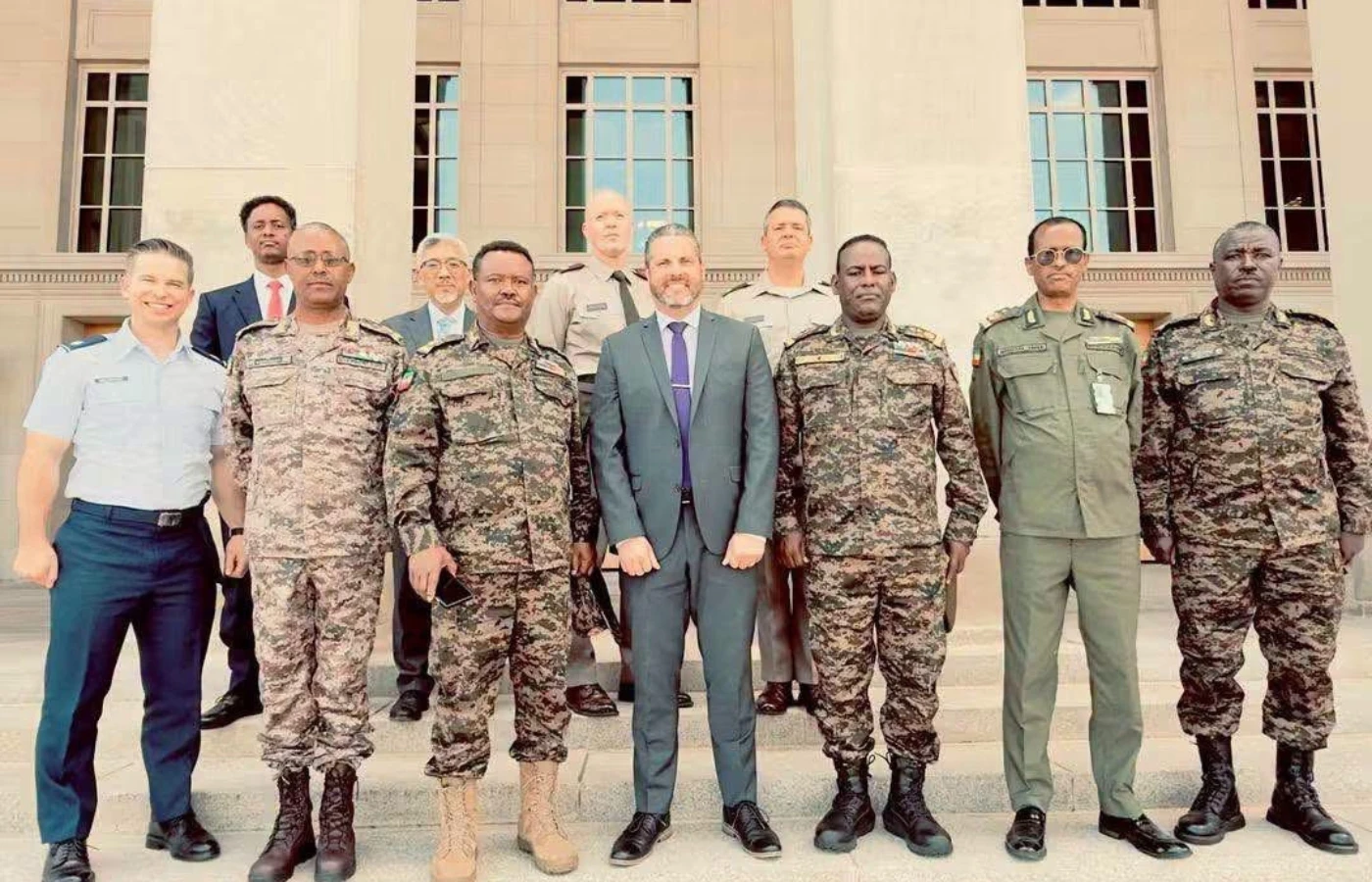
An Ethiopian defence delegation travelled to the United States on 19 and 20 August 2026 and held bilateral consultations at the Pentagon. The announcement came from Ethiopia’s foreign ministry and was carried by the state news agency on 21 August.
The two sides agreed to elevate military and diplomatic cooperation into comprehensive strategic cooperation in defence and security. Three pillars were declared: protecting national interests on a basis of mutual benefit, building lasting cooperation through mutual trust, and working jointly on peace and security in the Horn.
Both sides committed to implement the agreed frameworks quickly and to expand institutional cooperation between their defence establishments. The delegation also held wider discussions and made site visits.
The Ethiopian side was led by Major General Teshome Gemechu, director general of foreign relations and military cooperation at the defence ministry. The named American interlocutor is Brian J. Ellis, the Pentagon’s deputy assistant secretary for African affairs.
What the announcement does not contain
There is no treaty text and no named signed instrument. There is no funding figure, no equipment list and no basing arrangement.
This is a declaratory upgrade, and declaratory upgrades are cheap. The value lies in what follows, which is usually a working group, an exercise programme and eventually a procurement conversation.
The sourcing is also worth stating plainly. Every account we have traces back to Ethiopian state or state-adjacent outlets reporting a foreign ministry readout, and we have not seen an American document.
There is a small inconsistency in how Ellis’s title is rendered across those outlets. That is a detail, but it is the kind of detail that indicates a press release travelling faster than verification.
Why Washington would want this now
Ethiopia is the anchor state of the Horn of Africa, home to more than 130 million people and one of Africa’s fastest-growing economies. It sits behind the Red Sea approaches through which Gulf-Asia trade moves.
It is also, at present, a country whose external relationships lean heavily elsewhere. Chinese contractors are on every package of its new airport, Gulf money is moving into its gold sector, and Turkish drones have featured in its recent conflicts.
American re-engagement in the Horn has been episodic and has tended to follow shipping disruption in the Red Sea. The corridor has been contested for two years.
For Addis Ababa the calculation is straightforward. A country negotiating debt restructuring and courting investment gains from being visibly useful to Washington.
The neighbourhood this lands in
Ethiopia has no coastline, and its pursuit of sovereign sea access has strained relations with Eritrea and Somalia. That ambition is the single most destabilising variable in the region.
A closer defence relationship with the United States cuts both ways here. It gives Washington more leverage to restrain Ethiopian action, and it gives Addis Ababa more confidence to contemplate it.
Somalia meanwhile has been building its own external defence relationships, having signed a defence memorandum with Pakistan on 4 August, confirmed by Somalia’s state news agency, while hosting Turkey’s largest overseas base. The Horn is acquiring patrons faster than it is acquiring settlements.
None of the region’s open questions is resolved by a Pentagon readout. But the alignment map has shifted, and that map is what investors in Ethiopian debt and infrastructure are reading.
What to watch
The first test is whether an American document appears. A joint statement, a defence department release or an announcement from US Africa Command, known as AFRICOM, would confirm that both sides describe this the same way.
The second is whether anything is funded. Strategic partnership language is common; money is not. One American step has already been taken: on 11 May 2026 the State Department lifted the arms embargo that had barred defence exports to Ethiopia, so licence applications can again be considered case by case. That happened three months before these talks, and it is the only concrete American move on the record.
The third is Ethiopia’s currency and debt position, because a warmer Washington usually shows up in IMF posture before it shows up in hardware. The birr has been at record lows and the central bank has been selling dollars into the market.
Until those appear, this is a word rather than a programme. It is a significant word, and it should be reported as exactly that.
More: Ethiopia news in English, every day from The Rio Times.
Frequently Asked Questions
What did Ethiopia and the United States agree?
To elevate military and diplomatic cooperation into what Ethiopia calls comprehensive strategic cooperation in defence and security, following Pentagon talks on 19 and 20 August 2026.
Was a treaty signed?
No. No treaty text, signed instrument, funding, equipment or basing arrangement was announced.
Who represented Ethiopia?
Major General Teshome Gemechu, director general of foreign relations and military cooperation at the defence ministry.
Where does the account come from?
Ethiopian state and state-adjacent media reporting a foreign ministry announcement. We have not seen an American document.
Why does it matter?
Ethiopia is the anchor state of the Horn of Africa and sits behind the Red Sea approaches, while its main external partners have lately been China, Gulf states and Turkey.
Connected Coverage
The contest for influence in the Horn runs through our pillar Africa: The New Scramble. See also the Chinese builders on Ethiopia’s new airport, the birr’s record low, and more from our Eastern Africa hub.
This article was produced by The Rio Times’ automated newsroom system. How we use AI · Report an error · Editorial responsibility: Matthias Camenzind, Editor-in-Chief
LatAm Markets: Live Signals → — real-time movers, turnover leaders and FX across Latin America.