Ethiopia Election Board Weighs Tigray Vote
Ethiopia’s election board has opened talks on a Tigray vote, but it has named no date, and the region’s main parties say the conditions for one are not in place.

Politics: Ethiopia
Ethiopia’s National Election Board (NEBE), the state body that runs the country’s votes, said on Friday 27 November 2026 that it had consulted political parties on holding an election in Tigray region. It gave no date for a vote.
Tigray, a northern region that took no part in the general election of 1 June 2026, would show whether the 2022 Pretoria peace deal, which ended the Tigray war, can lead back to the ballot box under the new caretaker arrangement. For readers in the United States, the step matters because Ethiopia is Africa’s second most populous country and a security anchor in the Horn of Africa, the region around Somalia and Eritrea.
Key Facts
- Who. Ethiopia’s National Election Board (NEBE), the state body that runs elections, led by chair Melatwork Hailu.
- What. NEBE consulted national and Tigray-based parties on holding an election in Tigray, in northern Ethiopia.
- When. Announced Friday 27 November 2026; more consultations promised, no election date set.
- Prediction markets. Polymarket, a betting exchange, puts Eritrea invading Ethiopia by 31 December at 12.5% (28 November, 1:35 a.m. ET).
- As of. 28 November 2026, 12:00 GMT.
Ethiopia’s election board has opened talks on a Tigray vote, but it has named no date, and the region’s main parties say the conditions for one are not in place.
The 2020 to 2022 war in Tigray ended with the Pretoria agreement, a peace deal led by the African Union and signed in November 2022. Tigray’s seats in the House of Peoples’ Representatives, the lower house of parliament, stayed empty on 1 June 2026, and NEBE announced on 21 June 2026 that Prime Minister Abiy Ahmed’s ruling Prosperity Party won 438 seats in the House.
On Friday 16 October 2026 the federal government installed a caretaker administration, a temporary government, for Tigray for six months, tasked with restoring stability, rebuilding services, returning displaced people and preparing the region for elections. The Tigray People’s Liberation Front (TPLF), the region’s former ruling party, rejected the caretaker body as illegitimate the next day, 17 October, and federal forces and government-allied fighters entered Mekelle, the regional capital, on 4 October after renewed fighting.
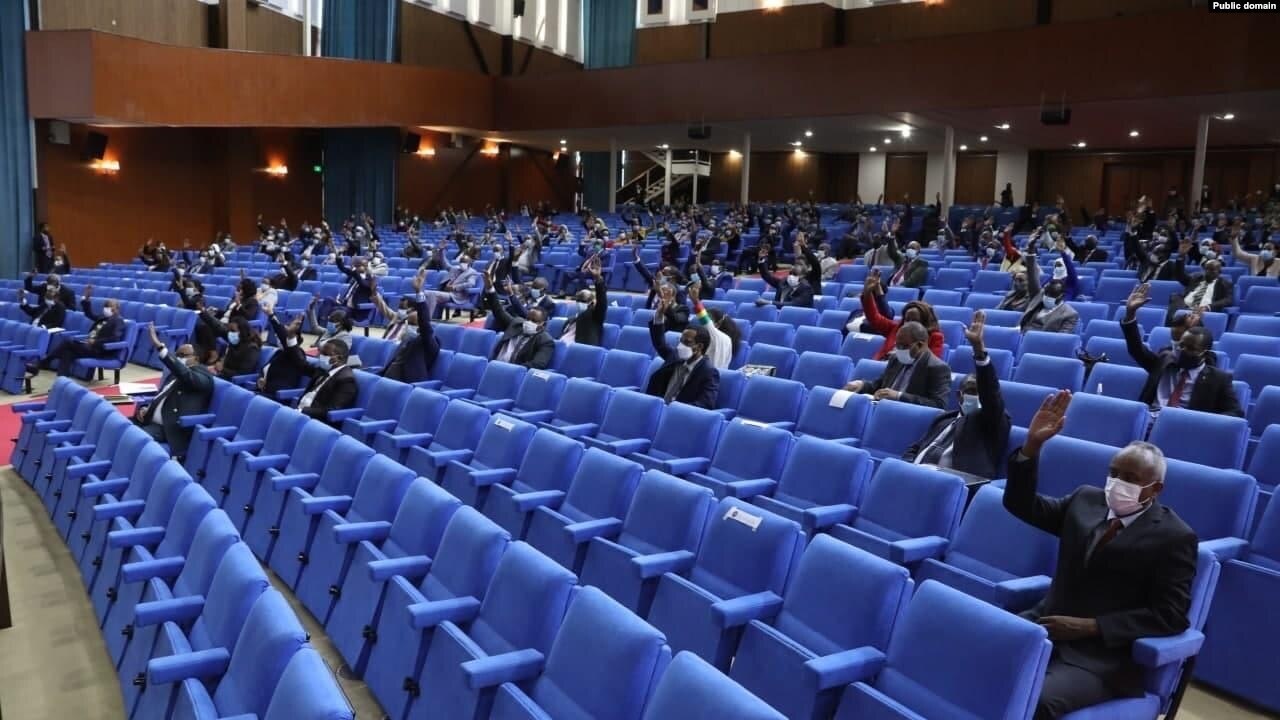
NEBE chair Melatwork Hailu said in the announcement, in our translation from the Amharic, that a successful election cannot rest on the board’s efforts alone. She said stakeholders must take part so that the vote is open, free and impartial.
Melatwork said the consultation was meant to gather input, that it will continue and that other stakeholders will be consulted too. She told parties to start preparing and civil-society groups to work so that citizens know and use their rights.
The board said a Tigray vote would let the region’s people govern themselves and win seats in the House of Peoples’ Representatives and the House of Federation, the upper house that represents Ethiopia’s regions. It did not say how many parties came, which ones attended or whether the TPLF was in the room.
NEBE revoked the TPLF’s legal party status in May 2025, and Melatwork said in January 2026 that the decision stands and that the board was not in talks with the party. On 13 January 2026 the board’s deputy chair, Tesfaye Niway, told lawmakers that the Tigray vote will go ahead.
That leaves the region’s former ruling party outside the process on the board’s current position, and Tigrayan parties object to the plan. Kibrom Berhe, chairperson of the National Congress of Great Tigray (Baytona), an opposition party in the region, said in January 2026: “The fact that the Pretoria Accord isn’t implemented makes it too challenging to think about elections and carry out election-related tasks.”
TPLF spokesperson Michael Asgedom said on 26 November 2025: “Whether they like it or not, it was the TPLF that negotiated the Pretoria Agreement.” He asked whom the federal authorities plan to compete with in Tigray while the party is suspended.
The parties’ shared argument is that the minimum security, administrative and political conditions for a vote are absent. The federal government’s own list of caretaker tasks, from restoring order to returning displaced people, reads like a list of those same conditions.
The mechanism is a timetable. Counted from 16 October, the caretaker mandate runs about six months, to mid-April 2027, so any vote would depend on how much of that work is done before the mandate ends.
NEBE has not published dates for further consultations or for an election. The board’s next step is to consult the other stakeholders Melatwork named, and the date for that is not confirmed.
Frequently Asked Questions
Is a vote in Tigray now scheduled?
No, the board has set no date. It says only that consultations will go on.
Why do Tigrayan parties object?
They say the Pretoria deal is not fully carried out and that security and administration are not ready. The former ruling party also has no legal status.
Why does the caretaker period matter?
The caretaker body is meant to prepare the region for elections, so its progress shapes any timetable. Its mandate is set to end around mid-April 2027.
Sources
Sources
- National Election Board of Ethiopia announcement of 27 November 2026
- Ethiopian federal government announcement of 16 October 2026 on the Tigray caretaker administration
- NEBE results announcement of 21 June 2026
- statements by NEBE chair Melatwork Hailu (January 2026), NEBE deputy chair Tesfaye Niway (13 January 2026), Kibrom Berhe (January 2026) and Michael Asgedom (26 November 2025)
- Pretoria agreement, November 2022
- Polymarket market data, 28 November 2026
Connected Coverage
Ethiopia news · Ethiopia Sets Six-Month Tigray Caretaker Rule · TPLF Rejects Tigray Caretaker Administration · Ethiopia’s Ruling Party Wins 438 Seats · Ethiopia’s Key Political Players
This article was produced by The Rio Times’ automated AI newsroom. Editorial responsibility: Matthias Camenzind, Publisher and Editor-in-Chief. The Rio Times also runs Ask Rio Times, which answers from 100,000+ of our own articles, the daily Latin America Power Map, and prediction-market odds on elections and markets.. How we use AI · Report an error
Horn of Africa and the Red Sea
- Horn of Africa 2026: Why It Matters and Who Backs Whom
- Ethiopia’s Neighbors Explained, Ports, Eritrea, Somalia
- Eritrea Explained 2026, a Red Sea Country Guide
- Somalia Explained: Al-Shabaab, Somaliland, the Ports and the Fight Over a 2026 Vote