Colombia’s Peace Court Says Budget Cut Threatens Victim Protection
Key Facts
Colombia’s peace court has judged crimes from the FARC war since 2019. A proposal to cut its 2027 budget, backed by the president, has become the latest fight over its future.
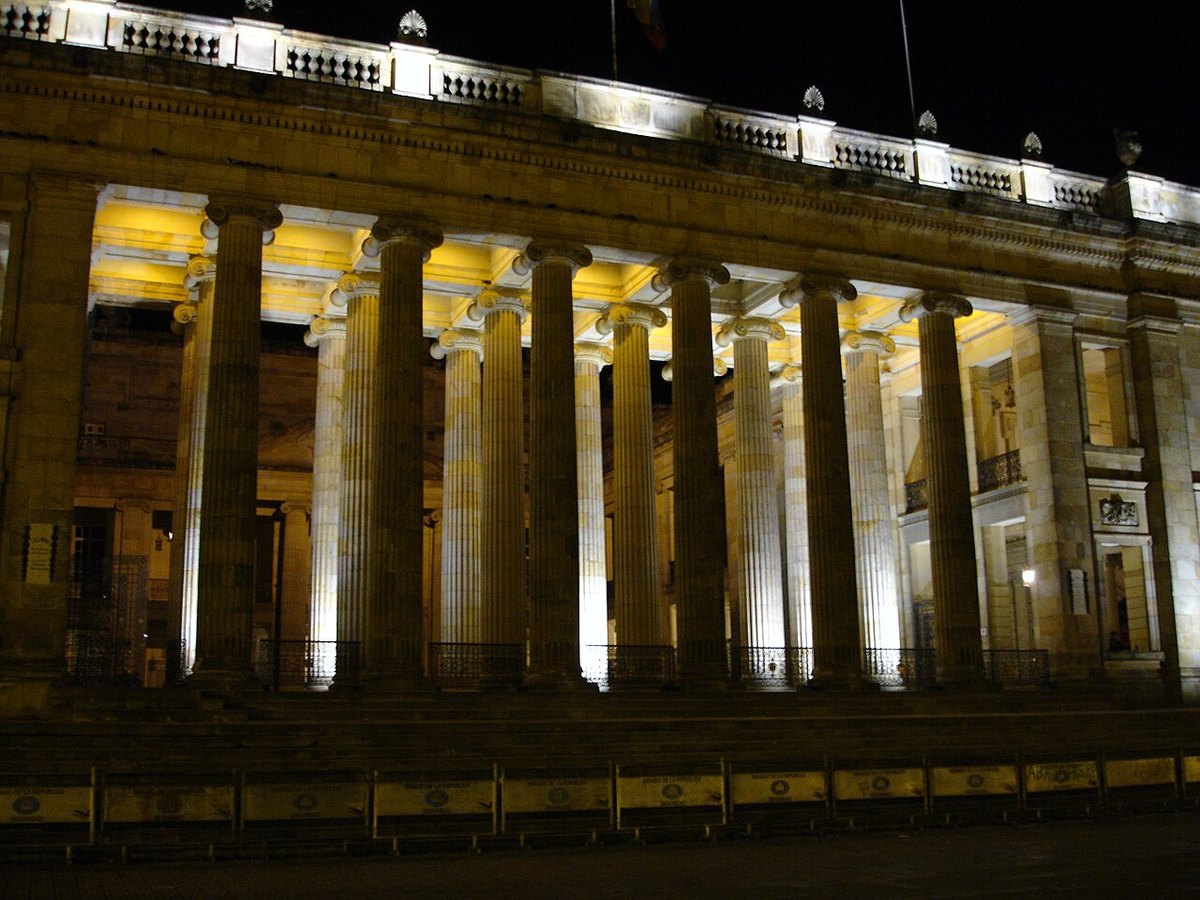
Colombia’s transitional justice court, the JEP, has condemned a proposal to cut 100,000 million pesos (about US$31.3 million) from its 2027 budget. Its president, Alejandro Ramelli, called the cut and a reform “the gravest attack we have suffered” on 18 September, Publimetro reported.
Why This Matters
The Special Jurisdiction for Peace (JEP) was created under the 2016 peace deal between the state and the former FARC guerrillas. Its cases involve former rebels and members of the armed forces.
The Senate turned the court into part of the constitution on 14 March 2017, according to Spanish-language Wikipedia. It covers crimes committed during the armed conflict up to 1 December 2016.
Its best-known case concerns the “false positives”, civilians killed by soldiers and presented as guerrillas killed in combat. The court counted 6,402 such victims between 2002 and 2008, a figure it later raised to 7,837 for 1990 to 2016.
Senator Enrique Gómez said the court has cost about 4 trillion pesos (US$1.25 billion) since it began operating in 2019. President Abelardo de la Espriella backed the cut with the words “publish, communicate and comply”, El Tiempo reported.
The fight also has an international side, because the International Criminal Court (ICC) once examined Colombia itself. The ICC prosecutor closed that examination in October 2021 on the basis that Colombia’s own courts were doing the work.
What Is Proposed
Gómez, of Salvación Nacional, proposed moving the money to the Superior Judicial Council, which runs the courts, El Tiempo reported. He wants the council to use the money to create new court offices, according to the same report.
Semana said the JEP’s 2027 budget would fall from 821,800 million pesos (US$257.4 million) to 721,800 million pesos (US$226.1 million). Centro Democrático senator María Clara Posada argued the cut should be at least half the budget, Semana reported.
Posada said the court’s payroll reached 404,477 million pesos (US$126.7 million) in 2026, Infobae reported. Gómez argued that ordinary courts, which handle about 2.2 million cases, need the money more, according to El Tiempo.
Ramelli said the cut equals 62% of the court’s funds for goods and services, according to El Tiempo. He said it would put victim and witness protection at risk, along with rent and upkeep of its Bogotá offices.
El Tiempo put the protection budget at 62,478 million pesos (US$19.6 million) and office costs at 29,362 million pesos (US$9.2 million). He put the total impact at up to 185,000 million pesos (US$57.9 million), after earlier cuts of 84,663 million pesos (US$26.5 million).
Dollar figures use the official TRM rate of 3,192.92 pesos per dollar valid on 21 September 2026. The national budget bill for 2027 totals 635 trillion pesos (US$199 billion), El Frente reported.
A Budget Already Below Its Request
The JEP had asked for 947,642 million pesos (US$296.8 million) for 2027, Semana reported. The government’s bill gave it about 821,000 million pesos (US$257.1 million), a gap of more than 125,000 million pesos (US$39.1 million).
Ramelli called that allocation “dramatic” before the new cut was even proposed, according to the same report. The proposed transfer would come on top of that shortfall, which is why he speaks of a combined impact.
Congress’s joint economic committees approved the overall 2027 budget of 634.9 trillion pesos (US$198.8 billion) on 14 September. They rejected an opposition proposal of 597 trillion pesos (US$187 billion), the Chamber of Representatives reported.
The committees have until 25 September to vote on the detailed articles and allocations, El Tiempo reported. That is the stage at which a transfer from the JEP to the judicial council could be written into the bill.
Finance Minister Miguel Gómez Martínez said the figure “is not optimal”, according to El Tiempo. Interior Minister Rodrigo Lara said the government would seek significant spending cuts in the next two months, Semana reported.
The Court’s Response
Ramelli described the cut and a separate constitutional reform as a strategy of “economic asphyxiation and subjection”. That reform, now moving through Congress, would give military courts automatic review of JEP decisions on security-force members.
He said the court would inform the UN Security Council, the Inter-American Commission on Human Rights and the ICC prosecutor’s office. Informing the ICC prosecutor is not a legal complaint, and the JEP has not announced any filing at the court.
Semana reported that Ramelli asked the ICC prosecutor’s office to support the court’s “independence, autonomy and functioning”. He called the measures “incompatible with commitments assumed by the Colombian government”, according to the same report.
On La FM radio on 19 September, he said the court could become “a court on the internet” without offices. “If they end the JEP, they will all end up at the International Criminal Court,” he added, Infobae reported.
Why the ICC Link Matters
When the ICC prosecutor closed the Colombia examination on 28 October 2021, he signed a cooperation agreement with the government. In it, Colombia committed to maintaining adequate funding for transitional justice and protecting its institutions’ independence, the ICC said.
The agreement also lets the prosecutor reconsider his assessment “in light of any significant change in circumstances”. That clause explains why the court is framing a domestic budget row as an international commitment.
Whether a single cut would meet that threshold is a legal judgment only the ICC prosecutor’s office can make. The office has made no public statement on the JEP budget in the reports reviewed by The Rio Times.
What the Court Has Delivered
Critics’ main argument is output, and it is where the court is most exposed. Gómez called the JEP “a bureaucratic fortress” with “minimal performance” and “only four rulings”, Infobae reported.
He has also called it “the jurisdiction of impunity”, according to El Tiempo. Former president Álvaro Uribe wrote that the JEP has “so much budget to mistreat the military”, Infobae reported.
The court’s first sentence came on 16 September 2025, against seven members of the FARC’s last leadership. It found them responsible for kidnapping, with at least 21,396 incidents documented, and imposed the maximum eight-year restorative sanction.
Two days later, it sentenced 12 former members of the La Popa army battalion in the false positives case. Restorative sanctions mean work such as searching for the disappeared and mine clearance, under movement restrictions, rather than prison.
Victims’ groups called the FARC sentence a “mockery” and a “betrayal”, Infobae reported at the time. The court says those sentenced had never faced ordinary courts, where impunity for these kidnappings reached 92 percent.
What It Means If You Follow Colombia
For investors, the row signals how far the new government will go against institutions created by the peace deal. Any change that unsettles former fighters’ legal security could affect stability in rural areas where armed groups remain active.
For victims, the direct risk lies in protection schemes and hearings, which Ramelli says depend on the money under threat. Donor governments and the UN, which monitors sanctions with the court, are likely to watch the committee vote closely.
What Is Not Yet Known
It is not known whether the economic committees will adopt the cut when they debate the 2027 budget. The JEP has not said which offices or programmes it would cut first.
It is also unclear whether Posada’s call for a deeper cut has support in Congress. The constitutional reform on military review has not yet been put to a vote.
Frequently Asked Questions
Why does a budget cut at Colombia’s peace court matter?
The court judges the worst crimes of the FARC war, and Colombia promised the ICC to fund it. Its president says the cut threatens victim protection.
What is the JEP?
It is Colombia’s Special Jurisdiction for Peace, created by the 2016 deal with the FARC. It judges the gravest crimes of the armed conflict.
How big is the proposed cut?
The proposal removes 100,000 million pesos (about US$31.3 million) from the 2027 budget. Congress has not yet voted on it.
Could the ICC step in?
The ICC prosecutor can reconsider Colombia’s case after a significant change in circumstances. No such step has been announced.
Sources: El Tiempo, Ramelli rejects the cut, Semana, the proposal and the 50% call, Publimetro, the gravest attack, El Frente, Senator Gómez’s proposal, Infobae, Ramelli on La FM and the critics, Semana, the JEP writes to the ICC prosecutor, Semana, the JEP’s request and the budget’s next phase, El Tiempo, committees approve the 2027 budget total, Cámara de Representantes, the committee vote, ICC, conclusion of the Colombia preliminary examination, JEP, first sentence against the former FARC leadership, JEP, Case 03 on false positives, Infobae, victims react to the first sentence, Wikipedia (Spanish), Jurisdicción Especial para la Paz, Banco de la República, the TRM exchange rate
This article was produced by The Rio Times’ automated newsroom system. How we use AI · Report an error
Read More from The Rio Times