Colombia Protest Regulation Decree Lets Police Act While Dialogue Continues
POLITICS · COLOMBIA
Key Facts
- —The country Colombia, governed since 7 August 2026 by President Abelardo de la Espriella, who campaigned on public order.
- —What happened On 30 September 2026 the Interior Ministry published a draft decree rewriting the 2021 rules on how police handle street protests.
- —Who is involved Interior Minister Rodrigo Lara drafted it. Opposition lawmakers object; a right-wing senator and Bogotá’s security chief back it.
- —What it means for you Marches stay presumed peaceful. Police could act against violent individuals while talks with marchers continue, keeping at least four metres away.
- —Still open Public comments close on Sunday 4 October 2026. A Liberal senator warns that regulating a fundamental right is largely a matter for Congress.
Colombia’s government has published a draft protest regulation decree letting police move against violent individuals without first ending talks with marchers. The Interior Ministry released the text on 30 September 2026 and is taking public comments until Sunday 4 October.
The draft rewrites Decree 003 of 2021, the protest protocol issued in January 2021 under then-President Iván Duque. It has split Congress and the city councils along familiar left–right lines, El Espectador and El Tiempo reported.

What the Protest Regulation Decree Changes
The text keeps the presumption that every march is peaceful and bans stigmatising protesters, El Tiempo reported. Police must stay at least four metres from marchers, a point El Tiempo and Infobae both quote from the draft.
The main change is timing. Police could act at once against people using firearms, explosives or knives, holding others captive or attacking anyone. They would not need to wait for dialogue to run its course.
Talks with peaceful marchers would continue at the same time, a principle the ministry calls simultaneous protection. According to Infobae’s reading, dialogue would end if blockades stop ambulances, affect hospitals or cause food or medicine shortages.
Infobae also describes five response levels, from prevention and dialogue to mediation, dissuasion and the restoration of order. The last step falls to specialised police units, including the riot unit known as UNDMO.
El Tiempo reported that local authorities would have to publish a report on each protest’s impact within 72 hours. Business groups and neighbourhood council delegates would also join the dialogue tables, it said.
Why the Government Says It Is Needed
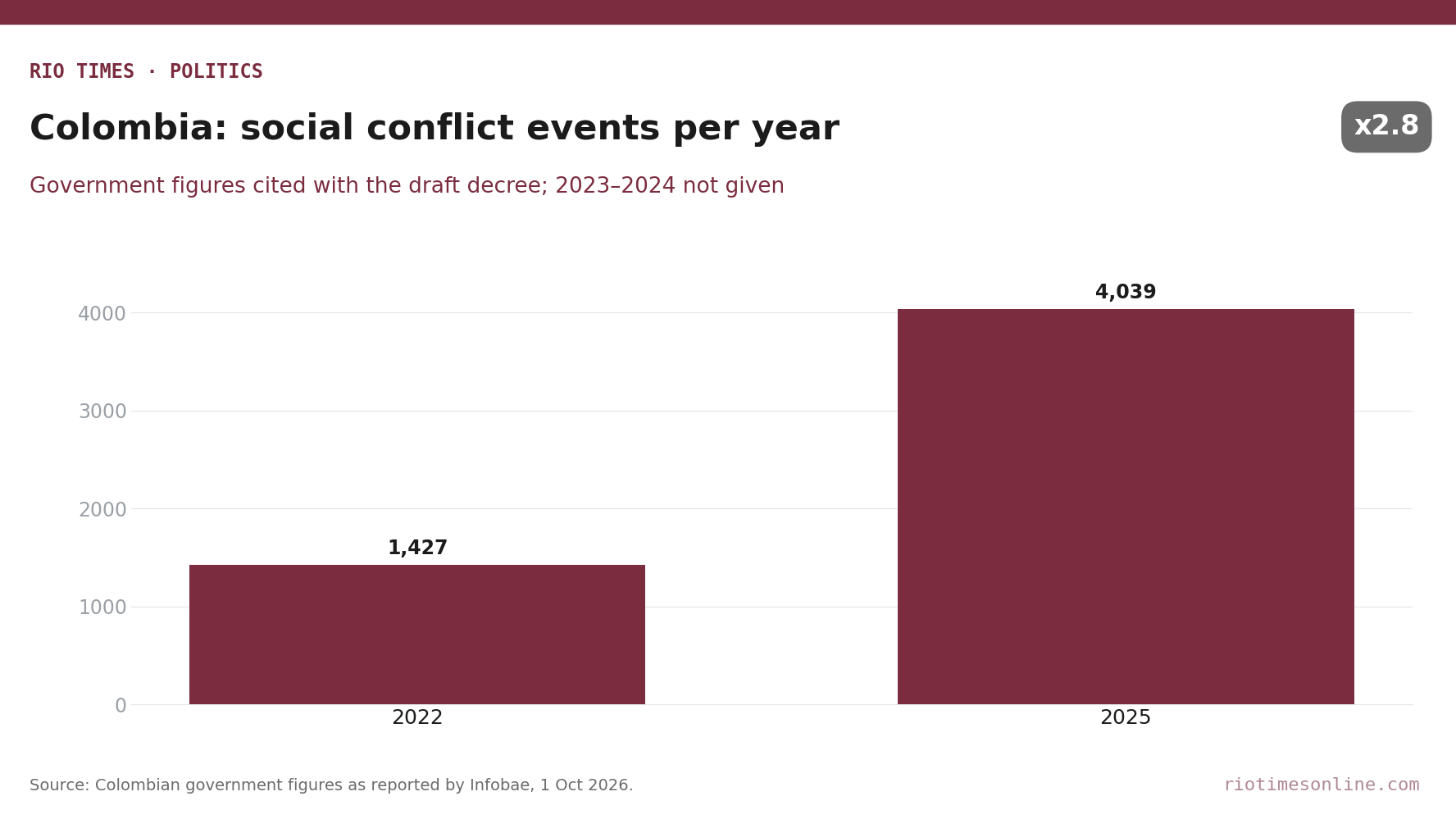
The government cites a sharp rise in unrest. Social conflict events rose from 1,427 in 2022 to 4,039 in 2025, according to official figures reported by Infobae. The underlying count could not be independently checked.
Minister Lara framed the draft on X as protecting both sides. “Not one right less for those who march. Not one inch more for those who destroy,” he wrote.
He also drew a line on what counts as violence. “A traffic jam is not violence. Discomfort is not violence,” he said, according to Infobae, while attacks, weapons and blocking an ambulance are.
Supporters and Critics
Senator María Clara Posada of the right-wing Centro Democrático party said police should not wait through endless talks while property is destroyed. Bogotá security secretary César Restrepo said the right to protest does not cover violence, El Espectador reported.
On the left, Pacto Histórico congressman Camilo Torres said “the right to protest is neither negotiated nor cut back.” Former deputy interior minister Gabriel Rondón said the government showed little interest in public debate.
Former President Gustavo Petro called for new street mobilisations after the announcement, El Espectador reported. The draft lands as the opposition and unions plan protests against the new government, as Colombia’s Election Runner-Up Backs Union Protests Against New President reported.
The sharpest objection is legal. Liberal Party senator Héctor Olimpo Espinosa warned the decree must not exceed the government’s powers, since much of the regulation of a fundamental right falls to Congress. For background on the president’s security agenda, see Who Is Abelardo de la Espriella? Colombia’s President Explained.
What Is Not Yet Known
It is not known how many comments will arrive by 4 October, or how far the protest regulation decree will change. No signing date has been announced.
It is also unclear whether anyone will challenge the decree in court once it is signed. The ministry has not said which body compiled the 2022 and 2025 conflict figures.
Sources: El Espectador, 30 Sep 2026; El Espectador, 1 Oct 2026; El Tiempo, 30 Sep 2026; El Tiempo, 1 Oct 2026; Infobae, 1 Oct 2026.
Read More from The Rio Times