Brazil’s Oil Output Climbs in February 2025 as Pre-Salt Reserves Offset Petrobras Decline
Brazil’s oil production rose to 3.488 million barrels per day in February 2025, a 1.2% annual increase, despite Petrobras’s output dropping 2.7% to 2.14 million bpd, according to the National Agency of Petroleum (ANP).
The growth reflects a strategic shift as smaller operators and international partners fill gaps left by the state giant’s retreat from aging fields. Pre-salt reserves, ultra-deep offshore deposits, now drive 76% of Brazil’s oil and gas output, with Shell boosting production to 358,644 bpd.
Petrobras has sold over 100 smaller fields since 2020, redirecting investments to high-yield pre-salt zones. Independent firms like PRIO revived legacy assets, lifting national output by 1.1% monthly.
Natural gas production hit 158.76 million m³/d, though only 30% reached markets due to reinjection and on-site consumption. The Tupi field alone produced 744,680 bpd, underscoring Brazil’s reliance on offshore basins, which supply 97% of its oil.
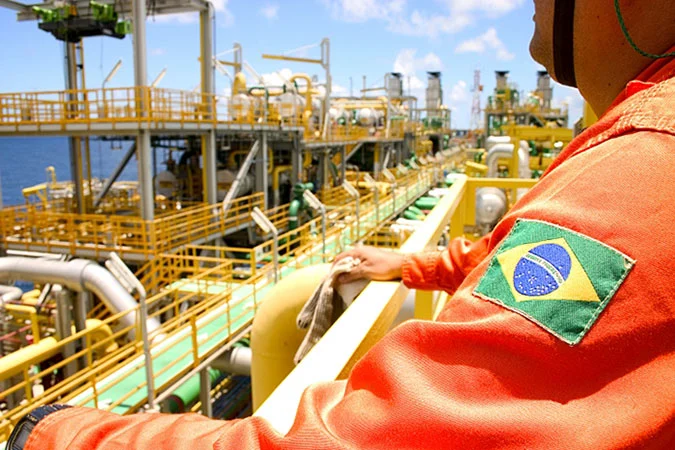
Analysts project output hitting 4 million bpd by 2026 as new platforms launch in Búzios and Mero fields. Petrobras plans $111 billion in low-carbon investments through 2029, balancing growth with environmental goals.
This pivot highlights Brazil’s emergence as a flexible energy player, leveraging partnerships to sustain growth despite internal shifts. With global crude demand rising, its diversified model positions it to rival top exporters while navigating infrastructure and emission challenges.
Live Company IntelligencePetroleo Brasileiro Petrobras SA ADR — the full investor dossier
This article was produced by The Rio Times’ automated AI newsroom. Editorial responsibility: Matthias Camenzind, Publisher and Editor-in-Chief. The Rio Times also runs Ask Rio Times, which answers from 100,000+ of our own articles, the daily Latin America Power Map, and prediction-market odds on elections and markets.. How we use AI · Report an error
LatAm Markets: Live Signals → — real-time movers, turnover leaders and FX across Latin America.