Brazil Counts 12.2 Million Unemployed, According to IBGE
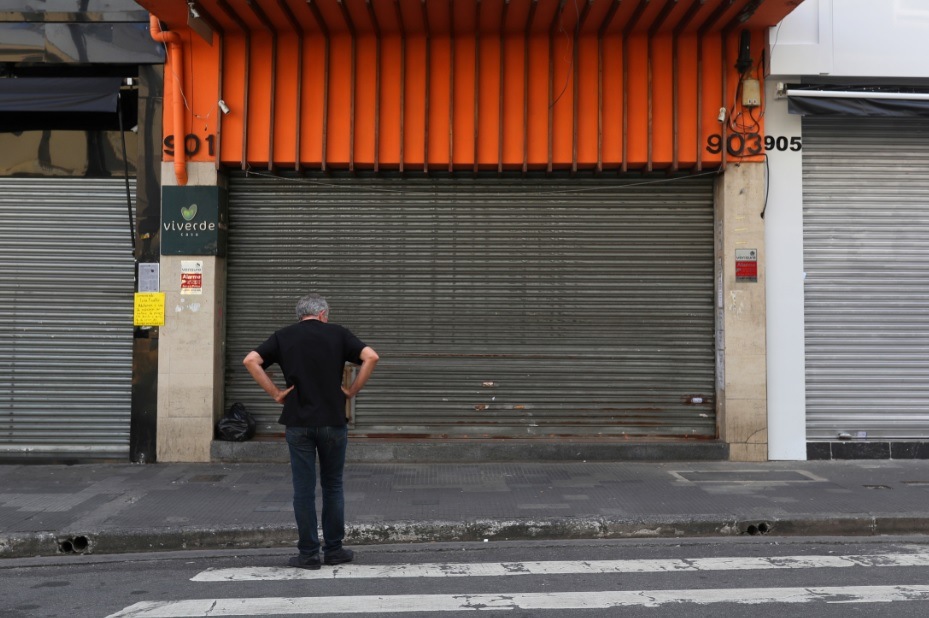
RIO DE JANEIRO, BRAZIL – The rate of unemployed in Brazil stands at 13.1 percent of the employable population, a total of 12.2 million jobless individuals. The data is included in the Covid-19 National Household Sample Survey (Covid-19 PNAD) covering the second week of July, from 5th to 11th, released yesterday, July 31st, by the Brazilian Institute of Geography and Statistics (IBGE).
The figure is above the 12.3 percent rate for the preceding week (11.5 million) and the first week of May, which recorded 10.5 percent of the population unemployed.
Working
The Covid-19 PNAD estimates the country’s working population at 81.1 million in the second week of July, while in the preceding seven days the figure stood at 81.8 million, which shows a drop related to the survey’s first week in May, when there were 83.9 million individuals working.

In percentage terms, the occupation level reached 47.6 percent. The IBGE considered it stable when compared to the preceding week (48.1 percent), but retreating from the week of May 3rd to 9th (49.4 percent). The informality rate reached 34 percent, also stable in comparison to the preceding week (34.2 percent) and declining if compared to the week between May 3rd and 9th (35.7 percent).
Distancing
Between July 5th and 11th, 8.6 percent of the employed – seven million – were away from work because of social isolation. In the preceding week, they were 10.1 percent. The difference is even greater when compared to the survey’s first week, May 3rd to 9th, when the rate stood at 19.8 percent, and 16.6 million employed were away from work.
The working and non-working population reached 71 million people, stable in relation to the preceding week (71.1 million) and an increase when compared to the period between May 3rd and 9th when there were 63.9 million people.
The survey also showed that in this group, 8.2 million or 11.6 percent, were working remotely. In absolute numbers, this contingent was stable when compared to the week between May 3rd and 9th (8.6 million), but means a drop in percentage terms (13.4 percent). According to IBGE, for the first time the number of employed individuals working remotely has dropped, because in the first week of July there were 8.9 million.
According to the research coordinator, Maria Lúcia Vieira, this trend points to a return to in-person work with the relaxation of social distancing measures.
“This is the first significant drop in the group since the start of May when the survey began. The reduction was observed both in absolute figures (643,000) and percentages (11.6 percent) and reflects what we are currently observing, which is the return of part of these people to their pre-pandemic workplaces,” she noted.
Labor force
The IBGE also reported that the labor force share rate stood at 54.8 percent in the second week of this month, very close to the preceding period (54.9 percent) and the first week of May (55.2 percent).
In contrast, the population out of the labor force, people who were not working or looking for work, totaled 76.9 million individuals. This represents stability over the preceding week (76.8 million) and also over the week from May 3rd to 9th (76.2 million).
According to the survey, about 28.3 million people or 36.7 percent of the population outside the labor force, said they would like to work. The contingent was stable when compared to the preceding week (28.7 million or 37.4 percent); however, it increased when compared to the week from May 3rd to 9th (27.1 million or 35.5 percent).
The pandemic or the absence of occupation in the place where they lived, were the reason for some 19.2 million people out of the labor force wanting to work, not to seek employment.
This corresponds to 68 percent of the non-occupied individuals who did not look for a job and would like to work. The result remained stable when compared to the preceding week (19.4 million or 67.4 percent) and also when compared to the week between May 3rd and 9th (19.1 million or 70.7 percent).
Health
Between July 5th and 11th, it is estimated that 13.9 million people (or 6.6 percent of the country’s population) had at least one of the 12 symptoms associated with the flu syndrome, which are fever, cough, sore throat, difficulty breathing, headache, chest pain, nausea, blocked or runny nose, fatigue, eye pain, loss of smell or taste, and muscle pain.
These are the symptoms investigated by the survey. The total remains stable when compared to the preceding week (14.3 million or 6.8 percent of the population), but decreasing when compared to May 3rd to 9th (26.8 million or 12.7 percent).
According to Covid-19 PNAD, approximately three million people, or 21.5 percent of those who presented some symptoms, sought a healthcare facility such as a health center, family health team, emergency room or SUS hospital, or even an outpatient/advisory facility, emergency room, or private hospital for care.
The result was very close to the preceding week (3.1 million or 21.5 percent). Despite a drop in absolute numbers, it was higher in percentage terms than the week between May 3rd and 9th (3.7 million or 13.7 percent). Over 84 percent of these services were provided by the public healthcare network.
Among those who had symptoms of influenza between July 5th and 11th, 315,000 (10.6 percent) sought care in an outpatient clinic or private office or in the armed forces. This result is stable both when compared to the preceding week (311,000 or 10.1 percent) and to the first week of May (320,000 or 8.7 percent).
In general, 914,000 people with symptoms sought hospital services in the week between July 5th and 11th. Statistically, the number remained stable when compared to the preceding week (933,000) and to the week between May 3rd and 9th (1.1 million).
Among those seeking care, 124,000 (13.6 percent) needed hospitalization. In this case, there was also stability when compared to the preceding week (136,000 or 14.6 percent) and the week between May 3rd and 9th (97,000 or 9.1 percent).
Source: Agência Brasil
More: Brazil news in English, every day from The Rio Times.
Read More from The Rio Times