Wildfire Above Colombia’s Villa de Leyva Reaches Edge of Iguaque Sanctuary
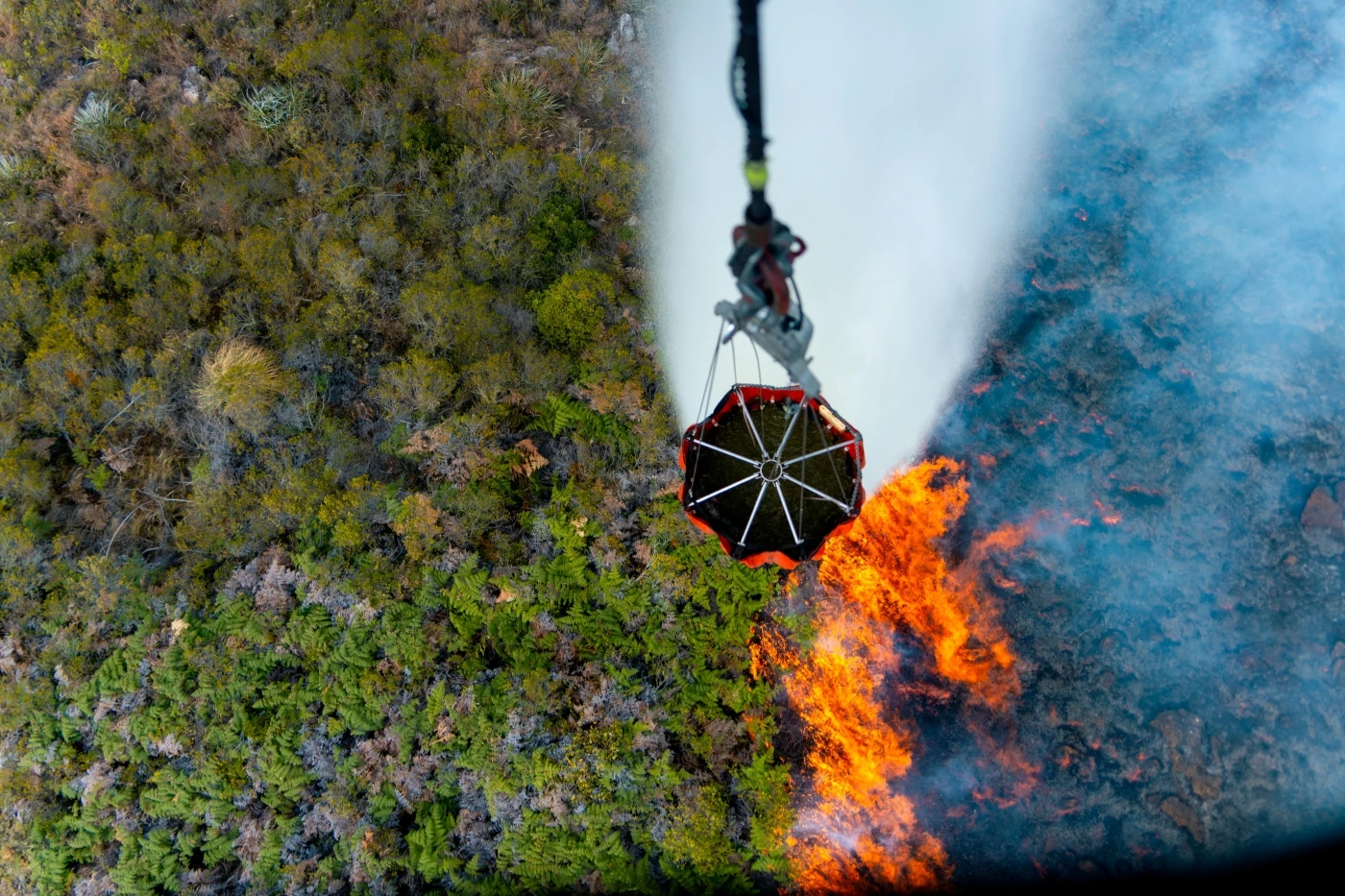
Fires have hit the hills around Villa de Leyva before, including a 2010 blaze that burned 1,300 hectares. A new fire has now burned hundreds of hectares and reached the edge of the Iguaque sanctuary.
A wildfire broke out on 19 September on the San Marcos hill above Villa de Leyva, a town in Boyacá department. Boyacá’s governor, Carlos Amaya, said on 20 September that it had burned about 290 hectares, El Tiempo reported.
Key Facts
Why This Matters
Villa de Leyva is a colonial town about three hours by road from Bogotá, founded in 1572. It was declared a national monument in 1954, and its cobbled main square covers 14,000 square metres.
The town receives more than one million tourists a year, the Mexican daily Excélsior reported. The governor called it an architectural jewel of Colombia, which explains the national attention.
The Santuario de Fauna y Flora Iguaque covers 6,889 hectares in Chíquiza, Arcabuco and Villa de Leyva, according to Parques Nacionales. Its páramo and Andean forests regulate water for more than 30,000 people in nearby communities, the parks agency says.
Parques Nacionales, the national parks agency, says that is the largest number served by any park in its system. A páramo is a high Andean wetland of grasses and shrubs that stores rain and releases it slowly.
Its lagoon is sacred in Muisca tradition as the place where the goddess Bachué, mother of humanity, emerged. A disaster management official said on Sunday that flames were already in the páramo’s buffer zone, El Tiempo reported.
Amaya warned of a great risk that the reserve could be damaged irreversibly. In February 2010, a fire burned 1,300 hectares in the area, 800 of them inside the reserve, El Tiempo recalled.
How the Fire Spread
The fire was reported at about 2 p.m. on Saturday in the La Marmolera sector of the hill, El Tiempo reported. Early estimates put the affected area at about 40 hectares, before strong winds pushed the flames across steep ground.
By 10:30 a.m. on Sunday, about 70 hectares had burned, according to a regional government update cited by Orfe TV. Two helicopters had made 24 water drops by then, releasing more than 27,000 litres, Semana reported.
Estimates of the burned area vary, from about 180 hectares in one El Tiempo report to the governor’s 290. The figures rose through Sunday as night winds revived several points of the fire, Excélsior reported.
El Tiempo reported that Hotel El Duruelo, which was evacuated, stands four blocks from the central square. No homes had been reported destroyed and no one had been reported injured on Sunday, Orfe TV said.
The Response
Villa de Leyva declared a public calamity on 20 September and suspended classes for Monday, Infobae reported. Civil Defence evacuated 29 people from the Hotel Suites Arcoíris, and Hotel El Duruelo was also cleared.
Ten people, the owners and staff, chose to stay at the Arcoíris hotel, the news site Minuto60 reported. Residents of north-eastern sectors were evacuated, and the municipal coliseum became a shelter and aid centre.
Four helicopters, two from the regional government and two from the national government, dropped water on the flames. More than 350 firefighters, soldiers, police officers, Red Cross staff and volunteers worked on the ground, Orfe TV reported.
Helicopters cannot fly at night, so ground crews and firefighters sent from Bogotá held the lines overnight. Amaya asked the national government for more helicopters, machinery and personnel, Minuto60 reported.
Environment Minister Fabio Arjona said on Sunday evening that up to half the fire was under control, El Tiempo reported. A local running race, the Carrera del Amor, was cancelled, and many tourists left the town, Orfe TV said.
What Officials Said
“Villa de Leyva is not alone,” President Abelardo de la Espriella wrote, promising to deploy all the state’s capacities. He said the aim was to protect the town’s inhabitants, its heritage and its natural resources, El Tiempo reported.
Mayor Nicolás Méndez said there were many active fire fronts and that local capacity was being overwhelmed, Excélsior reported. Interior Minister Rodrigo Lara said on Sunday morning that the fire had slowed as cooler air helped crews, Semana reported.
Suspected Arson
Arjona wrote on X that, according to the disaster risk agency UNGRD, the fire “would have been provoked”. He said authorities were carrying out checks, and no suspect has been named.
Colombia’s Penal Code punishes arson with prison terms of 16 to 144 months in its basic form. Article 350 raises the penalty by up to half when the fire affects forests or areas of special ecological importance.
A previous fire in the sanctuary, in August 2024, burned about 100 hectares of native vegetation and grassland. Parques Nacionales said at the time that preliminary investigations pointed to human causes.
Boyacá’s government offered 45 million pesos (about US$14,100) for information on those responsible, El Tiempo reported. The dollar figure uses the official TRM rate of 3,192.92 pesos per dollar valid on 21 September 2026.
A Dry Year Under El Niño
The government confirmed on 11 June that El Niño conditions had formed in the Pacific, about three months early. El Niño is a periodic warming of Pacific waters that usually brings drier weather to Colombia’s Andes.
The Environment Ministry warned of less rain than normal in the Andean region and a higher risk of forest fires. It put the chance of a very strong event between November 2026 and January 2027 at 63 percent.
On the morning of 20 September, Colombia had 19 active forest fires across seven departments, Semana reported. In neighbouring Cundinamarca, the disaster agency counted 828 forest fires on 3,140 hectares between January and mid-September, Infobae reported.
During the last El Niño, in January 2024, then-President Gustavo Petro announced a natural disaster decree over wildfires. Boyacá had four active fires on the day of that announcement, CNN en Español reported.
What It Means If You Are Visiting or Live Nearby
Travellers booked in Villa de Leyva should check with their hotel before leaving Bogotá, since some establishments were evacuated. Authorities asked the public to stay away from the fire zone, including trails on the burning hills.
Visitors planning to walk to the Iguaque lagoon should first confirm with Parques Nacionales that the sanctuary is open. Residents in the north-east of the town should follow municipal evacuation orders and use the coliseum shelter if needed.
Smoke can affect people with asthma or heart conditions, so staying indoors near the fire is advisable. Tourism businesses should keep records of any losses, since no damage assessment has yet been published.
What Is Not Yet Known
It is not known how much, if any, of the sanctuary itself has burned. Investigators have not said what evidence points to a deliberate start.
Officials have not said when the fire will be fully controlled or when evacuees can return. Damage to hotels and homes has not been assessed in public.
More: Colombia news in English, every day from The Rio Times.
Sources: El Tiempo, 290 hectares and the risk to Iguaque, El Tiempo, buffer zone and containment, El Tiempo, start of the fire and the president’s statement, Infobae, public calamity and evacuations, Infobae, minister suspects arson, Boyacá 7 Días, calamity and resources, El Tiempo, reward for information, Orfe TV, crews, helicopters and water drops, Semana, live updates on the emergency, Minuto60, hotel staff and the governor’s request, Excélsior, the mayor, tourism and El Niño, Parques Nacionales, the August 2024 Iguaque fire, Parques Nacionales, Iguaque sanctuary profile, Colombia Travel, Villa de Leyva profile, Wikipedia, Villa de Leyva founding and monument status, Environment Ministry, El Niño confirmed, Infobae, Cundinamarca wildfire count for 2026, CNN en Español, the 2024 wildfire disaster decree, Senate of Colombia, Penal Code Article 350
Frequently Asked Questions
Why does the Villa de Leyva fire matter?
It threatens a national monument town and the Iguaque sanctuary, whose páramo supplies water to more than 30,000 people. It also comes as El Niño raises wildfire risk across Colombia.
Has the fire reached the Iguaque sanctuary?
A disaster official said flames were in the páramo’s buffer zone on 20 September. Officials have not reported how much of the sanctuary itself has burned.
Was the fire started deliberately?
Environment Minister Fabio Arjona said that, according to the disaster agency, it may have been provoked. Authorities are still verifying this, and no suspect has been named.
Is it safe to travel to Villa de Leyva?
The historic centre had not been reported damaged, but hotels near the hill were evacuated. Travellers should check with their accommodation and follow official guidance.
This article was produced by The Rio Times’ automated AI newsroom. Editorial responsibility: Matthias Camenzind, Publisher and Editor-in-Chief. The Rio Times also runs Ask Rio Times, which answers from 100,000+ of our own articles, the daily Latin America Power Map, and prediction-market odds on elections and markets.. How we use AI · Report an error