Bolivia is between a rock and a hard place over hydrocarbon subsidies
By Sebastián Ochoa
For more than 20 years, the Bolivian State has been buying gasoline and diesel at international prices to sell them in the country with a 50% subsidy.
The government is looking for alternatives to stop this measure, which costs the public coffers more than US$1 billion annually.
A liter of gasoline or diesel costs Bs3.72 (US$0.54) in Bolivia.
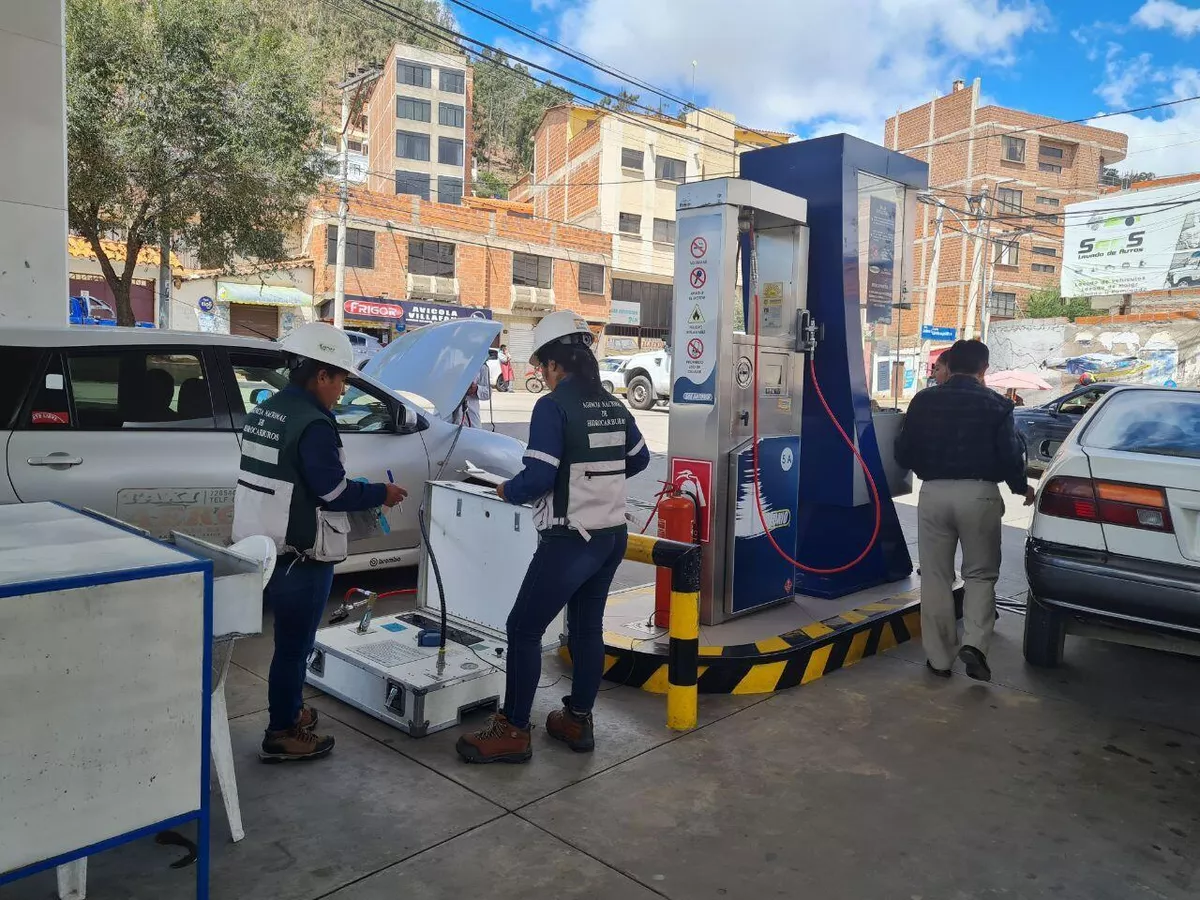
Approximately half of this price has been subsidized by the Bolivian state for over two decades, constituting a permanent loss for the local economy.
Former president Evo Morales (2006-2019) recently suggested to his successor in office, Luis Arce, to eliminate this fuel subsidy, which the current president rejected due to the social effects it would have.
On December 26, 2010, Morales instructed to remove this subsidy.
Demonstrations and blockades, led by the transportation unions, paralyzed the country.
On the night of December 31, the then-president announced that he was reversing this measure and that the subsidized price would remain in effect.
The issue was not discussed again, but year after year, the cost of this subsidy increases for the State, given the inevitable growth of the Bolivian vehicle fleet.
According to data from the National Statistics Institute (INE), Bolivia imported fuels and lubricants for US$4.365 billion in 2022, while gas exports reached US$3.088 billion.
A loss in the balance of more than US$1.276 billion.
There was a time in the 1970s when Bolivia could refine enough hydrocarbons to feed a national vehicle fleet of fewer than 250,000 vehicles.
Besides, it was enough to export.
But in 2023, with more than 2 million cars on the road, the fuel requirement is insufficient.
Analyst Emilio Rodas explained to Sputnik:
“We do not have many reserves of heavy oil, which is used for the production of diesel and gasoline. In the 1970s, we became self-sufficient and even exported”.
The lack of exploration and exploitation of hydrocarbons in Bolivia determined the current low levels.
Today, 15.4 million cubic meters are extracted every day, while in 2015, they exceeded 22 million cubic meters per day.
“On the one hand, there is a decrease in oil production. On the other, the increase in the national vehicle fleet.”
That has led us to increase fuel imports,” explained Rodas, former Vice Minister of the Internal Regime at the beginning of Arce’s government, between 2020 and 2021.
Fuel imports reached US$4.365 billion in 2022, according to the Minister of Hydrocarbons, Franklin Molina.
“We pay at an international price and sell at a subsidized price. Our price is half the commercial price of any of our neighbors.”
“That, of course, is a very heavy burden that has been increasing and does not seem to be decreasing because the vehicle fleet continues to grow,” warned Rodas.
The fuel subsidy was established in 2000, during the government of Hugo Banzer, de facto president between 1971 and 1978 and democratically elected president between 1997 and 2001.
ELEMENTS IN CONFLICT
For the analyst, there is a structural way out, but it is very difficult to implement in the short term.
He explained that two elements of the economy have been determinant during the governments of the Movement to Socialism (MAS), the party of Morales and Arce.
“One is the hydrocarbon subsidy. Another is the exchange rate stability.”
“Any variation in either of the two would have strong political consequences because a large part of competitiveness is based on the subsidy”, Rueda explained.
Since former President Morales revived the debate on fuel subsidies, proposals have emerged from several sectors.
The one gaining more ground is that of MAS, which suggests removing the benefit to agro-industrial entrepreneurs of Santa Cruz, who capitalize on this support from the State.
Rodas, who lives in Santa Cruz, commented that “our soybean exports last year reached US$3 billion. Much of that profit was supported by the fuel subsidy”.
“Bolivian soybeans are competitive not because of production per hectare but because of the fuel subsidy and the Andean preferential market.”
“If the subsidy is removed, our production would be left out of international markets,” he observed.
DEVELOPMENT OF BIOFUELS
Following Morales’ recommendation, President Arce clarified that the fuel subsidy would continue.
In any case, the Bolivian Drivers Confederation warned that it rejects any attempt to increase the price of gasoline and diesel.
“Removing the subsidy to public transportation would be dramatic because it would have a terrible multiplier effect on inflation.”
“All things are transported from the countryside to the city. In the whole productive chain, there is a latent subsidy.”
“It would be an irresponsible adventure,” said Rodas.
On several occasions, President Arce, who was head of the Ministry of Economy and Public Finance under Morales, stated that the development of biofuels would help the country to get out of this crossroads.
Several projects are underway to construct plants to produce fuels from vegetable oils.
It is projected that by 2026 “we will have three biofuel production plants in operation, which will reduce fuel imports by about US$600 million”, informed Rodas.
As a short-term measure, the former vice minister agreed with the Ministry of Hydrocarbons proposal: to use the pipelines that go to Argentina and Brazil to import crude oil, refine it in Bolivia and thus reduce subsidy costs.
Rodas explained that Bolivia has two refineries, in the departments of Cochabamba and Santa Cruz, which currently operate at 30% due to lack of oil.
“It is estimated that this operation would allow us to save between US$250 million and US$300 million. It is an immediate measure.”
“But I calculate that this 2023 we will close with a subsidy of nearly US$2 billion”, he indicated.
With information from Sputnik
More: Bolivia news in English, every day from The Rio Times.
Read More from The Rio Times