Brazil Gas Power Plants in Bahia to Cost US$174 Million, Town Hall Says
Key Facts
A town in northeastern Brazil says four gas-fired power plants will be built on its land. The municipality of Pojuca, in Bahia state, puts the private investment at about R$900 million, or US$174 million.
The plants belong to Grupo Corcovado, a Brazilian generator that won four lots in a federal capacity auction in March. Pojuca expects about 1,000 direct and indirect jobs while the site is built.
What the Town Hall Announced
Pojuca’s town hall published the plan on 22 September, and the trade outlet CPG Click Petróleo e Gás reported it days later. Both describe four natural-gas thermal plants in the Estação Recife district of the municipality.
The investment figure of about R$900 million, roughly US$174 million, and the estimate of 1,000 jobs come from the municipality. Grupo Corcovado has not published its own budget for the site.
Bahia’s economic development secretariat has been briefed on the project since May. The regional outlet Bahia Econômica reported that company representatives presented it to the secretariat on 27 May.
Aécio Moreira, then the acting state secretary for economic development, said Bahia was building an institutional setting that attracts investment. He framed the state as a player in energy security and the energy transition.
Four Plants or Four Contracts
The number four appears twice in this story, and the two uses are not the same thing. Grupo Corcovado won four lots in the March auction, and Pojuca describes four plants at one site.
An auction lot is a contract for a block of capacity, not necessarily a separate building. The business site NegóciosBA reported the same announcement as a single plant tied to four winning lots.
The public record settles one unit so far. A secretariat of Brazil’s mines and energy ministry authorised UTE Corcovado 05 on 21 September, rated at 49.998 megawatts.
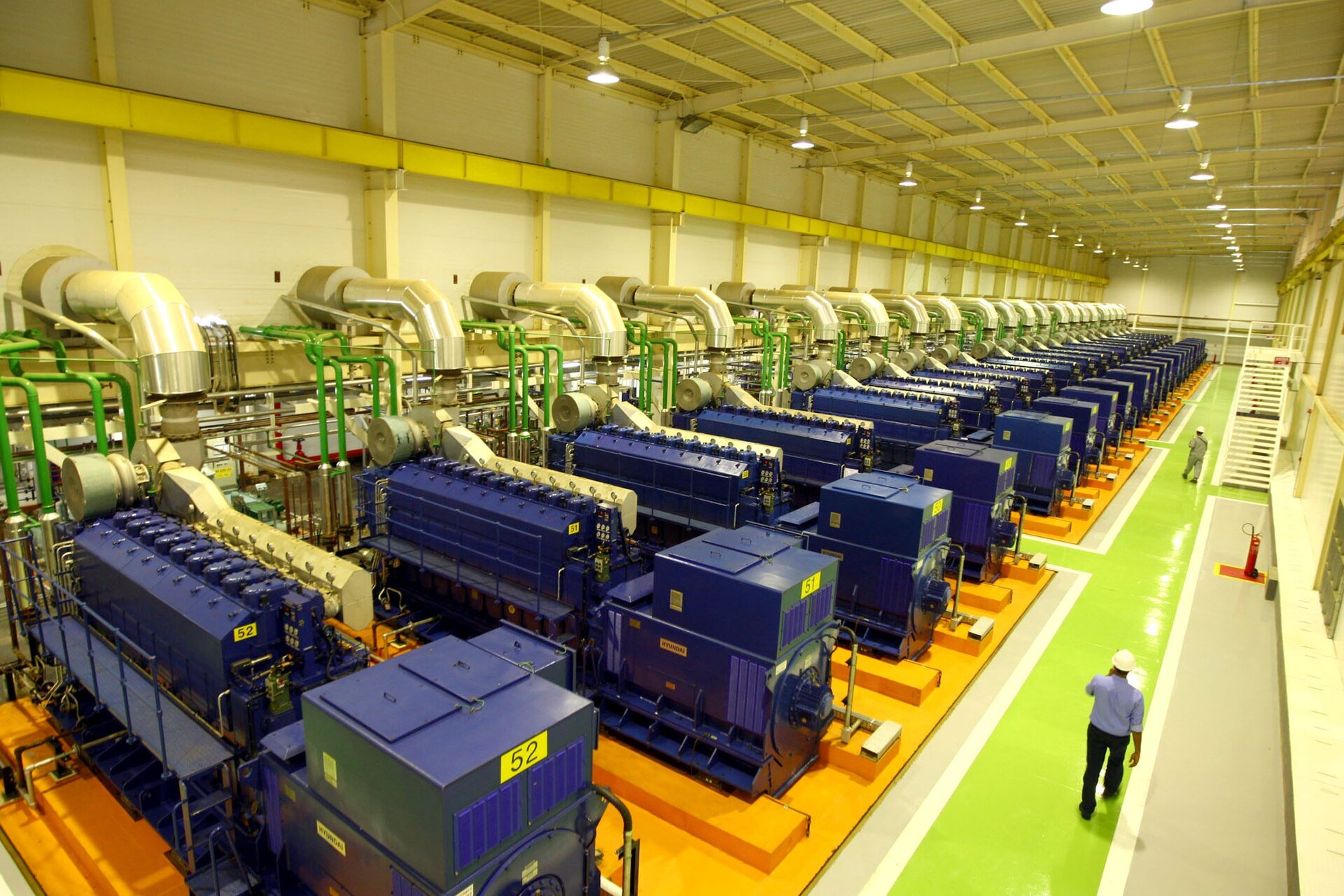
That unit alone carries 13 generators and must be running commercially by 1 October 2028. The name and the number suggest sister units, but no authorisation for them has been published.
Why Brazil Buys Gas Power
Brazil’s grid is one of the cleanest among large economies, with renewable sources supplying close to 90 percent of generation. Hydroelectric dams do most of the work, and wind and solar farms have grown quickly beside them.
The problem is not how much electricity Brazil can make over a year, but when it can make it. Solar output stops at dusk, wind is unreliable, and reservoirs can run low in a dry year.
So the government now buys something different from energy, which it calls capacity, or potência in Portuguese. A plant is paid to be ready to run on demand, whether or not it is called on.
Gas-fired units suit that job because they start and stop within minutes. Their fuel bill is high, but under these contracts most of their income does not depend on burning any gas at all.
The Auction Behind the Project
The March tender is formally the Leilão de Reserva de Capacidade, Brazil’s capacity reserve auction. It was held on 18 March and contracted 18,977 megawatts across 100 winning projects.
Agência Brasil, the state news agency, reported about R$64 billion of declared investment, roughly US$12.3 billion. The trade site Agência iNFRA counted 90 gas-fired winners, three burning imported coal and two on biomethane.
Contracts run ten years for thermal plants and fifteen for hydroelectric expansions, with supply starting in stages from August 2026 to August 2031. The average contracted price was about R$2.33 million per megawatt a year, roughly US$449,000.
Energy Minister Alexandre Silveira said after the auction that Brazil’s capacity problem in the power system was solved. The Pojuca unit’s deadline of October 2028 sits inside that delivery window.
Who Objects, and Why
Not everyone welcomed the result, because consumers pay for capacity through their bills. The environmental news service ClimaInfo put the annual cost of the contracts at about R$39 billion, roughly US$7.5 billion.
Abrace, which represents large industrial electricity users, and the National Front of Energy Consumers said the volume contracted was more than the system needed. They estimated the effect on the average electricity tariff at about 10 percent.
Jerson Kelman, a former director-general of Brazil’s electricity regulator, called the coal contracts a subsidy disguised as energy policy. Gas draws a milder version of the same complaint, that a clean grid is being made dearer.
The government’s answer is that the auction saved money against the ceiling prices it set. Officials put that saving at about R$33.6 billion, roughly US$6.5 billion, and say unserved demand would cost far more.
What Has to Happen Next
Pojuca’s announcement is a plan, not a building site. Environmental licensing is under way, and the town hall has spoken of earthworks starting in January without confirming a date.
The authorised unit also has to post a performance guarantee of about R$11.25 million, roughly US$2.2 million. That deposit is what a developer forfeits if the plant is late.
Gas supply is the other open question, because a plant in the Camaçari industrial belt needs a pipeline connection and a contracted volume. Neither the company nor the municipality has published a gas supply agreement.
For Pojuca, a small municipality, the jobs matter more than the megawatts. Most of those 1,000 posts last only as long as the construction does.
Frequently Asked Questions
How many power plants are actually confirmed?
One is authorised: UTE Corcovado 05, cleared by a mines and energy ministry secretariat on 21 September and rated at 49.998 megawatts. The town hall describes four plants and the company won four auction lots, but only that one unit appears in the public record.
What is a capacity reserve auction?
It is a Brazilian government tender that pays power plants to stand ready on demand, rather than for the electricity they sell. The 2026 round, held on 18 March, contracted 18,977 megawatts from 100 projects.
Why does Brazil need gas plants if its grid is already clean?
Because dams, wind farms and solar parks cannot all be switched on at will, and the evening peak still has to be covered. Gas units can start within minutes, which is what the capacity contracts pay for.
Who pays for this?
Electricity customers do, through a charge in their bills. ClimaInfo put the annual cost of the 2026 contracts at about R$39 billion, roughly US$7.5 billion, and consumer groups estimated an effect of about 10 percent on the average tariff.
When would the Pojuca plant start running?
The authorisation sets 1 October 2028 as the deadline for commercial operation of the first unit. Environmental licensing is not finished and construction has not started.
This article was produced by The Rio Times’ automated newsroom system. How we use AI · Report an error
Read More from The Rio Times