IBOV 172,758.89 ▼ 0.35% IPSA 10,877.68 ▼ 0.18% IPC MEX 66,125.27 ▼ 0.74% MERVAL 3,281,489 ▲ 1.79% COLCAP 2,309.56 ▲ 0.49% BVL PERÚ 56,620.35 — — USD/BRL5.08▼ 0.22% USD/MXN17.39▼ 0.21% USD/CLP931.50▼ 0.32% USD/COP3,239▼ 0.91% USD/PEN3.40▲ 0.12% USD/ARS1,479▼ 0.20% USD/UYU40.11▲ 1.23% USD/PYG6,045▲ 1.76% USD/BOB10.80▲ 2.69% USD/DOP58.02▲ 0.31% USD/CRC446.12▲ 1.15% USD/GTQ7.62▲ 2.33% USD/HNL26.74▲ 1.61% USD/NIO36.62▲ 0.84% USD/VES735.39▼ 0.13% USD/PAB1.00— 0.00% USD/BZD2.00— 0.00% USD/JMD157.79▲ 0.73% USD/TTD6.73▲ 1.11% EUR/BRL5.79▼ 1.07% BRENT 91.25 ▲ 2.28% WTI 84.38 ▲ 1.38% IRON ORE 161.91 — — COPPER 6.53 ▲ 3.71% GOLD 4,075 ▲ 1.61% SILVER 59.34 ▲ 4.47% SOY 1,220 ▼ 0.51% CORN 473.00 ▲ 5.23% WHEAT 669.25 ▼ 0.70% COFFEE 326.35 ▼ 2.41% SUGAR 14.84 ▲ 0.13% ORANGE JUICE 149.90 ▲ 1.70% COTTON 79.51 ▲ 2.77% COCOA 5,652 ▲ 2.39% BEEF 222.58 ▼ 1.74% CATTLE 344.08 ▼ 2.25% LITHIUM 68.97 ▲ 3.06% PETR4 41.45 ▲ 0.73% VALE3 71.67 ▼ 0.36% ITUB4 42.35 ▲ 0.12% BBDC4 18.44 ▲ 0.16% ABEV3 15.78 ▼ 0.06% BBAS3 20.21 ▲ 0.20% B3SA3 15.05 ▼ 1.38% WEGE3 42.75 ▼ 0.88% PRIO3 58.80 ▲ 1.92% SUZB3 41.78 ▼ 0.26% RENT3 36.79 ▼ 1.87% AZZA3 17.65 ▼ 2.86% CSAN3 3.73 ▼ 2.36% RAIZ4 0.28 ▲ 3.70% PCAR3 2.69 ▲ 3.46% GMAT3 3.82 ▼ 0.78% PSSA3 53.28 ▼ 1.70% CVCB3 1.15 ▲ 6.48% POSI3 3.74 ▲ 1.08% SLCE3 13.70 ▲ 0.96% NATU3 8.65 ▲ 0.23% BRKM5 5.98 ▲ 0.67% RANI3 7.86 ▼ 1.63% CSNA3 5.11 ▲ 0.79% CMIN3 5.52 ▲ 2.41% USIM5 8.30 ▲ 1.72% GGBR4 23.57 ▼ 0.21% ENEV3 25.21 ▼ 1.72% CPFE3 46.20 ▼ 0.26% CMIG4 10.95 ▼ 0.64% EQTL3 38.60 ▼ 1.76% LREN3 13.18 ▼ 0.98% VIVT3 35.46 ▼ 0.59% RAIL3 13.37 ▼ 1.47% KLABIN 17.45 ▼ 0.17% RAIA DROGASIL 18.53 ▼ 0.86% RDOR3 33.94 ▼ 4.26% HAPV3 11.30 ▼ 2.16% FLRY3 16.37 ▼ 1.15% SMTO3 15.36 ▼ 0.32% UGPA3 31.35 ▼ 1.10% VBBR3 33.22 ▼ 2.61% BBSE3 41.05 — 0.00% BPAC11 55.50 ▼ 0.61% CURY3 29.78 ▼ 1.36% AERI3 2.02 ▼ 2.42% VIVARA 21.58 ▼ 1.73% COMPASS 24.33 ▼ 1.10% VAMOS 3.11 ▲ 0.65% SANB11 27.49 ▲ 1.78% ASAI3 8.21 ▲ 0.86% SBSP3 28.48 ▼ 1.73% WALMEX 49.29 ▼ 0.18% GMEXICO 204.75 ▲ 1.95% FEMSA 226.84 ▼ 0.06% CEMEX 22.07 ▲ 0.87% GFNORTE 183.10 ▲ 1.72% BIMBO 59.04 ▼ 0.77% TELEVISA 9.63 ▼ 0.82% AMX 22.80 ▲ 0.26% GAP 377.25 ▼ 0.25% ASUR 271.12 ▼ 1.19% OMA 225.31 ▼ 0.50% KOF 181.07 ▲ 0.14% GRUMA 287.54 ▼ 0.02% KIMBER 38.09 ▼ 0.78% SQM-B 63,600 ▲ 0.76% COPEC 6,329 ▲ 2.08% BSANTANDER 78.52 ▲ 3.19% FALABELLA 5,838 ▼ 0.63% ENELAM 84.43 ▲ 0.38% CENCOSUD 2,000 ▲ 0.26% CMPC 1,080 ▲ 1.31% BANCO CHILE 190.44 ▲ 2.12% LATAM AIR 24.39 ▼ 0.08% YPF 80,750 ▲ 1.96% GGAL 7,960 ▲ 1.47% PAMPA 5,465 ▲ 3.70% TXAR 669.00 ▼ 0.22% ALUAR 968.50 ▲ 0.94% TGS 9,645 ▲ 1.53% CEPU 2,331 ▲ 1.83% MIRGOR 16,600 ▼ 3.07% COME 43.27 ▲ 0.75% LOMA NEGRA 3,630 ▲ 1.61% BYMA 293.50 ▼ 0.09% TELECOM ARG 4,180 ▲ 0.84% ECOPETROL 16.45 ▲ 2.62% BANCOLOMBIA 82.12 ▲ 1.61% GRUPO AVAL 5.01 ▲ 1.11% CREDICORP 392.34 ▲ 1.42% SOUTHERN COPPER 182.78 ▲ 4.40% BUENAVENTURA 30.88 ▲ 2.73% MERCADOLIBRE 1,805 ▼ 1.48% NUBANK 14.19 ▲ 1.43% XP 16.54 ▼ 1.58% PAGSEGURO 9.29 — 0.00% STONE 10.97 ▼ 1.39% GLOBANT 32.41 ▲ 0.37% TECNOGLASS 45.90 ▼ 0.46% GAP AIRPORT 216.43 ▼ 0.32% ASUR 271.12 ▼ 1.19% OMA AIRPORT 103.45 ▼ 0.54% AMX ADR 26.14 ▲ 0.15% FEMSA ADR 130.21 ▲ 0.15% CEMEX ADR 12.67 ▲ 1.40% PETROBRAS ADR 18.39 ▲ 1.07% VALE ADR 14.11 ▲ 0.04% ITAU ADR 8.34 ▲ 0.18% SANTANDER BR 5.43 ▲ 1.02% AMBEV ADR 3.09 ▲ 0.32% CSN 1.02 ▲ 0.50% GERDAU 4.67 ▼ 0.32% LATAM ADR 52.39 ▲ 1.25% BTC 66,636 ▲ 2.16% ETH 1,925 ▲ 1.09% SOL 77.78 ▼ 0.02% XRP 1.15 ▲ 3.16% BNB 574.57 ▲ 0.67% ADA 0.18 ▲ 3.25% DOGE 0.07 ▲ 1.33% AVAX 6.58 ▲ 0.06% LINK 8.66 ▲ 0.93% DOT 0.86 ▲ 3.74% LTC 47.75 ▲ 0.87% BCH 225.61 ▲ 2.59% TRX 0.33 ▲ 0.56% XLM 0.19 ▲ 2.56% HBAR 0.07 ▲ 2.35% NEAR 1.96 ▼ 0.74% ATOM 1.50 ▲ 0.13% AAVE 94.45 ▲ 5.21% SELIC 14.25% EMBRAER 82.25 ▼ 1.25% EMBRAER ADR 64.73 ▼ 1.82% JBS 11.88 ▼ 1.29% JBS BDR 60.21 ▼ 0.95% MBRF3 15.01 ▲ 3.37% MBRFY 2.89 ▼ 0.69% INTER 5.53 ▼ 1.60% IBOV 172,758.89 ▼ 0.35% IPSA 10,877.68 ▼ 0.18% IPC MEX 66,125.27 ▼ 0.74% MERVAL 3,281,489 ▲ 1.79% COLCAP 2,309.56 ▲ 0.49% BVL PERÚ 56,620.35 — — USD/BRL 5.08 ▼ 0.22% USD/MXN 17.39 ▼ 0.21% USD/CLP 931.50 ▼ 0.32% USD/COP 3,239 ▼ 0.91% USD/PEN 3.40 ▲ 0.12% USD/ARS 1,479 ▼ 0.20% USD/UYU 40.11 ▲ 1.23% USD/PYG 6,045 ▲ 1.76% USD/BOB 10.80 ▲ 2.69% USD/DOP 58.02 ▲ 0.31% USD/CRC 446.12 ▲ 1.15% USD/GTQ 7.62 ▲ 2.33% USD/HNL 26.74 ▲ 1.61% USD/NIO 36.62 ▲ 0.84% USD/VES 735.39 ▼ 0.13% USD/PAB 1.00 — 0.00% USD/BZD 2.00 — 0.00% USD/JMD 157.79 ▲ 0.73% USD/TTD 6.73 ▲ 1.11% EUR/BRL 5.79 ▼ 1.07% BRENT 91.25 ▲ 2.28% WTI 84.38 ▲ 1.38% IRON ORE 161.91 — — COPPER 6.53 ▲ 3.71% GOLD 4,075 ▲ 1.61% SILVER 59.34 ▲ 4.47% SOY 1,220 ▼ 0.51% CORN 473.00 ▲ 5.23% WHEAT 669.25 ▼ 0.70% COFFEE 326.35 ▼ 2.41% SUGAR 14.84 ▲ 0.13% ORANGE JUICE 149.90 ▲ 1.70% COTTON 79.51 ▲ 2.77% COCOA 5,652 ▲ 2.39% BEEF 222.58 ▼ 1.74% CATTLE 344.08 ▼ 2.25% LITHIUM 68.97 ▲ 3.06% PETR4 41.45 ▲ 0.73% VALE3 71.67 ▼ 0.36% ITUB4 42.35 ▲ 0.12% BBDC4 18.44 ▲ 0.16% ABEV3 15.78 ▼ 0.06% BBAS3 20.21 ▲ 0.20% B3SA3 15.05 ▼ 1.38% WEGE3 42.75 ▼ 0.88% PRIO3 58.80 ▲ 1.92% SUZB3 41.78 ▼ 0.26% RENT3 36.79 ▼ 1.87% AZZA3 17.65 ▼ 2.86% CSAN3 3.73 ▼ 2.36% RAIZ4 0.28 ▲ 3.70% PCAR3 2.69 ▲ 3.46% GMAT3 3.82 ▼ 0.78% PSSA3 53.28 ▼ 1.70% CVCB3 1.15 ▲ 6.48% POSI3 3.74 ▲ 1.08% SLCE3 13.70 ▲ 0.96% NATU3 8.65 ▲ 0.23% BRKM5 5.98 ▲ 0.67% RANI3 7.86 ▼ 1.63% CSNA3 5.11 ▲ 0.79% CMIN3 5.52 ▲ 2.41% USIM5 8.30 ▲ 1.72% GGBR4 23.57 ▼ 0.21% ENEV3 25.21 ▼ 1.72% CPFE3 46.20 ▼ 0.26% CMIG4 10.95 ▼ 0.64% EQTL3 38.60 ▼ 1.76% LREN3 13.18 ▼ 0.98% VIVT3 35.46 ▼ 0.59% RAIL3 13.37 ▼ 1.47% KLABIN 17.45 ▼ 0.17% RAIA DROGASIL 18.53 ▼ 0.86% RDOR3 33.94 ▼ 4.26% HAPV3 11.30 ▼ 2.16% FLRY3 16.37 ▼ 1.15% SMTO3 15.36 ▼ 0.32% UGPA3 31.35 ▼ 1.10% VBBR3 33.22 ▼ 2.61% BBSE3 41.05 — 0.00% BPAC11 55.50 ▼ 0.61% CURY3 29.78 ▼ 1.36% AERI3 2.02 ▼ 2.42% VIVARA 21.58 ▼ 1.73% COMPASS 24.33 ▼ 1.10% VAMOS 3.11 ▲ 0.65% SANB11 27.49 ▲ 1.78% ASAI3 8.21 ▲ 0.86% SBSP3 28.48 ▼ 1.73% WALMEX 49.29 ▼ 0.18% GMEXICO 204.75 ▲ 1.95% FEMSA 226.84 ▼ 0.06% CEMEX 22.07 ▲ 0.87% GFNORTE 183.10 ▲ 1.72% BIMBO 59.04 ▼ 0.77% TELEVISA 9.63 ▼ 0.82% AMX 22.80 ▲ 0.26% GAP 377.25 ▼ 0.25% ASUR 271.12 ▼ 1.19% OMA 225.31 ▼ 0.50% KOF 181.07 ▲ 0.14% GRUMA 287.54 ▼ 0.02% KIMBER 38.09 ▼ 0.78% SQM-B 63,600 ▲ 0.76% COPEC 6,329 ▲ 2.08% BSANTANDER 78.52 ▲ 3.19% FALABELLA 5,838 ▼ 0.63% ENELAM 84.43 ▲ 0.38% CENCOSUD 2,000 ▲ 0.26% CMPC 1,080 ▲ 1.31% BANCO CHILE 190.44 ▲ 2.12% LATAM AIR 24.39 ▼ 0.08% YPF 80,750 ▲ 1.96% GGAL 7,960 ▲ 1.47% PAMPA 5,465 ▲ 3.70% TXAR 669.00 ▼ 0.22% ALUAR 968.50 ▲ 0.94% TGS 9,645 ▲ 1.53% CEPU 2,331 ▲ 1.83% MIRGOR 16,600 ▼ 3.07% COME 43.27 ▲ 0.75% LOMA NEGRA 3,630 ▲ 1.61% BYMA 293.50 ▼ 0.09% TELECOM ARG 4,180 ▲ 0.84% ECOPETROL 16.45 ▲ 2.62% BANCOLOMBIA 82.12 ▲ 1.61% GRUPO AVAL 5.01 ▲ 1.11% CREDICORP 392.34 ▲ 1.42% SOUTHERN COPPER 182.78 ▲ 4.40% BUENAVENTURA 30.88 ▲ 2.73% MERCADOLIBRE 1,805 ▼ 1.48% NUBANK 14.19 ▲ 1.43% XP 16.54 ▼ 1.58% PAGSEGURO 9.29 — 0.00% STONE 10.97 ▼ 1.39% GLOBANT 32.41 ▲ 0.37% TECNOGLASS 45.90 ▼ 0.46% GAP AIRPORT 216.43 ▼ 0.32% ASUR 271.12 ▼ 1.19% OMA AIRPORT 103.45 ▼ 0.54% AMX ADR 26.14 ▲ 0.15% FEMSA ADR 130.21 ▲ 0.15% CEMEX ADR 12.67 ▲ 1.40% PETROBRAS ADR 18.39 ▲ 1.07% VALE ADR 14.11 ▲ 0.04% ITAU ADR 8.34 ▲ 0.18% SANTANDER BR 5.43 ▲ 1.02% AMBEV ADR 3.09 ▲ 0.32% CSN 1.02 ▲ 0.50% GERDAU 4.67 ▼ 0.32% LATAM ADR 52.39 ▲ 1.25% BTC 66,636 ▲ 2.16% ETH 1,925 ▲ 1.09% SOL 77.78 ▼ 0.02% XRP 1.15 ▲ 3.16% BNB 574.57 ▲ 0.67% ADA 0.18 ▲ 3.25% DOGE 0.07 ▲ 1.33% AVAX 6.58 ▲ 0.06% LINK 8.66 ▲ 0.93% DOT 0.86 ▲ 3.74% LTC 47.75 ▲ 0.87% BCH 225.61 ▲ 2.59% TRX 0.33 ▲ 0.56% XLM 0.19 ▲ 2.56% HBAR 0.07 ▲ 2.35% NEAR 1.96 ▼ 0.74% ATOM 1.50 ▲ 0.13% AAVE 94.45 ▲ 5.21% SELIC 14.25% EMBRAER 82.25 ▼ 1.25% EMBRAER ADR 64.73 ▼ 1.82% JBS 11.88 ▼ 1.29% JBS BDR 60.21 ▼ 0.95% MBRF3 15.01 ▲ 3.37% MBRFY 2.89 ▼ 0.69% INTER 5.53 ▼ 1.60%
since 2009
Tuesday, July 21, 2026

Opinion: As Epidemics Struck, So Did the Growth of State Power

By · May 1, 2020 · 6 min read

Daily Brief

The morning intel from across Latin America. Free.

By subscribing you agree to our privacy policy. We never share your email.

RIO DE JANEIRO, BRAZIL – (Opinion) In the 6th century, the plague struck in Constantinople. Emperor Justinian, the ruler of the Eastern Roman Empire, well on his way to reconquer Western Rome from the barbarians, became infected. He survived the disease but his armies fell apart. The conquered territories rebelled, and the plan failed.

Sometimes the epidemic acts as an equalizer and reduces the gap between the wealthy and the poor, sometimes it exacerbates inequality.
Sometimes the epidemic acts as an equalizer and reduces the gap between the wealthy and the poor, sometimes it exacerbates inequality. (Photo: internet reproduction)
One-stop reference
Company Intelligence
Every listed company in Latin America — financials, ownership and structure for 1,450+ companies across 26 exchanges, in one place.
Browse the directory →
RT
Ask Rio Times
17 years of Latin America reporting, on demand.
Open the full Ask Rio Times →

When the plague finally passed mid-eighth century, the world was a different place. The new religion of Islam ruled in parts of the former empire, and in Western Europe, the Franks spread.

“Plagues and Peoples” is the title of a book by the American historian William McNeill. But people, not microbes, make history. The way societies react to mass contagions through time differs.

Sometimes the epidemic acts as an equalizer and reduces the gap between the wealthy and the poor; sometimes it exacerbates inequality. When plagues in the late Middle Ages drastically reduced the number of workers and made farmers a scarce commodity for landowners, the balance of power between the classes changed.

In England, the peasants rebelled and demanded to be able to freely negotiate their labor contracts with the nobles. The uprising was crushed, but the feudal order wavered, and soon landowners and urban employers began to compete for the scarce labor force.

In Eastern Europe (from Prussia to Russia), the same epidemic-driven shortage led to the nobility enslaving the surviving workers. With long-term consequences, as historian Walter Scheidel writes: Over time, the solution to the corporative grip of the West led to better wages, increased labor productivity, and economic growth. The east of the continent was left behind in this modernization process for a long time.

The interpretation of the crisis

Diseases are social catastrophes that must be interpreted by those affected. They require a sense of meaning – and this sense is time-dependent. What does a person in the Middle Ages think when cemeteries overflow and the dead are thrown “all over the place like ship cargo” into ditches?

“So many died that everyone believed it was the end of the world,” reports Agnolo di Tura from Siena, the chronicler of the Black Death, after burying his five children with his own hands. The plague as a divine punishment does not preclude the search for the culprits on earth. In the 14th century, fear and anger were directed against the Jews. A wave of pogroms swept over Central Europe, at the end of which there were hardly any Jewish communities left.

Today, conspiracy theories are still circulating in isolated cases during the coronavirus pandemic: Greek media report that Turkey is sending infected migrants across the border as biological weapons. The mutual accusations between China and the USA of being to blame for the pandemic and even of having deliberately triggered it, on the other hand, tend to fall into the realm of political propaganda.

But, taken as a whole, the scientifically-inspired interpretation prevails. It also produces its cult figures. For instance, the stoic Doctor Fauci, who tries to keep his employer in Washington on the ground. Apart from a few exceptions, the religious interpretation of an epidemic has become obsolete. Otherwise, how could an Anglican clergyman argue in favor of closing places of worship, claiming that the virus does not care whether he is in a gambling house or a church.

What for centuries was regarded as God’s punishment is today often interpreted in a similar line of thought as “nature’s revenge”: in the exploitation of nature (creation), man oversteps every boundary and is held accountable by the virus.

The epidemic calls for authority

Despite all the time-related differences, epidemic outbreaks always produce something similar. Containing the epidemic requires action by the authorities. The authorities issue regulations and create institutions to deal with the crisis. Some historians date the beginnings of a public health policy to the quarantines imposed in the years of the “Black Death” (1346-1353), which killed a third of Europe’s population.

In the 15th century, Venetians established quarantine stations on their islands during a plague epidemic. Only after forty days were the crews of incoming ships granted access to the city. So quarantine existed long before people knew about the pathogens and their transmission routes.

The same applies to bans on leaving the city, the suspension of economic activities, the interruption of trade routes, and the sealing off of cities and regions. These measures were effective and became popular. To this day: as long as there is no vaccine against new viruses, modern societies will continue to rely on medieval defense measures.

Legitimized by the danger of the epidemic, the authorities established an order that regulated the mobility of citizens in the area. This is a topic of the French philosopher and historian Michel Foucault (1926-1984). He sketches three models of state power development, which he associates with three contagious diseases: leprosy, plague, and smallpox.

This is not a history of the pandemics, as Zurich historian Philipp Sarasin notes. Rather, he says, these models are about different ideal types of power. The large leprosariums at the gates of the city disappeared at the end of the Middle Ages.

Now, according to Foucault, the way in which the authorities dealt with the epidemics, which consisted of separating the sick from the healthy and leaving them to their own devices, also changed. With the modern age, a new practice began. The plague model: To ward off the epidemic, the movements of the subjects are strictly regulated and controlled. Areas are cordoned off, control posts are set up and citizens are confined to their homes.
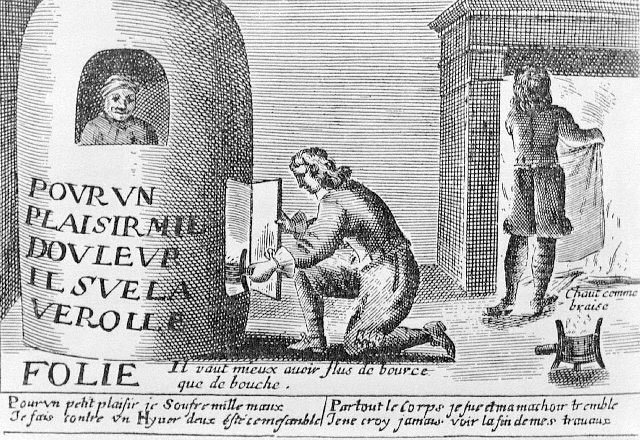
Some historians date the beginnings of a public health policy to the quarantines imposed in the years of the "Black Death" (1346-1353), which killed a third of Europe's population.
Some historians date the beginnings of a public health policy to the quarantines imposed in the years of the “Black Death” (1346-1353), which killed a third of Europe’s population. (Photo: internet reproduction)

Discipline and movement control

“The space solidifies into a network of impermeable cells. Everyone is bound to their place. Those who move risk their lives: contagion or punishment,” Foucault wrote.

However, Sarasin stresses that this “political dream” of the powerful, the far-reaching organization, and monitoring of plague-ridden cities, has hardly ever been achieved. Rather, he illustrates the ideal of power in the 17th century: the ruled city with disciplined citizens. A historical constant becomes visible: the epidemic is invariably the executive’s moment.

But the practice of exercising power is changing. In the 18th century, authorities adopted a different approach to the epidemic. The smallpox model was used to produce surveys that provided information on the mortality of both young and old, and the first vaccinations were administered, the success of which the authorities sought to determine.

The focus is no longer on disciplining or imprisoning the sick, but rather on risk management. The age of medical campaigns is dawning. The power of the state is thus growing, but it is not simply enforced by the police. Citizens must learn to coexist with the pathogens through official information and instructions.

Monitoring even in “normal conditions”?

During the coronavirus pandemic that we are now experiencing, European governments are more or less following the liberal smallpox model. The widespread information available makes the decision to be monitored understandable, and almost everyone complies with it. However, even in established democracies, governments are now ruled by the inherent logic of the social subsystems, economy, and science, subject to the primacy of the law: There is a state of emergency.

The aim of the measures, however, is to overcome the epidemic and return to a “normal state” with the familiar “checks and balances” and guaranteed freedoms. The state’s power of control is also growing in this epidemic. How many citizens were hitherto aware that authorities and telecommunications companies could always know where we were and with whom?

In addition, we are now being monitored through apps that are designed to protect us from infection and disease. They take away our fears but invade our privacy. Will health insurance companies in the future control the way we move around (enough and in the right place) – and then calculate their rates? Who controls the controllers?

The coronavirus crisis brings us a huge step closer to the police state. In the aftermath, we must rebalance the equation between freedom and security.

Read More from The Rio Times

The Rio Times · Power Map
See who really holds power in Latin America
Click to open the Power Map

Rotate for Best Experience

This report is optimized for landscape viewing. Rotate your phone for the full experience.