Argentina has reportedly asked China for a loan extension to strengthen the Central Bank’s reserves
RIO DE JANEIRO, BRAZIL – On the eve of President Alberto Fernandez’s trip to China, Argentina would have asked the Chinese government to extend the loan for US$20.5 billion to strengthen the Central Bank’s reserves, which are at shallow levels compared to the maturities that the country has to face. The news was published by the specialized financial media Bloomberg but was denied by Central Bank spokespersons.
“South America’s second-largest economy is seeking to ask China to extend its CNY 130 billion (US$20.6 billion) swap by an additional CNY 20 billion (US$3.2 billion), according to one of the people who asked not to be identified because the talks are private. Argentina has already made the request, and the issue will be discussed next week in Beijing when President Alberto Fernandez travels there for Olympic celebrations, another person said,” the Bloomberg story said.
Read also: Check out our coverage on Argentina
The Argentine president will travel to Russia, China, and Barbados next week. On the tour, the government is also expected to ask Moscow for a loan of special drawing rights (SDR, IMF money). The Fund had indicated that a mechanism was being designed to allow the Fund’s member countries to voluntarily channel SDRs from richer countries to poorer and more vulnerable ones.
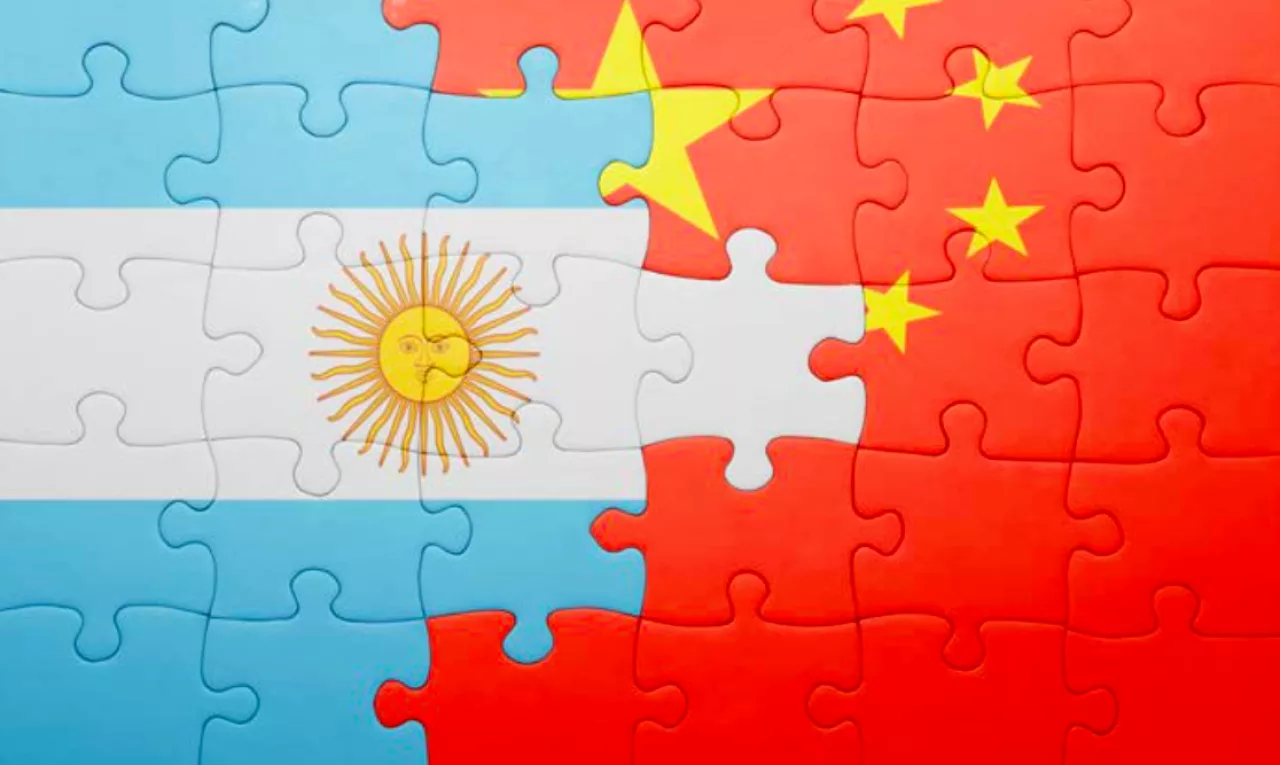
Although both requests to extend SDRs with Russia and the swap with China aim to strengthen the Central Bank’s reserves, neither operation involves fresh dollars to the monetary entity. Their approval would have to go through several authorization processes. One condition that those governments could impose is that Argentina agrees with the IMF since they are both member countries of the Fund despite the differences they have with the United States.
Argentina signed the first swap agreement with China in 2009 when the president of the Central Bank was Martín Redrado. At that time, the economist met with his Chinese peer, Zhou Xiaochuan, to agree on a currency swap in pesos or yuan equivalent to US$10.2 billion. In 2014, during Juan Carlos Fábrega’s presidency, both organizations signed a second agreement renewed in 2017 and supplemented at the end of 2018 with a supplementary agreement.
In August 2020, the current president of the BCRA, Miguel Pesce, signed a new currency swap agreement with the People’s Republic of China Bank (PBC) for a three-year term.
The only time the swap was used was in December 2015, when the government of Mauricio Macri took office, and the then-president of the Central Bank, Federico Sturzenegger, converted part of the yuan into dollars for a total of US$3.1 billion at an approximate financing cost for the BCRA of 4% in dollars, which allowed it to expand the liquidity of the entity at the time when it had been decided to remove the exchange rate cap and unify the market.
The swap operation works as follows: if Argentina asks to use this money, the interest rate and the exchange parity are agreed; then pesos are issued and deposited in the Chinese central bank, which, in turn, places yuans in the BCRA. It is a temporary swap for terms of between one and three years.
SCARCE RESERVES
In the next seven days, Argentina faces two obligations for a total of US$1.1 billion with the International Monetary Fund (IMF). In the coming weeks, it must also pay US$193 million to the Paris Club and US$137 million to other multilateral organizations.
This Friday, the Treasury must pay to the Fund the first maturity of the year for US$718 million in principal. Next Tuesday, meanwhile, it will have to make another payment of US$368 million to pay interest on the loan. According to the consulting firm 1816, the Central Bank still has US$673 million equivalent to the Special Drawing Rights (SDR), which the IMF distributed last August to all monetary entities to alleviate the effects of the pandemic.
In addition, the president of the BCRA, Miguel Pesce, will have to use money from available reserves to cancel the maturities. Last week, gross reserves closed at US$39 billion. From that total, if we subtract the reserve requirements in dollars (deposits from savers), equivalent to US$15.2 billion, the swap with China (a loan that is not freely available, for a total of US$20.5 billion) and loans from other agencies (around US$3 billion), the net reserves of the Central Bank would be around US$1.5 billion, according to the latest report of the consulting firm 1816.
More: Argentina news in English, every day from The Rio Times.
This article was produced by The Rio Times’ automated newsroom system. How we use AI · Report an error · Editorial responsibility: Matthias Camenzind, Editor-in-Chief