Nigeria’s Amos Dangut Becomes WAEC Registrar
Key Facts
- —The country Nigeria is Africa's most populous country, with about 238 million people. Its economy, about US$291 billion in 2025, is a little smaller than Finland's (World Bank).
- —Why it matters The West African Examinations Council (WAEC) sets the school-leaving exams of Nigeria, Ghana, Sierra Leone, The Gambia and Liberia. Its certificate is the usual ticket to university.
- —Why now Amos Dangut took charge on Thursday 1 October 2026, weeks after WAEC defended this year's Nigerian results against public criticism.
- —What happened Dangut, head of WAEC's Nigeria office since 2023, became the council's 14th Registrar and Chief Executive Officer on 1 October 2026.
- —The numbers In Nigeria alone, 1,950,726 school pupils sat the 2026 exam; 61.54% gained five credits including English and mathematics, WAEC said.
- —What it means for you Universities and employers abroad that check West African certificates deal with WAEC. Dangut's record includes a digital certificate portal and computer-based exams.
- —Still open Whether his Nigerian reforms spread to the four other member countries during a term that runs until September 2031.
A Nigerian now runs the exam board that decides which school leavers in five English-speaking West African countries reach university. Amos Josiah Dangut took office as WAEC registrar on Thursday 1 October 2026.
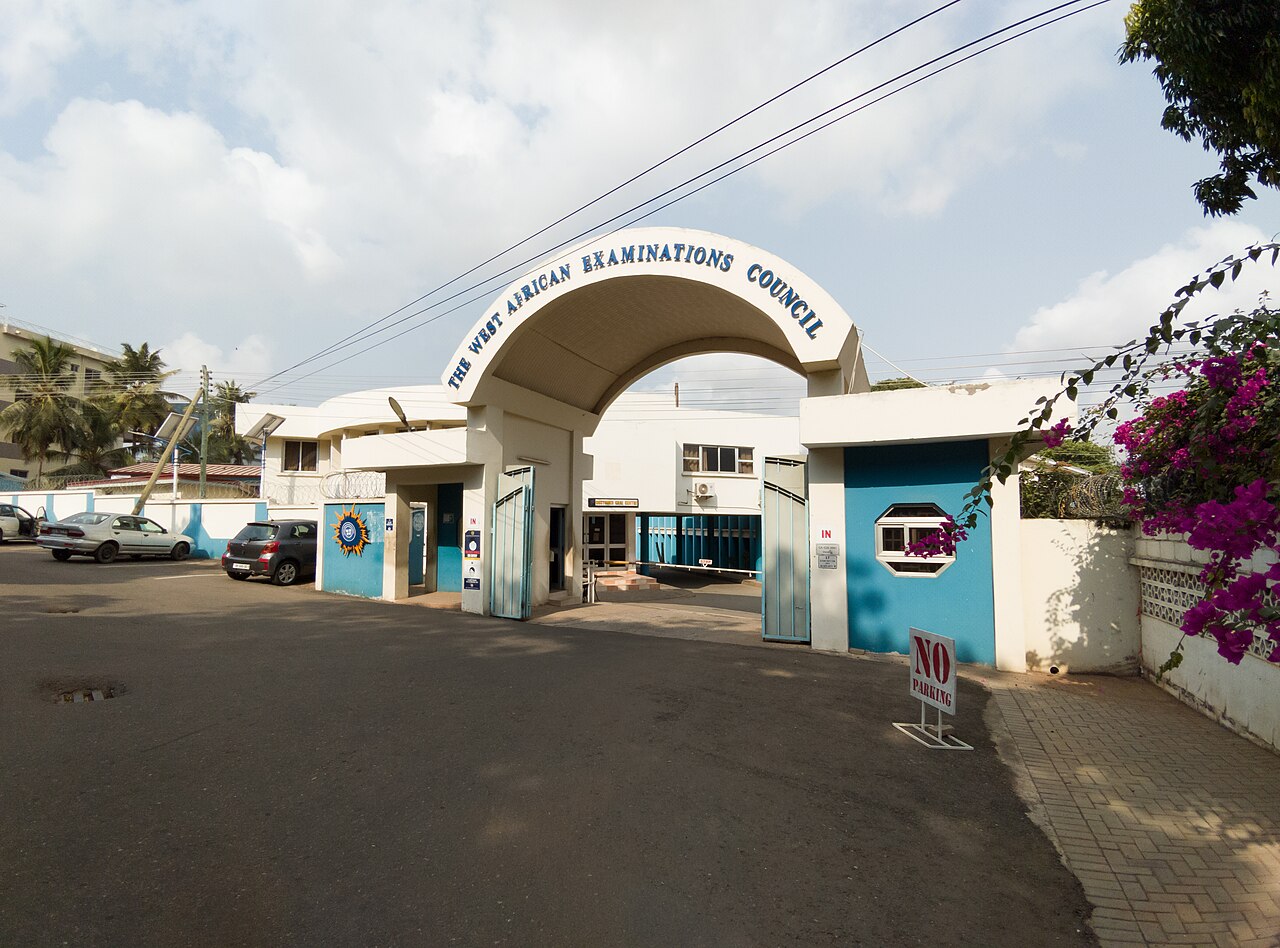
The West African Examinations Council (WAEC) is the regional body that sets and marks school-leaving exams. Its members are Nigeria, Ghana, Sierra Leone, The Gambia and Liberia, home to about 290 million people.
Dangut, a Nigerian career examiner, succeeds Alhaji Pateh Bah of The Gambia. His five-year term runs from October 2026 to September 2031, WAEC said in a statement.
Who Amos Dangut is
Dangut was born on 2 October 1967 in Bokkos, in Nigeria's central Plateau State. He began his career teaching at St Louis College in Jos, where he also served as an examiner.
He joined the council's staff in 1998 and held posts in Lagos, Uyo, Bauchi and Yola. From October 2023 to September 2026 he headed WAEC's Nigeria National Office.
His degrees span agriculture, animal science and education administration, including a doctorate in animal science in 2017. He also represents West Africa on the executive board of the Association for Educational Assessment in Africa.
How the appointment was made
WAEC's international governing board, known as the Council, ratified the choice at its 74th annual meeting in Accra, Ghana, in March 2026. Nigerian newspapers first reported the nomination in April.
Demianus Ojijeogu, head of public affairs at WAEC headquarters in Accra, announced the handover in a statement on Thursday. Dangut assumed office the same day as the 14th Registrar to Council.
The National Association of Nigerian Students (NANS), the country's main student union, welcomed the appointment this weekend. The governor of Plateau State, Caleb Mutfwang, had congratulated him in April.
What the council does and why it matters abroad
WAEC was founded in 1952 by Ghana, Nigeria, Sierra Leone and The Gambia, then British colonies. Liberia joined in 1974.
Its main product is the West African Senior School Certificate Examination (WASSCE), taken at the end of secondary school. The certificate is the standard entry requirement for universities across the region.
Universities in Britain, North America and Europe that admit West African students usually ask for WASSCE grades. The exam's integrity therefore matters well beyond West Africa.
The scale of the job in Nigeria
In Nigeria alone, 1,950,726 school candidates sat the 2026 WASSCE between April and June, according to WAEC. Of these, 1,200,514, or 61.54%, gained credits in at least five subjects including English and mathematics.
Results were released on 5 August. About a week later, WAEC publicly defended their credibility after criticism spread on social media.
An education group then threatened to take the council to court, the Nigerian newspaper Premium Times reported. Disputes like these show how closely families and schools watch every result.
A record built on digital exams
As head of the Nigeria office, Dangut oversaw the rollout of a computer-based version of the WASSCE. He also introduced serial-numbered question papers, a step aimed at curbing exam leaks.
His office brought in a digital electronic marking system and an online portal for certificates. It also built an e-study platform for candidates and a digital archive of past records, WAEC said.
The council described him as an examiner who uses information technology to improve test development and administration. Those systems are now his main credential as WAEC registrar.
What to watch until 2031
The main question is whether computer-based exams and digital marking spread from Nigeria to the other four member countries. Each has its own education ministry, budget and internet capacity.
A second test is trust in results. Credible certificates reduce fraud and make it easier for employers to hire across borders.
For foreign universities and employers, little changes in the short term. Wider use of digital certificates across the region would, however, make checking a West African applicant's grades quicker.
Frequently Asked Questions
Who is the new WAEC registrar?
Dr Amos Josiah Dangut, a Nigerian career examiner who led the council's Nigeria office from October 2023. He took office as the 14th Registrar and Chief Executive Officer on 1 October 2026.
How long will Amos Dangut serve?
His five-year term runs from October 2026 to September 2031. He succeeds Alhaji Pateh Bah of The Gambia.
What does the West African Examinations Council do?
It sets and marks school-leaving exams in Nigeria, Ghana, Sierra Leone, The Gambia and Liberia. Its WASSCE certificate is the usual route to university in the region.
How many pupils sit the exam in Nigeria?
In 2026, 1,950,726 school candidates sat the WASSCE in Nigeria. Of these, 61.54% gained five credits including English and mathematics, according to WAEC.
Connected Coverage
Sources
- Vanguard: WAEC appoints Nigeria's Dangut as new registrar, CEO (2 Oct 2026)
- Nigeria Info: Amos Dangut assumes office as WAEC Registrar (2 Oct 2026)
- TVC News: WAEC appoints Nigeria's Amos Dangut as Registrar/CEO (2 Oct 2026)
- Vanguard: 10 things to know about Amos Dangut (2 Oct 2026)
- Leadership: 61.54% of candidates obtain five credits in 2026 WASSCE (Aug 2026)
- World Bank: Nigeria population and GDP, 2025
- West African Examinations Council: history and membership
This article was produced by The Rio Times’ automated newsroom system. How we use AI · Report an error · Editorial responsibility: Matthias Camenzind, Editor-in-Chief