Nigeria Kenya Angola Set Africa Elections 2027 Calendar as Incumbents Face Term Limit Tests
Politics · Africa
Kenya latest: Kenya news — latest coverage · Nairobi International Trade Fair: Kenya Show Opens 28 September
—The stakes. Presidential, parliamentary and local contests will reshape policy and investment climates across sub-Saharan Africa’s largest markets.
—The dates. Nigeria votes on 16 January 2027, Kenya on 10 August 2027 and Angola by August 2027, with no exact date yet fixed.
—Late 2026 tests. Gambia holds a presidential vote on 5 December 2026 while São Tomé and Príncipe stages parliamentary polls on 27 September 2026.
—Term limits. Constitutional two-term presidential limits are the central institutional question in Nigeria and Kenya.
—Data gaps. As of September 2026 Nigeria’s major party nominations are complete, with 19 presidential tickets published by INEC on 1 August 2026; Kenya’s are still outstanding.
Africa’s 2027 election season will define the political risk premium for foreign capital in three of the continent’s most watched economies. The calendar runs from Nigeria’s January general election through Kenya and Angola in August, with late-2026 contests setting the tone.
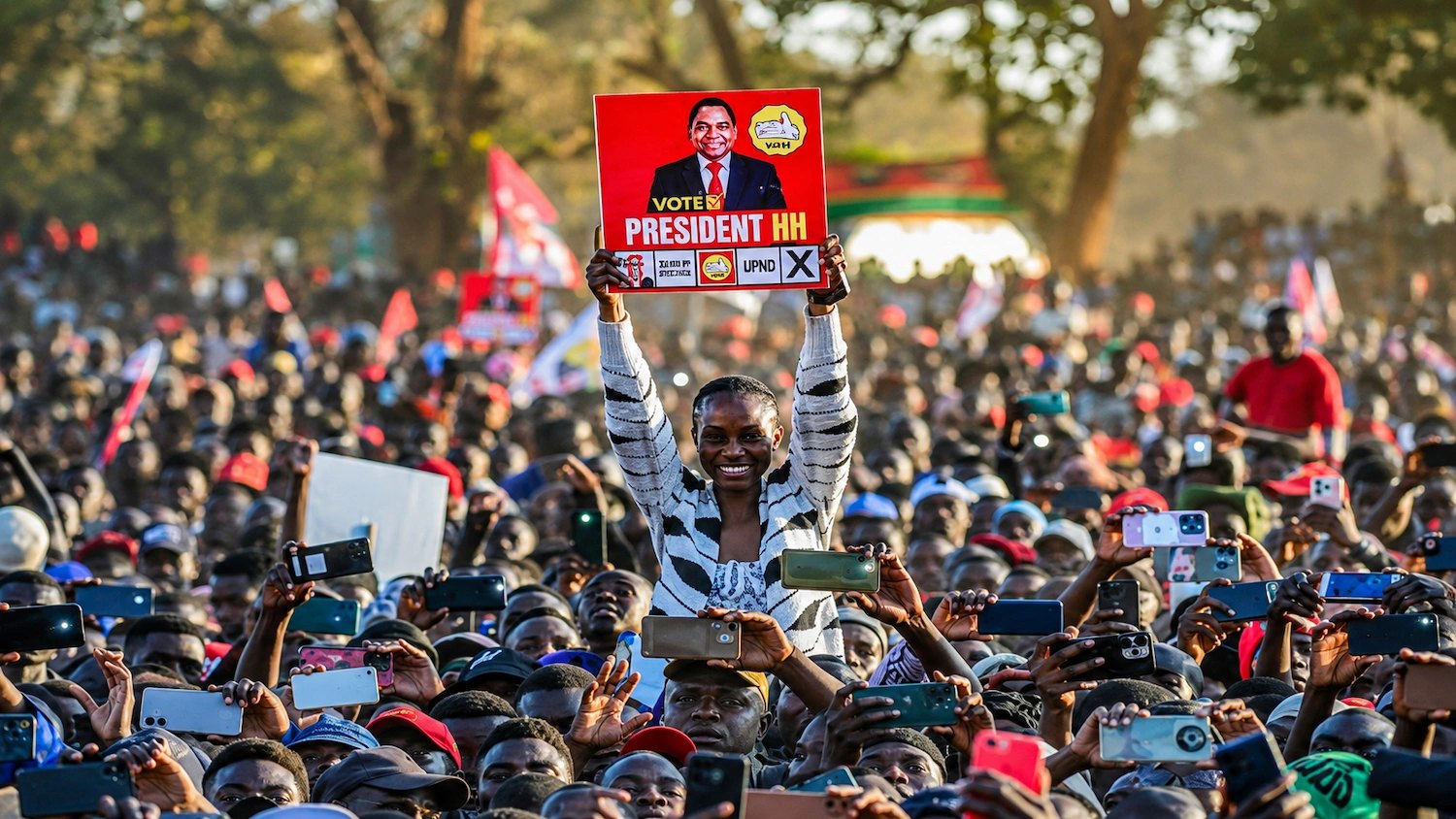
The Continental Map: Africa Elects 2026–2027 Calendar
Africa Elects maintains a detailed calendar for 2026 and 2027 African elections, listing country, election type and fixed dates.
The Africa Center for Strategic Studies also provides a table of key 2026 contests including Uganda, Republic of Congo, Djibouti, Benin, Ethiopia, São Tomé and Príncipe, Cabo Verde, The Gambia and South Sudan.
Those six were Benin, Uganda, Republic of the Congo, Djibouti, Cabo Verde and Ethiopia.
For 2027, the Africa Elects calendar lists Nigeria, Gambia, Republic of the Congo, Kenya and Angola among the headline national votes.
Nigeria: INEC Timetable and the Two-Term Question
Nigeria’s general election decides the President, Senate and House of Representatives, plus governorships and state houses of assembly.
The Independent National Electoral Commission revised timetable sets Presidential and National Assembly elections on 16 January 2027.
Governorship and State Houses of Assembly elections follow on 6 February 2027.
An earlier INEC schedule had placed presidential and National Assembly votes on 20 February 2027, with governorship contests on 6 March 2027.
Africa Elects still lists 27 February 2027 for Nigeria’s presidential and parliamentary elections, but that entry now appears outdated.
Nigeria’s Constitutional Framework and Economic Stakes
The Nigerian President is limited to two four-year terms under Section 135 of the 1999 Constitution.
Any incumbent seeking re-election in 2027 must be within that two-term limit.
The central institutional issue is respect for the two-term presidential limit and whether any political actors push for extension or constitutional amendment.
The INEC timetable indicates a normal electoral calendar without constitutional change as of February through August 2026.
As of September 2026, Kenya’s major party nominations are not yet finalised, so challenger names cannot be reliably reported from available calendar sources.
Nigeria’s Economy at Stake in January 2027
Nigeria is sub-Saharan Africa’s largest economy and heavily dependent on oil exports.
Structural pressures include unemployment, inflation and currency volatility.
Election stakes typically involve fiscal and monetary policy such as fuel subsidies, debt management and the foreign exchange regime.
Oil sector governance and diversification efforts also feature in voter and investor calculations.
Security and governance outcomes will shape investor confidence through the transition period.
Kenya: 10 August 2027 General Election
Kenya’s next general election is scheduled for 10 August 2027.
The ballot covers the President, the National Assembly lower house and the Senate upper house.
Kenya’s 2010 Constitution provides that the President serves a maximum of two five-year terms.
Any 2027 incumbent can run only if they have not yet served two full terms.
Kenya’s Challenger Field and Economic Signals
The Africa Elects and global 2027 calendars do not include candidate names or partisan alignments.
As of September 2026, formal candidate lists for the August 2027 race are unlikely to be finalised.
Kenya’s election will serve as a stress test for institutional continuity and judicial independence after recent cycles.
Investors will watch the campaign for signals on fiscal consolidation, tax policy and public debt management.
The two-term constitutional limit remains the key legal boundary for any presidential candidacy.
Angola: Parliamentary and Presidential Vote Around August 2027
Angola’s next presidential, legislative and local elections are set for 2027.
The 2027 national electoral calendar lists Angola’s Parliament National Assembly vote on 24 August 2027.
Africa Elects similarly lists Angola’s national parliament and presidential elections around August 2027.
Angola’s vote will test the ruling party’s dominance as oil revenues and diversification pressures persist.
Late 2026: Gambia, Republic of Congo and São Tomé
Gambia’s presidential election falls on 5 December 2026 according to multiple election calendars.
A parliamentary National Assembly election is then listed around 10 April 2027.
The Republic of Congo held its presidential election on 15 March 2026, with a parliamentary lower house vote expected around July 2027.
São Tomé and Príncipe held its presidential election on 19 July 2026 and stages parliamentary, regional and local elections on 27 September 2026.
These late-2026 contests provide early signals for governance continuity before the larger 2027 votes.
Term Limits as the Institutional Fault Line
Across Nigeria and Kenya, the two-term presidential limit is the clearest constitutional constraint.
Nigeria’s Section 135 and Kenya’s 2010 Constitution both cap presidential service at two terms.
No available calendar source shows a scheduled constitutional amendment before these votes.
Election management bodies such as INEC and the continental calendars indicate standard electoral timelines.
Foreign investors will monitor candidate registration and court rulings for any term-limit disputes.
Nigeria Faces A Crowded Nineteen Candidate Field
INEC has published the personal particulars of 19 presidential candidates and their running mates for the 16 January 2027 vote. The ballot includes incumbent President Bola Ahmed Tinubu of the APC with Kashim Shettima as his running mate. Former Vice President Atiku Abubakar appears for the ADC with Rotimi Amaechi. Peter Obi, the former Anambra State governor, now leads the NDC ticket with Rabiu Musa Kwankwaso as his deputy.
Several other tickets add pressure to the field. Oyo State Governor Seyi Makinde runs on the APM platform. Omoyele Sowore represents the AAC. Three female presidential candidates are also listed: Anita Zugwai Chukwu of the YPP, Esther Iken Okereke of the NRM, Ada Elizabeth Okwori of the NDP, and Hajja Bintu Konto running as deputy on the Labour Party ticket. The PDP ticket goes to Senator Sandy Ojang Onor with Umaru Babangida as running mate.
The campaign window for the presidential and National Assembly races opens on 19 August 2026 and closes on 14 January 2027, two days before voting. The final list of candidates and ballot order will be published on 12 September 2026. INEC will publish the Register of Voters on 15 December 2026 and the Notice of Poll on 29 December 2026. With so many names on the ballot, vote splitting could shape the outcome beyond the two largest traditional parties.
Data Gaps and What Investors Should Watch Next
The verified research block does not list party candidates or leading challengers for Nigeria’s 2027 race.
Kenya’s calendar sources likewise omit candidate names and partisan alignments as of September 2026.
Major party nominations may not yet be finalised in either country.
The next events to monitor are candidate registration windows, INEC announcements and Kenya’s campaign launch timeline.
Economic data points such as Nigeria’s inflation, FX regime and oil output, plus Kenya’s fiscal deficit, will frame the campaigns.
Connected Coverage
DR Congo: Kinshasa Comics Festival Returns After Six Years
The Big Picture
This article was produced by The Rio Times’ automated newsroom system. How we use AI · Report an error · Editorial responsibility: Matthias Camenzind, Editor-in-Chief