Brazil’s Spy Agency Flags ‘Critical’ US Pressure Before October Vote
Key Facts
Relations between Brasília and Washington have soured over tariffs, sanctions and crime policy during the campaign. Brazil’s own spies now describe that pressure as a critical risk to the October vote.
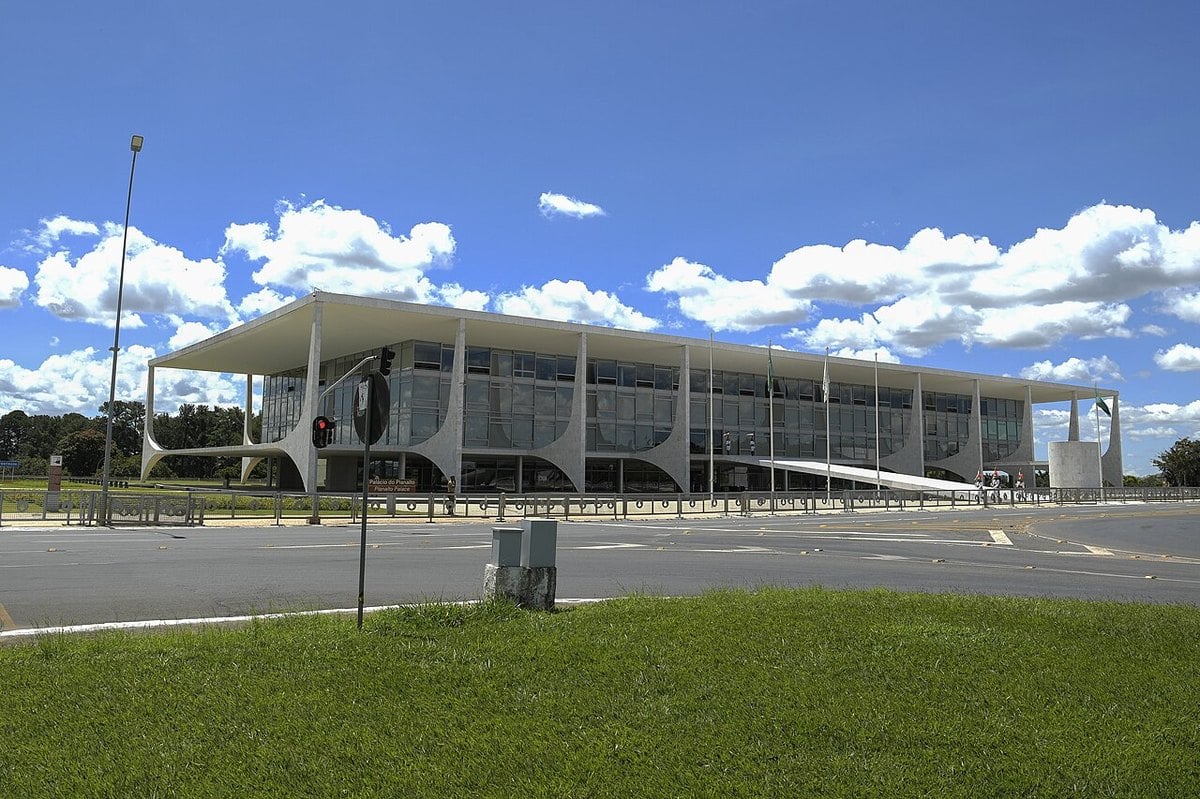
Abin, Brazil’s federal intelligence agency, sent a confidential warning about US pressure on the election in late August. Folha de S.Paulo columnist Mônica Bergamo revealed the report, and Metrópoles and CNN Brasil followed on 19 September.
Why This Matters
Brazil holds the first round of its general election on 4 October 2026. President Luiz Inácio Lula da Silva faces Senator Flávio Bolsonaro in a race that recent polls show as a statistical tie.
Datafolha’s poll of 15 to 17 September put Lula on 46% and Flávio Bolsonaro on 44% in a likely runoff. Quaest, another pollster, had Flávio ahead by 42% to 40% in its survey of 10 to 13 September.
About 158.7 million Brazilians are registered to vote, and a runoff, if needed, falls on 25 October. Voters also choose all 513 federal deputies, 54 of 81 senators and every state governor.
Flávio is the eldest son of former president Jair Bolsonaro, an ally of Donald Trump. The Supreme Court sentenced Jair Bolsonaro on 12 September 2025 to 27 years and 3 months for a coup plot.
An intelligence warning about a foreign power in a race this close is therefore politically charged in Brazil. It also lands days before Lula plans to warn Donald Trump at the UN not to interfere in the vote.
What the Report Says
According to Gazeta do Povo and Brasil de Fato, the document is titled “Threats to the 2026 electoral process”. It went to the presidential palace, the Superior Electoral Court (TSE) and the Justice Ministry, CNN Brasil reported.
Metrópoles said Abin raised the possibility of US interference to a “nível de criticidade”, or critical level. The agency saw a “selective intensification and reconfiguration” of US pressure on Brazil, according to the same report.
CNN Brasil said Abin drew on Trump administration documents from November 2025 to May 2026. Those papers list goals such as reducing rival powers’ influence in Latin America, the agency noted.
Abin cited US Treasury sanctions of 1 July on two Brazilians and several firms allegedly tied to the PCC gang. It also named Secretary of State Marco Rubio as central to the pressure, Metrópoles reported.
The report recalls a White House draft declaration asking Brazil not to limit “political dissidents” at the polls. Brasil de Fato said the report stresses political, economic and diplomatic pressure rather than direct manipulation of the vote.
CNN Brasil quoted the agency describing the pressure as “gradual, combined and adaptive”. Abin warned that sanctions could affect dollar access, business reputation and exposure to secondary sanctions, the broadcaster added.
Gazeta do Povo said the report links Brazil’s exposure to its role in the BRICS group and its ties with China. Metrópoles reported that Abin sees Brazil as unusually willing and able to defend its autonomy against Washington.
How the Pressure Built Up
The dispute began in July 2025, when Trump tied trade measures to the trial of Jair Bolsonaro. On 18 July 2025, Rubio announced visa restrictions on Supreme Court Justice Alexandre de Moraes and his allies.
On 30 July 2025, the US Treasury sanctioned Moraes under the Global Magnitsky Act, a human-rights sanctions law. The same day, Trump ordered a 40% duty on Brazilian goods on top of a 10% tariff, bringing the total to 50%.
Aircraft, orange juice and energy were exempted, and a decree listed about 700 excluded items. In November 2025, Trump exempted coffee, beef, cocoa and tropical fruit, citing American demand.
Washington removed Moraes and his wife from the Magnitsky list on 12 December 2025. In February 2026, the US Supreme Court ruled 6 to 3 that the emergency-powers law behind the tariffs did not allow them.
Pressure then shifted to security, as Washington listed the PCC and Comando Vermelho gangs as terrorists on 28 May 2026. The designations, announced by Rubio, took effect on 5 June 2026 and widened US sanctions powers, Agência Brasil reported.
On 15 September, Trump’s annual drug memorandum said Brazil “failed to confront” both gangs. The same document did not classify Brazil as having “demonstrably failed” in its counternarcotics obligations.
What Abin Is
Abin was created in December 1999 by Law 9,883 and replaced the dictatorship-era National Information Service. It reports to the presidency and is led by director general Luiz Fernando Corrêa, a former Federal Police chief.
The agency has its own record to answer for, which critics of the report are likely to raise. Under director Alexandre Ramagem from 2019, a so-called parallel Abin allegedly spied on judges and politicians without court orders.
In June 2025, the Federal Police formally accused 36 people in that case, including Corrêa, over alleged obstruction. None of those allegations has been proven in court, and Corrêa remains in his post.
How Each Side Has Responded
Lula has called the draft declaration “arquivo morto”, meaning a dead file, Metrópoles reported. Foreign Minister Mauro Vieira rejected the proposal as resting on false premises, Forças Terrestres reported.
Abin, the presidential palace and the US Embassy had not commented publicly on the leaked report in the coverage reviewed. In August, the State Department said the United States “respects the Brazilian people and candidates chosen in free and fair elections”.
Forças Terrestres, a defence news site, cited that statement in its coverage of the Abin report. The Justice Ministry has rejected the US claim that Brazil is failing against organised crime, Agência Brasil reported.
It cited an Anti-Faction Law passed in March 2026 and a federal programme against organised crime launched in May. Bolsonaro allies are likely to question the timing of a leak that suits Lula’s sovereignty message before the vote.
Where Brazil Fits in the Region
Brazil is not the only country where Washington has used terrorist listings against local gangs. The United States designated Ecuador’s Los Choneros and Los Lobos as terrorist organisations in September 2025.
Brazil differs because its government has refused to adopt the terrorist label for the PCC and Comando Vermelho. Argentina listed the PCC as a narcoterrorist group in October 2025, and Paraguay has taken the same step.
What It Means If You Follow Brazil
For investors, the report signals that sanctions risk remains a live factor in the weeks around the vote. Banks and firms with any exposure to people or companies on US lists face compliance checks and possible frozen dollar flows.
For exporters, the 2025 tariffs are no longer in force, but new trade measures cannot be ruled out. For Brazilian voters and residents, the report changes nothing about how ballots are cast or counted.
The TSE runs an electronic voting system, and Abin’s published excerpts raise no doubts about the machines. Travellers and expats should expect sharper anti-US rhetoric in campaign speeches rather than practical changes.
What Is Not Yet Known
The full report has not been published, and only excerpts have reached the press. It is not known what measures, if any, the TSE or the government adopted in response.
It is also unclear who leaked the report or why it surfaced two weeks before the vote. Whether Lula and Trump address the dispute directly at the UN on 22 September remains to be seen.
Frequently Asked Questions
Why does the Abin report matter?
Brazil’s own intelligence service has rated US pressure on a tight election as critical. That gives the sovereignty dispute official weight weeks before the 4 October vote.
What is Abin?
Abin is Brazil’s federal intelligence agency, which advises the president on security threats. Its reports are normally confidential.
Did Abin say the US will rig Brazil’s election?
No. The excerpts reported so far describe diplomatic, economic and political pressure, not tampering with votes or voting machines.
Are the US tariffs on Brazil still in force?
No. The US Supreme Court struck down the emergency-powers tariffs in February 2026, but other sanctions tools remain available to Washington.
Sources: Metrópoles, Abin warns Lula government of critical US interference, CNN Brasil, Abin alerts government and TSE, Gazeta do Povo, report title and recipients, Brasil de Fato, contents of the Abin report, Forças Terrestres, reactions and State Department statement, Reuters via Investing.com, Datafolha runoff poll, Poder360, Quaest runoff poll, Wikipedia, 2026 Brazilian general election, NPR, Jair Bolsonaro sentenced for coup plot, Wikipedia, Alexandre de Moraes and US sanctions, Wikipedia, tariffs in the second Trump administration, Wikipedia, Brazil–United States relations, Agência Brasil, US memorandum and terrorist designations, Wikipedia, Brazilian Intelligence Agency, Wikipedia (Portuguese), Luiz Fernando Corrêa, Wikipedia, Primeiro Comando da Capital, CBS News, US terrorist designation of two Ecuadorian gangs
This article was produced by The Rio Times’ automated newsroom system. How we use AI · Report an error · Editorial responsibility: Matthias Camenzind, Editor-in-Chief
In depth
Brazil runoff, Sunday, October 25: When is the Brazil runoff election. Latest: Brazil runoff polls, Flávio 51%, Lula 49%.