Abidjan Power Cuts After Grid Incident
A fault on the high-voltage grid left parts of Abidjan and inland towns with unstable power, and the utility has said little beyond an apology.

IVORY COAST: POWER GRID
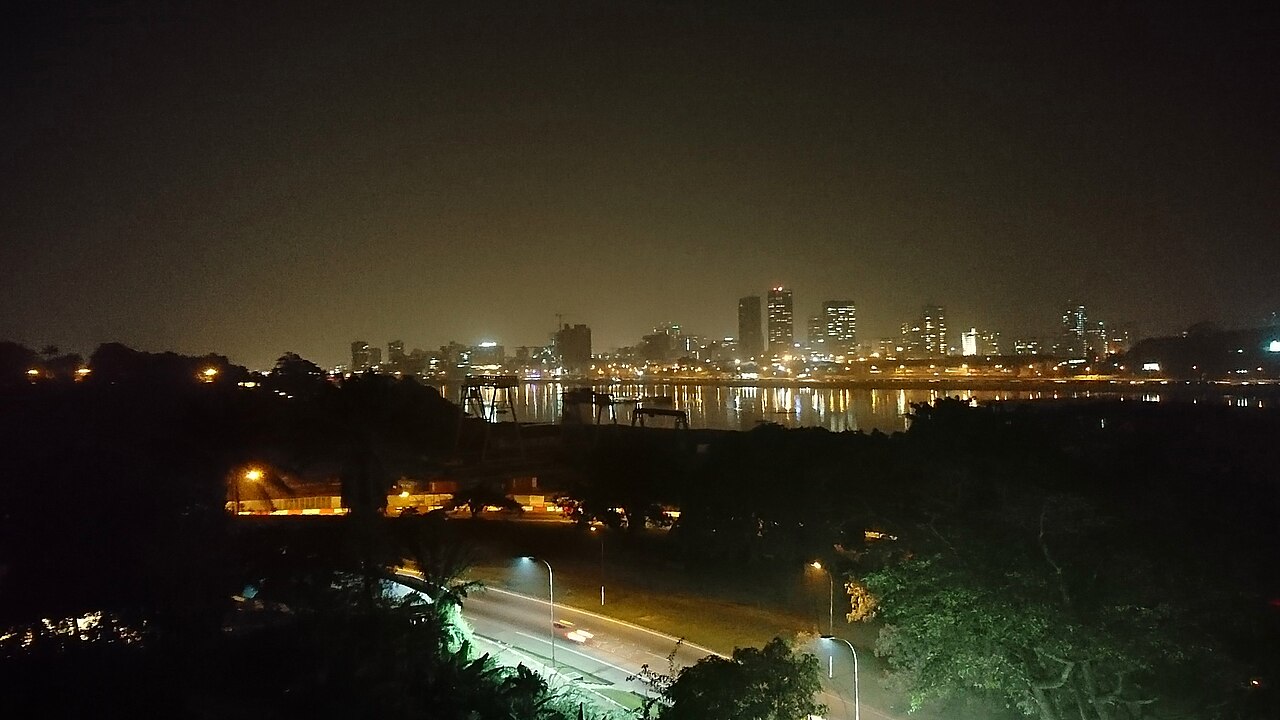
Electricity supply failed or wavered in several parts of Abidjan, the economic capital of Côte d’Ivoire (Ivory Coast), and in towns inland on Monday 23 November 2026. The national power distributor, Compagnie ivoirienne d’électricité (CIE), said in a statement that day that an incident on the high-voltage network caused the disruption.
The company has not named the affected communes, the cause or a restoration time. Its statement describes an incident on the high-voltage grid, not a scheduled cut.
Key Facts
- Who. CIE, Côte d’Ivoire’s national power distributor, which supplies homes and businesses.
- What. Supply disrupted after an incident on the high-voltage network; no cause stated.
- Where. Several communes (municipal districts) of Abidjan and localities of the interior.
- When. Monday 23 November 2026; no restoration time given.
- As of. 24 November 2026, 07:40 GMT
A fault on the high-voltage grid left parts of Abidjan and inland towns with unstable power, and the utility has said little beyond an apology.
CIE said technical teams were mobilised to restore supply “as soon as possible” (translated from French). It added that it was taking all measures for a quick return to normal and apologised to subscribers.
The statement gave no count of customers affected. It pointed subscribers to its customer line, 179, which the company says is open around the clock.
Outages are not new this year in Côte d’Ivoire. On 27 February 2026 CIE said the cuts across Greater Abidjan came mainly from strong seasonal pressure on parts of the distribution network, as heat drove up the use of air conditioners and fans and evening demand peaked.
The company added that the national network was not saturated, but that some fast-growing urban pockets needed targeted reinforcement of transformer stations. It also said load measurements taken in 2025 at Abatta, a district of Abidjan, showed some transformers close to their critical threshold.
On Saturday 28 March 2026, after a guided visit of sites in Cocody, an Abidjan district, CIE’s central commercial and operations director, Marius Doh, apologised for the recurring outages in Abidjan and the interior. He said some equipment had failed, particularly in areas of fast population growth.
The secretary general of CI-Energies, the state energy holding company that runs generation and transmission planning, joined the apology. The two officials pointed to heat waves and said a joint crisis committee of the two companies had been set up.
Teams worked day and night on repairs, they said, as part of a maintenance programme launched months earlier. A CI-Energies and CIE progress update of 12 May 2026 reported more than 90 kilometres of underground high-voltage cable replaced in Abidjan.
The same update said voltage regulators were being installed in rural areas and at the ends of power lines to steady the current. A separate strand began on 10 August 2026, when CIE started reinforcing the high-voltage network of Abidjan Sud, the south of the city, by replacing conductors and raising pylons.
The final phase needed switching operations on Saturday 29 and Sunday 30 August 2026, between 08:00 and 18:00, with temporary disruption possible in districts such as Koumassi, an industrial and residential area of south Abidjan. CIE described this as the last step of a major reinforcement of that grid.
Nothing in the 23 November statement links the fault to those August works or to the earlier heat-related stress. The company has not said whether supply has fully returned, how many communes and customers were affected, or what caused the fault.
Abidjan is the country’s economic capital, and its planned metro is covered in our report on the Abidjan metro. Readers considering a stay can find practical background in a guide to Ivory Coast visas and residency.
Frequently Asked Questions
What caused the power cuts in Abidjan?
CIE has only called it an incident on the high-voltage network. It has given no cause, so any link to earlier works or heat is unconfirmed.
Is this load-shedding?
Some residents may call it that, but the utility’s statement speaks of an incident on the high-voltage grid. Load-shedding means rotating cuts to balance supply and demand.
Where can customers get information?
CIE points subscribers to its customer line, which is open at all hours. It has not published a list of affected areas.
Sources
CIE statement of 23 November 2026; CIE clarification of 27 February 2026; statements of CIE and CI-Energies officials of 28 March 2026; CI-Energies and CIE works update of 12 May 2026; CIE notices of 10 and 27 August 2026.
This article was produced by The Rio Times’ automated AI newsroom. Editorial responsibility: Matthias Camenzind, Publisher and Editor-in-Chief. The Rio Times also runs Ask Rio Times, which answers from 100,000+ of our own articles, the daily Latin America Power Map, and prediction-market odds on elections and markets.. How we use AI · Report an error
Part of our ongoing coverage
Africa: The New Scramble — the great-power contest over the continent.
Living in or visiting Abidjan? See this month's events and our Abidjan city guide with rents, safety and upcoming concerts.