Accra Tests Aayalolo Contra-Flow Lanes to Speed Up City Buses
GHANA · INFRASTRUCTURE
Key Facts
- —What happened GAPTE has started studying whether Aayalolo buses can run against traffic in a spare lane.
- —Where first The assessment began on the Kinbu-Adenta corridor, a busy route into central Accra.
- —Trial result GAPTE’s managing director says a trial cut travel time from nearly two hours to about 45 minutes.
- —The fleet The plan would support the deployment of 126 repaired Aayalolo buses.
- —The catch No completion date, cost or start date for any lanes has been announced.
- —What comes next The findings will go to the Transport Minister for consideration.
Accra’s public bus operator wants its buses to use an empty lane on the other side of the road. A study now tests whether that is safe and workable.
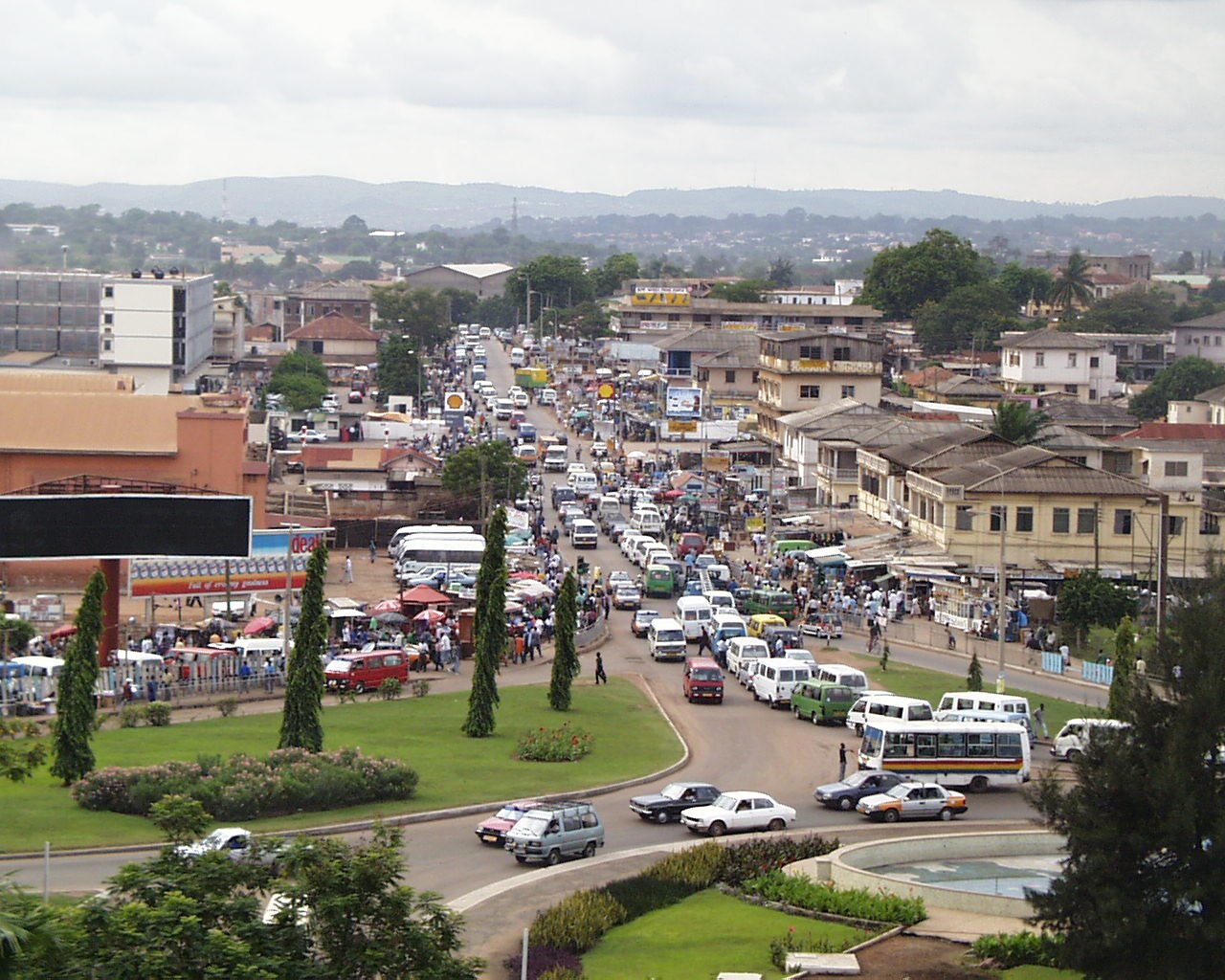
Accra’s public bus authority has begun a feasibility study into an Aayalolo contra-flow system on busy city routes. The work started on the Kinbu-Adenta corridor, Citi News reported on 17 September 2026.
What the Aayalolo contra-flow study will test
The Greater Accra Passenger Transport Executive (GAPTE) runs Aayalolo, the state-backed bus service in Ghana’s capital. It is carrying out the study with the Motor Traffic and Transport Department (MTTD) of the Ghana Police Service and other partners.
GAPTE Managing Director Daouda Awudu explained the idea to Citi News on Thursday, 17 September 2026. “When you say contra-flow, we are talking about a traffic management system that would ease congestion in a particular area,” he said.
In practice, the plan is simple. Where one side of a road has spare space, Aayalolo buses could use a lane there against the normal flow.
Awudu said the study will look at the possible risks of the system. It will also recommend ways to reduce those risks.
A promising trial on the Kinbu-Adenta route
According to Awudu, a trial on the Kinbu-Adenta route cut travel time from nearly two hours to about 45 minutes. The state broadcaster GBC carried the same figure on 18 September 2026.
The trial figure comes from GAPTE itself. No independent data on the trial, such as its length or the number of trips, has been published.
Awudu said the contra-flow system, together with dedicated bus lanes, would support the deployment of 126 repaired Aayalolo buses. The goal is to stop those buses from being caught in the same traffic as everyone else.
GBC reported that the results will be sent for evaluation and possible use if they are found to be workable. No timeline for that decision has been given.
Not a motorbike escort plan
Awudu also rejected reports that the buses would be escorted by police motorbikes. He said such an arrangement is not a contra-flow system.
That point matters because the idea has been in the news for weeks. On 8 September 2026, Local Government Minister Mahama Ayariga proposed a peak-hour lane for Aayalolo buses, according to MyJoyOnline.
Ayariga suggested reserving one lane on the less busy side of some roads for the buses from 6 am to 9 am. He also proposed that MTTD motorbike officers lead the buses to warn oncoming drivers.
Ayariga said the earlier approach of permanent dedicated lanes had not worked well. A senior MTTD officer, Assistant Commissioner of Police Alexander Kwaku Obeng, publicly backed the proposal, Rainbow Radio reported on 9 September 2026.
A bus service trying to recover
Aayalolo was launched in 2016 as a bus rapid transit service, with 245 buses bought for the system. By January 2026, only 80 of those buses were running in Accra, GAPTE told GhanaWeb.
Awudu said then that 60 buses had gone to Kumasi and 10 each to Takoradi and Tamale, on earlier ministry orders. GAPTE said it was working to bring buses back and repair others.
In April 2026, then Local Government Minister Ahmed Ibrahim asked a new GAPTE council to revive Aayalolo for 24-hour service. Easing congestion around Kinbu was among his priorities, the Daily Graphic reported.
Aayalolo managers have also said that buses stuck in traffic lose money. When dedicated lanes existed between Circle and Tesano, the buses saved riders up to 30 minutes, according to the Daily Graphic.
Why this matters to expats and investors in Ghana
Traffic in Accra is a daily cost for people who live and work there. A faster, more reliable bus would make longer commutes from suburbs such as Adenta more practical.
For employers, bus reliability affects staff punctuality and the cost of company transport. For property investors, better bus links can make outer districts easier to rent or sell.
The study is also a test of how well Ghana’s agencies work together. Road space, police enforcement and bus operations sit with different bodies, and a contra-flow lane needs all of them.
Visitors and expats who rely on ride-hailing or private cars would also feel the effect. Buses that move freely at peak hours could take some pressure off the wider road network.
What is not yet known about the Aayalolo contra-flow plan
GAPTE has not said when the study will finish or which corridors will be assessed after Kinbu-Adenta. It has not published the cost of the study or of any lane changes.
It is not yet clear whether police escorts will play any part in the final design. Awudu’s comments suggest GAPTE favours lane changes over escorts, but the final choice rests with the government.
Figures for the working Aayalolo fleet have also varied between reports this year. The study reports themselves refer only to 126 repaired buses.
The findings will go to the Transport Minister, currently Joseph Bukari Nikpe. How quickly his ministry acts on them will decide whether commuters see any change soon.
Frequently Asked Questions
Frequently Asked Questions
What is the Aayalolo contra-flow system?
It is a proposal to let Aayalolo buses use a spare lane on the opposite side of a busy road, moving against normal traffic.
How much time did the Kinbu-Adenta trial save?
GAPTE’s managing director says travel time fell from nearly two hours to about 45 minutes. No independent data on the trial has been published.
Who decides whether the plan goes ahead?
GAPTE will send its findings to the Transport Minister for consideration. The study is being done with the police traffic department, the MTTD.
Sources: Greater Accra Passenger Transport Executive statements via Citi News, 17 September 2026, and GBC, 18 September 2026; MyJoyOnline; Rainbow Radio; GhanaWeb; Daily Graphic; Ghanaian Times.
This article was produced by The Rio Times’ automated newsroom system. How we use AI · Report an error
LatAm Markets: Live Signals → — real-time movers, turnover leaders and FX across Latin America.
Read More from The Rio Times