US Wants Credible Vote From Venezuela Talks
Washington praises the Caracas talks and asks for more. Neither side has yet named a date for the vote.
Politics: Venezuela
Washington has welcomed the end of a fourth round of talks between Venezuela’s government and its opposition, yet it still cannot point to a date for an election. The US State Department, through spokesperson Thomas Pigott, said on Tuesday 24 November 2026 that both sides should keep their commitments and move toward “credible elections”.
The statement followed the close of the round in Caracas on Monday 23 November 2026. Venezuela holds some of the world’s largest oil reserves, so the pace of its political reset matters to investors and energy buyers in the United States.
Key Facts
- What. The US State Department welcomed Venezuela’s talks and urged credible elections; no election date is set.
- Where and when. Caracas; statement on Tuesday 24 November 2026, after the round closed on 23 November.
- Prediction markets. Polymarket (real-money bets): election by 31 Dec 2027 58.5%, by 31 Dec 2026 11.0% (13:43 ET, 25 Nov).
- Power Index. Venezuela ranks 12th of 14 in The Rio Times Latin America Power Index, with 29.4 points (November 2026 edition).
- As of. 25 November 2026, 18:43 GMT
Washington praises the Caracas talks and asks for more. Neither side has yet named a date for the vote.
The talks began on 6 August 2026 in Caracas under a US-backed plan, after the 3 January 2026 US operation that removed Nicolás Maduro, Venezuela’s former president. Jorge Rodríguez, president of the government-side National Assembly, leads the government delegation, facing a delegation of the National Assembly elected in 2015, the last chamber the opposition won, which sits apart from the government-side Assembly.
The fourth round opened on Friday 13 November 2026 and closed with an eight-point joint communiqué dated 23 November 2026. It was signed by Jorge Rodríguez, Venezuela’s chief government negotiator, and by Dinorah Figuera, head of the opposition delegation of the 2015 Assembly.
The communiqué covers a consultation on the party law, reform of the organised-crime and hate laws, renewal of the Supreme Court, broadcast licences, a work track with UK officials on Venezuelan gold held there and a joint position on the Essequibo, the region Venezuela and Guyana dispute. It sets no election date and no electoral timetable, and it says nothing about a new electoral council.
The State Department statement restates support for the three-phase plan of President Donald Trump and Secretary of State Marco Rubio, which runs from stabilisation to economic recovery to political reconciliation. It also urges both sides to keep implementing their commitments.
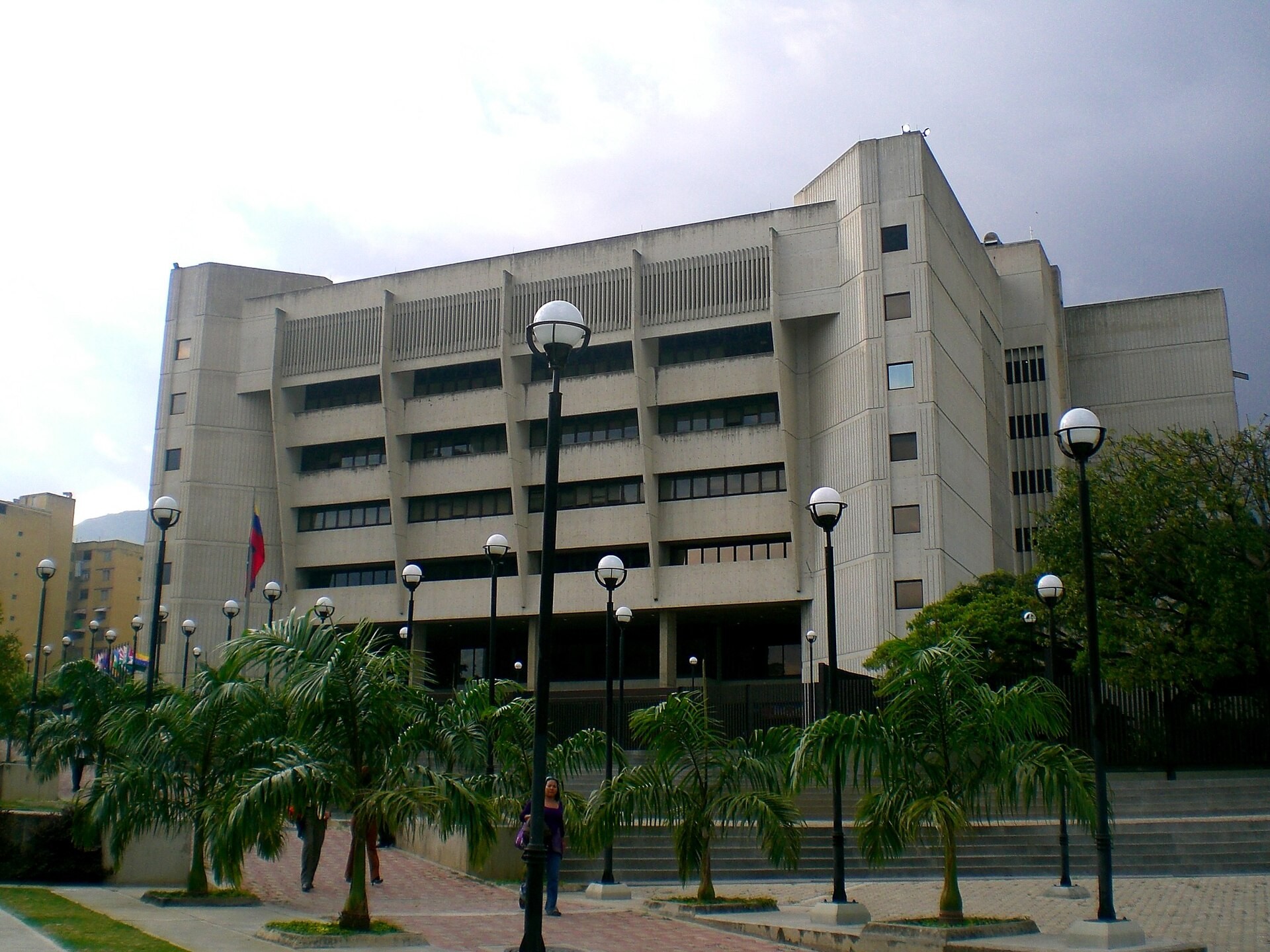
Pigott’s statement noted that the rebuilding of the Supreme Court continues, with applications for 32 magistrate posts closed on 18 November. It cited a consultation with all political organisations on the Law on Political Parties and an update of some broadcast media concessions, and a reform of the organised-crime and terrorism-financing law that both sides agreed to pass by the end of 2026.
Washington also repeated its call for the immediate release of all political prisoners and for the participation of all political actors. María Corina Machado, the opposition leader and Nobel Peace Prize laureate, is not at the table.
Foro Penal, a Venezuelan human rights group, counted 322 political prisoners as of 5 October 2026 in a report published on 9 October 2026. That is down from 382 in early August 2026 and 404 in early June 2026, after an amnesty law.
Delcy Rodríguez’s government has proposed only a partial reform of the Law against Hate, which punishes hate speech. The opposition and civil-society groups demand its repeal.
Rubio gave the clearest roadmap on Monday 9 November 2026, speaking to reporters in Paris at a meeting of foreign ministers of the Group of Seven (G7) wealthy democracies. He said new Supreme Court justices should be in office by the middle of December.
A new National Electoral Council, the body that runs elections, would follow shortly after, he said. Acting President Delcy Rodríguez would then declare the presidency vacant, which opens a six-month period for an election.
Neither the State Department statement nor Rubio’s roadmap names a date for the vote. Until the presidency is declared vacant, the six-month period has not begun.
For readers in the United States, the order of the steps matters more than the tone of the welcome. The rules behind US sanctions on Venezuela are set out in a separate explainer.
The next dated step is mid-December, when Rubio expects the new Supreme Court justices to be in office. That date is his expectation, not a decree, and the first test of whether the road he described is being followed.
What Prediction Markets Say
Polymarket, a platform where users bet real money, priced a Venezuelan presidential election scheduled by 31 December 2027 at 58.5%, by 30 June 2027 at about 43% to 45%, by 31 March 2027 at 21.5%, by 31 December 2026 at 11.0% and by 30 November 2026 at 1.7%, on a listed event volume of US$687,823 at 13:43 ET on 25 November 2026. These prices are bets, not polls: in a separate market with US$75,407 traded, María Corina Machado stands at 74.0% and Delcy Rodríguez at 8.0% to win the next presidential election.
Why we show this: prediction markets turn real-money bets into a live probability that moves within minutes of the news, which is why investors, campaigns and newsrooms in the United States now follow them closely. We show them next to polls and official results, never instead of them.
Frequently Asked Questions
Has Venezuela set a date for an election?
No. The joint communiqué and the US statement both leave the date open, and Rubio’s roadmap also stops short of naming one.
What does Washington want from the talks?
It wants both sides to keep their commitments and include all political actors on the way to credible elections. It also wants all political prisoners freed.
Why should US readers follow the talks?
Venezuela‘s oil reserves are among the world’s largest. The talks shape when and how the country can vote.
Sources
US State Department statement by spokesperson Thomas Pigott, 24 November 2026; joint communiqué of the fourth round of talks, 23 November 2026; remarks by Secretary of State Marco Rubio, 9 November 2026; Foro Penal report, 9 October 2026; Polymarket: https://polymarket.com/event/venezuela-presidential-election-scheduled-by and https://polymarket.com/event/next-venezuelan-presidential-election-winner.
Connected Coverage
Venezuela news · Venezuela Talks Still Lack an Election Date · Rubio Sees New Venezuela Court by December
This article was produced by The Rio Times’ automated AI newsroom. Editorial responsibility: Matthias Camenzind, Publisher and Editor-in-Chief. The Rio Times also runs Ask Rio Times, which answers from 100,000+ of our own articles, the daily Latin America Power Map, and prediction-market odds on elections and markets.. How we use AI · Report an error
Venezuela and the United States
- What Is Going On Between Venezuela and the United States?
- What Is Going On Between Venezuela and the United States?
- Venezuela Geopolitics Explained, US Now Runs Its Oil
- Venezuela Politics 2026, Who Holds Power After Maduro