The Man in Black Opens His Archive: Pablo Ramírez on Memory, Tango and Buenos Aires
Argentina · Culture
In Archivo Ramírez, more than 700 previously unpublished images reveal the private processes behind one of Argentina’s most distinctive designers — and the city, music and memories that shaped his visual language.
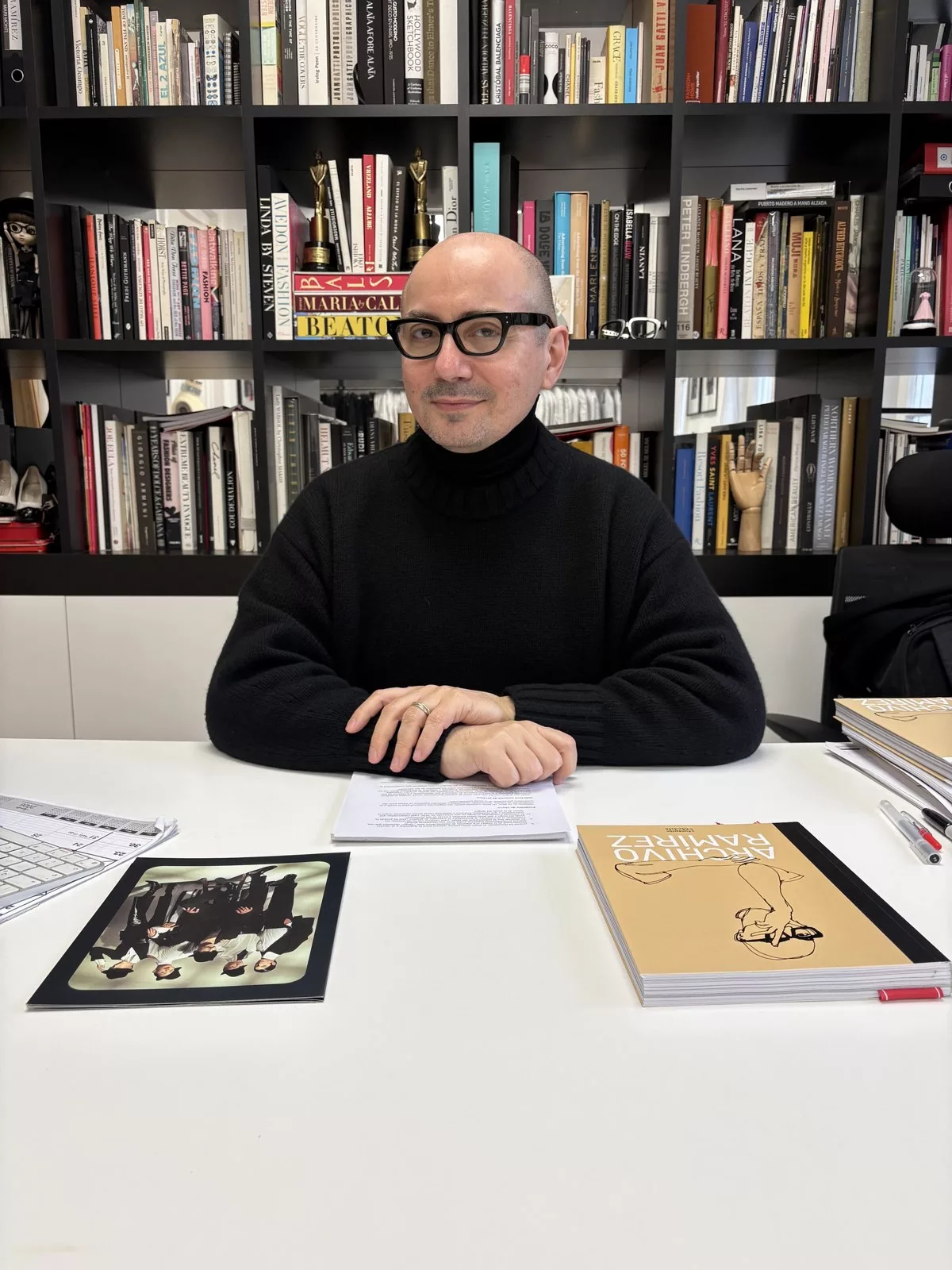
BUENOS AIRES — Pablo Ramírez has spent more than 25 years building one of Argentina’s most recognizable design languages. It is a world of black and white, disciplined lines and controlled sensuality, clothing that seems restrained until the body moves and reveals a flash of skin, a white cuff or an unexpected trace of red.
Now, the famously exacting designer is allowing the public to see what usually remains outside the frame.
Archivo Ramírez, published in 2026 by Fundación Medifé Edita, opens his personal and professional archive through 256 pages and more than 700 previously unpublished images. Figurines, sketches, personal notebooks, technical sheets, travel memories, family albums, correspondence, runway records and fashion films form an intimate map of a career in which private memory and public work are inseparable.
The book is neither a conventional catalogue nor a glossy coffee-table retrospective. Conceived as a theoretical and visual essay, it preserves the drawings, tests, fragments and unfinished thoughts that precede the immaculate final image. Researcher Daniela Lucena coordinated its texts with Sebastián Rodríguez, Lorena Tenuta led the visual editing, and Estudio ZkySky created the editorial design.
At a June presentation at Teatro Dumont in Buenos Aires, Ramírez discussed the making of the archive with Lucena and Fundación Medifé Edita director Daniela Gutierrez. The conversation placed the book within a larger question: how does a nation preserve fashion not merely as commerce, but as cultural memory?
An instinct to save everything
For Ramírez, the project began with a lifelong instinct to save things. He has kept diaries, scrapbooks, drawings and traces of the creative process since childhood. “This book is an extraordinary gift, something completely unexpected,” he has said. “It was always in my nature to save, to collect like treasure everything that passes through my hands during the work process: records of my life.”
The material documents an independent Argentine designer working through economic crises, cultural change and a fashion system increasingly driven by speed. It reveals not only what Ramírez made, but how he sustained an authorial identity.
From Navarro to Paris, and back
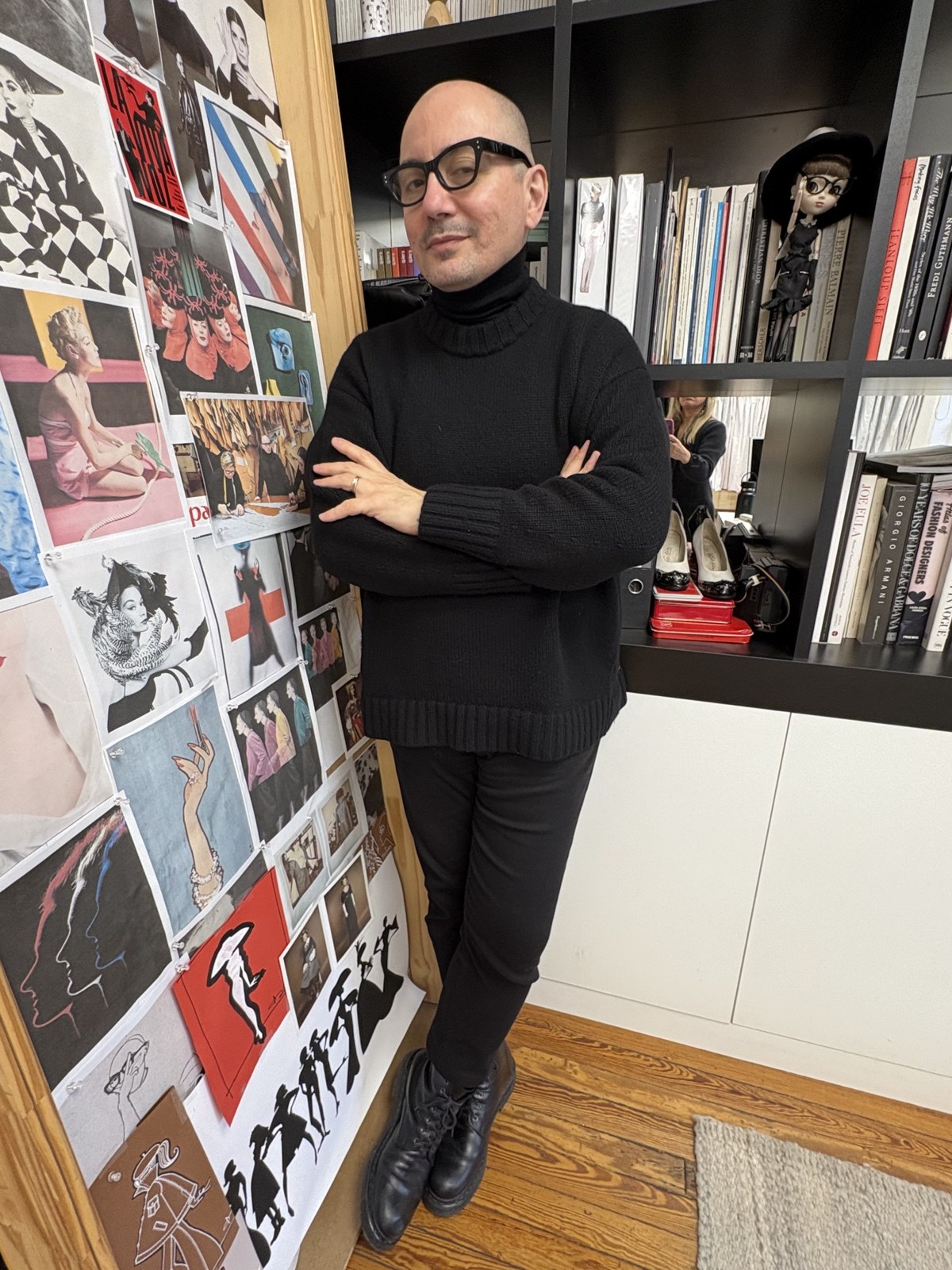
Born in Navarro, in Buenos Aires Province, Ramírez moved to the capital to study fashion design at the University of Buenos Aires. His early professional path took him to Paris in 1994 to develop denim collections before he returned to Argentina and worked for established companies, including Alpargatas. A later period of unemployment led him to New York, where encounters with photographers and stylists encouraged him to stop waiting for permission and create a collection of his own.
The late stylist Dolores Navarro Ocampo gave him the decisive push. Ramírez recalled her telling him that it was time to make his collection. The result was Casta, presented in 2000 as part of the Grandes Colecciones series at the Sheraton Hotel. A study in chastity, religion and the black silhouette, Casta established the foundations of the visual vocabulary that would come to define his work.
Black became more than a colour choice; it was a method that removed distraction and directed attention toward proportion, construction and the wearer. As Ramírez has put it: “Black is pure silhouette. There is no distraction, it emphasizes the person wearing it.”
Tango, and the turning point
The following year, Ramírez turned toward a cultural language that had surrounded him since childhood. His second collection, Tango, was presented at Buenos Aires Fashion Week in 2001 and became an international turning point. “At home, we always listened to tango. My grandfather sang tango,” Ramírez recalled. He also remembers his grandfather’s distinctly tanguero elegance: the shirt, the hat and the polished shoes. Researching the collection led him back toward tango’s beginnings, particularly La Boca and the conventillos. “For me, tango has mystery and sensuality,” Ramírez said. “It also has elegance, and tango has a sophistication in its music and its dance that is very important to me.”
The collection did not reproduce one famous dancer, photograph or historical dress. Ramírez drew instead from music, memory, research and a constellation of images. What interested him was tango’s emotional architecture: tension, friction, melancholy, restraint and desire.
That sensibility appeared in garments that disclosed themselves gradually. White shirts interrupted the black. Red appeared inside a sleeve or lining, visible only when the wearer moved. Rather than repeat the international cliché of the red tango dress, Ramírez might reserve red for the lips or conceal it within the construction. “I am interested in something that initially appears closed or restrained and then suddenly allows the skin or a fragment of colour to appear,” he explained. “The sensuality comes from revelation, rather than from showing everything.”
Movement is embedded in his work even when it is not consciously planned. “The clothes I make, when people put them on, invite movement,” he said. As a boy, Ramírez wanted to be a dancer — an unrealized desire that may explain why his clothes do not merely sit on the body; they ask the wearer to inhabit them.
Isabella Blow, and an international introduction
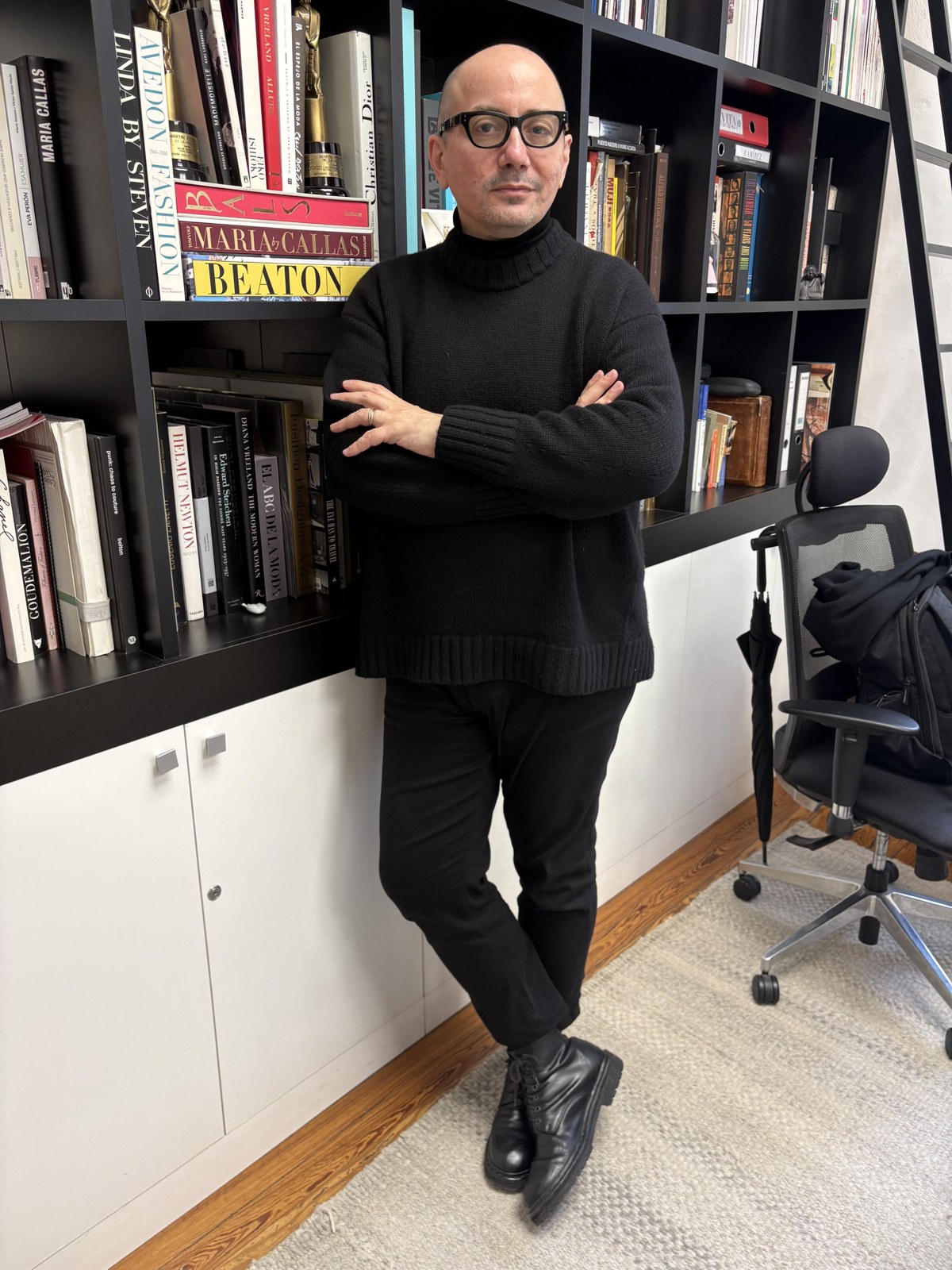
Tango also became the collection that carried Ramírez beyond Argentina. British fashion editor Isabella Blow attended the presentation, gave it a standing ovation and went backstage in tears. “She came backstage, started to cry and told me, ‘Look at me, I’m crying,’” Ramírez recalled. Blow said the collection had moved her, took pieces from the models and put them on. She then joined Michael Roberts for an impromptu shoot at Café Tortoni. The encounter transformed a deeply local story into an international introduction.
Afterward, international visitors often arrived already knowing his name through Tango. Argentine identity did not have to be diluted to travel; its specificity gave the work power.
Ramírez points to Claudio Segovia’s landmark stage production Tango Argentino as an earlier example of the same principle. The show reached Broadway by pairing refinement with authenticity: Segovia sought out genuine milonga dancers and musicians rather than inventing an artificial tango for export. “It was real, authentic and truthful,” Ramírez said, “but it was also presented with enormous sophistication.”
That union of truth and theatrical precision remains central to a career spanning more than 50 collections, international runways, opera, ballet, theatre, uniforms and music. Ramírez does not simply make clothes; he constructs characters and cultural worlds.
The city that keeps the archive moving
If Archivo Ramírez preserves the past, Buenos Aires keeps the archive from becoming static. Ramírez has worked across Paris, Rome, São Paulo, Santiago and Montevideo, including costume design for Carmen at São Paulo’s Theatro Municipal. Yet he continues to describe the Argentine capital as an inexhaustible source. “Buenos Aires is an incredible city,” he said. “It is always changing. It is a mix, a mixture.”
The phrase could also describe the book. Behind the controlled black silhouette lies a dense network of family memories, travel, music, Catholic imagery, national history, stagecraft and urban contradiction. Archivo Ramírez makes that layered construction visible.
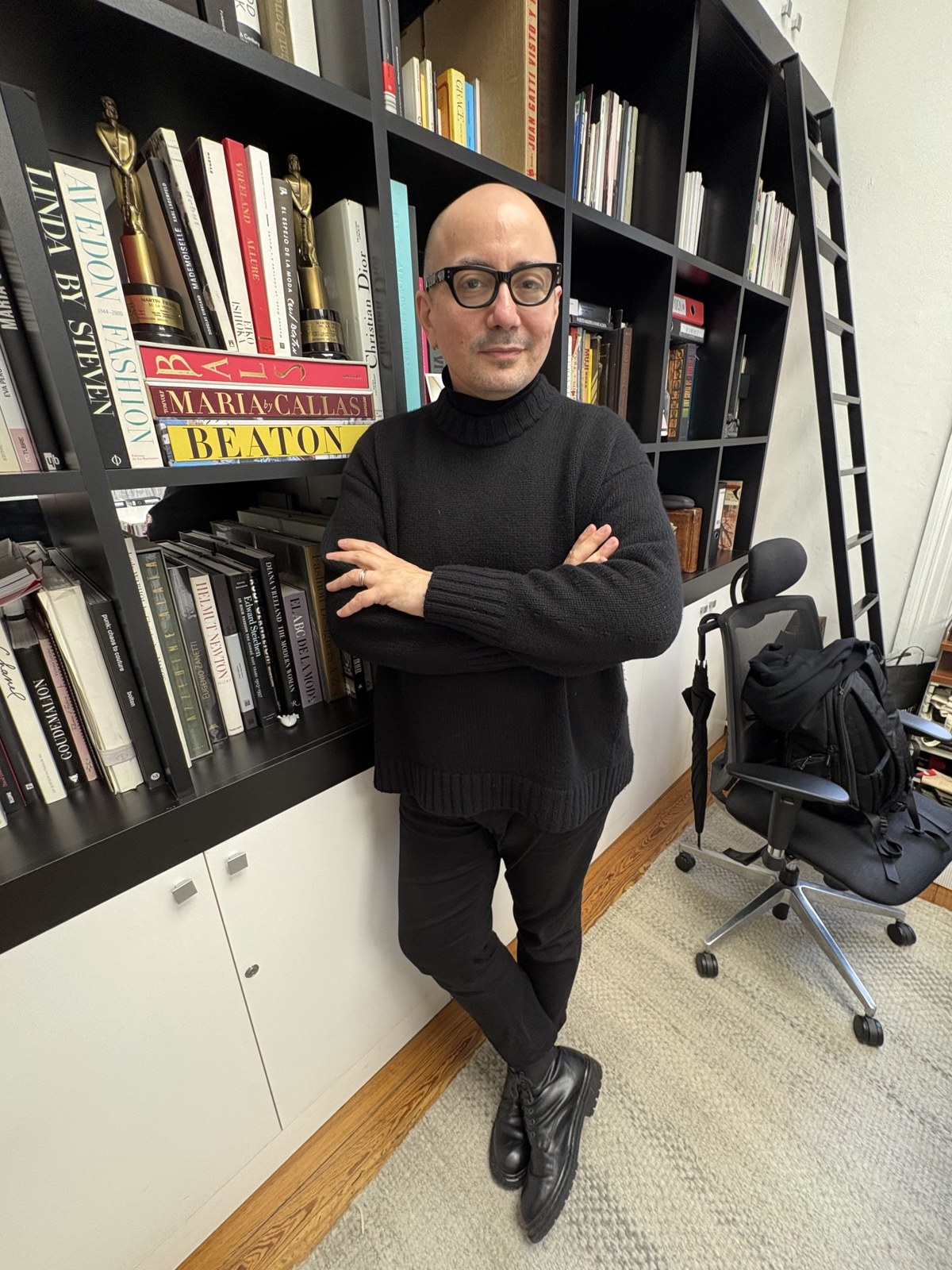
It also complicates the idea of a retrospective. Ramírez is not closing a chapter. His practice remains deliberately eclectic: he has designed Aerolíneas Argentinas uniforms, dressed musicians including Fito Páez and Gustavo Cerati, and created approximately 400 costumes for Carmen at São Paulo’s Theatro Municipal. In 2026 he returned to Teatro Solís in Montevideo to design Fidelio, Beethoven’s only opera. Recent projects also include restaurant uniforms in Recoleta and new stage work for Páez.
What the archive offers the next generation
The book’s deeper significance may be what it offers the next generation. By preserving drafts as carefully as finished dresses, Archivo Ramírez argues that creative process itself belongs to Argentina’s cultural history.
Ramírez is also open to returning to tango. Asked whether he could imagine a future project bringing fashion, music and dance together around the 20th anniversary of UNESCO’s inscription of tango in 2029, his answer was immediate: “I would love to.” The possibility points beyond a conventional runway toward a multidisciplinary cultural platform built from Argentine design, live music and dancers who carry tango as lived practice.
A return would not require repeating the 2001 collection. It could revisit its deeper proposition: tango is not a costume or tourist image, but a sophisticated living language capable of connecting Argentina with the world.
Ramírez’s career offers a pathway for a new generation of Argentine creatives: begin with what is unmistakably local, refine it until it becomes universal, and allow it to travel without erasing where it came from.
Archivo Ramírez may document more than three decades of work, but its most revealing pages are not monuments. They are traces of motion — drawings, fittings, revisions and memories that show an artist still becoming.
The boy who once wanted to dance ultimately found another way to choreograph the body. In black silhouettes shaped by Buenos Aires, the movement never stopped.
Editorial responsibility: Matthias Camenzind, Editor-in-Chief · Editorial standards · Report an error