Lula Signs Brazil’s Fiscal Bill Into Law
Brazil’s president signed the fiscal law within a day of the Chamber vote, and the dollar ended Tuesday only slightly lower against the real, after a deeper fall early in the session.

President Luiz Inácio Lula da Silva signed Brazil’s fiscal bill into law on Tuesday 24 November, less than 24 hours after the Chamber of Deputies, the lower house of Congress, passed it 353 to 128, according to Congresso em Foco, a political news site. The law, Complementary Law 239/2026, was published in an extra edition of the Diário Oficial da União, the government’s official gazette.
The dollar fell about 2.1% against the Brazilian real at its low on Tuesday, to R$5.80, but recovered to close at R$5.91, down 0.26%, the state news agency Agência Brasil reported. For US investors in Brazilian assets, the question is whether this law is enough, and the Chamber’s president, Hugo Motta, called it only “a first step”.
Key Facts
- The law. Signed Tuesday 24 November, a day after the Chamber voted 353 to 128.
- Savings. Government estimates a 2027 gain of R$45.1 billion to R$56.1 billion (US$7.6 billion to US$9.5 billion).
- The dollar. Fell about 2.1% to R$5.80, then closed at R$5.91, down 0.26% on Tuesday 24 November.
- Prediction markets. Polymarket prices no rate change at 88.5% for Brazil’s December decision (1:12 a.m. ET, 25 November).
- Power Index. Brazil ranks 1st of 14 in The Rio Times Latin America Power Index, with 74.2 points (November 2026 edition).
Brazil’s president signed the fiscal law within a day of the Chamber vote, and the dollar ended Tuesday only slightly lower against the real, after a deeper fall early in the session.
In Plain English
- Chamber of Deputies: The 513-member lower house of Brazil’s Congress, which voted last on the bill.
- Complementary law: A type of Brazilian law that sets rules under the constitution and needs an absolute majority in each house.
- Primary result: The government’s budget balance before interest payments on its debt.
- Sanction: The president’s signature that turns a bill passed by Congress into law.
How Lula Signed the Fiscal Law Within a Day
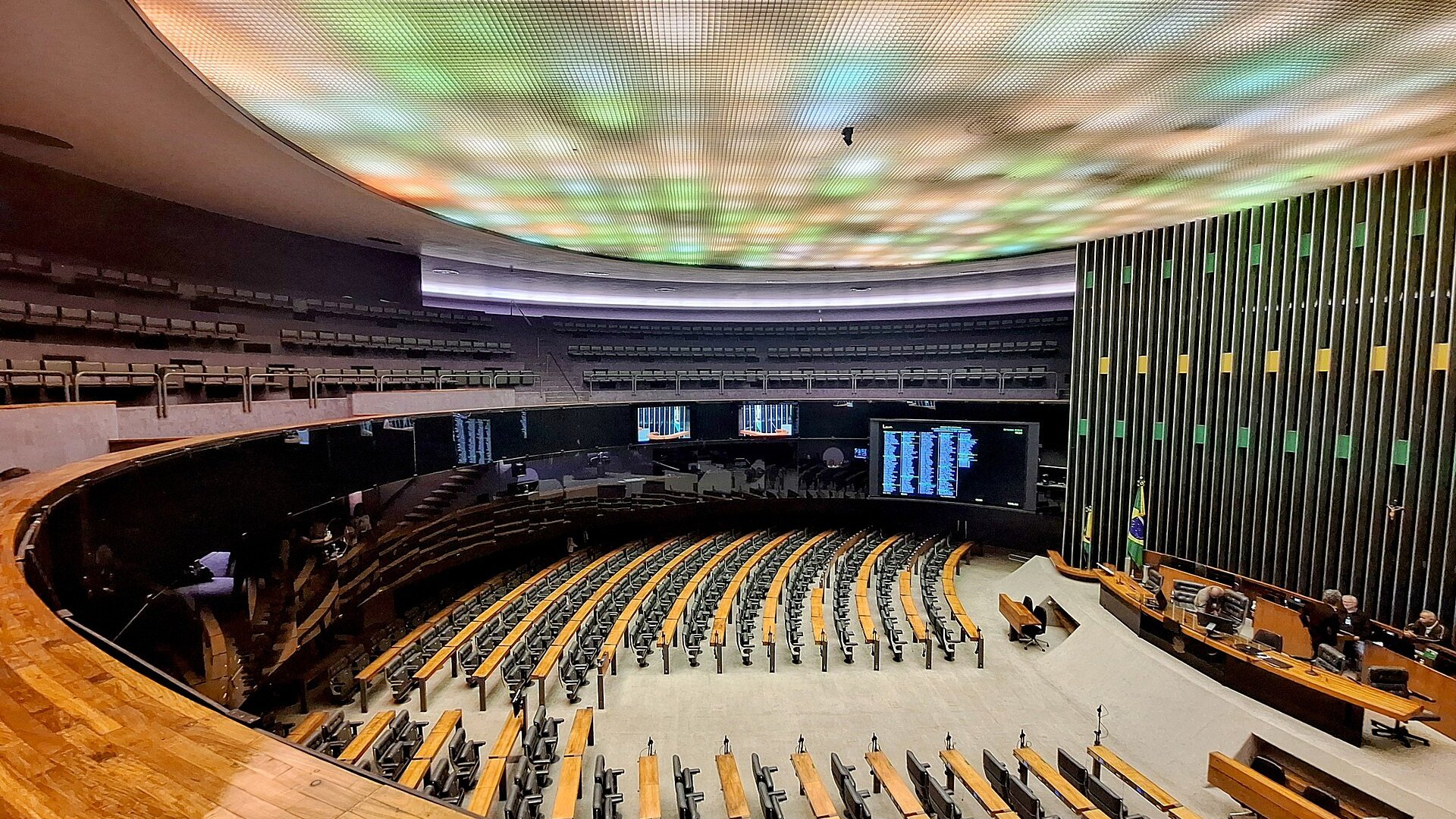
The Chamber of Deputies passed the bill, known as PLP 299/2026 (a bill for a complementary law), by 353 votes to 128 with five abstentions on the night of Monday 23 November, according to the Chamber’s own news service, Agência Câmara, and O Povo, a Brazilian newspaper. It approved the text without changes, so it went straight to the president for signature.
Congresso em Foco reported that Lula signed the law on Tuesday 24 November, and Agência Brasil reported the same day that he had sanctioned it. The Planalto, the presidency’s website, lists Complementary Law 239 as dated 24 November 2026.
The conservative Liberal Party (PL), the free-market Novo party and the leftist Socialism and Liberty Party (PSol) resisted the bill, Congresso em Foco reported, and the Chamber rejected the six amendments put to a floor vote. Hugo Motta, the Chamber’s president, said after the vote: “This is a first step.”
Motta added: “In the Chamber, we vote on what improves the lives of Brazilians.” He also said the approval gives the country better conditions to organise next year’s budget, Congresso em Foco reported on 24 November.
What the Law Changes
From 2027, in years when the budget mechanisms are triggered, real growth of spending, which means growth after inflation, may not exceed 2%, against 2.5% now allowed, Agência Brasil reported. The cut in federal tax benefits rises from 10% to 20%, Congresso em Foco reported.
Agência Brasil reported that the government estimates the measures will improve the 2027 primary result, the budget balance before debt interest, by R$45.1 billion to R$56.1 billion (about US$7.6 billion to US$9.5 billion at R$5.91).
Why the Dollar Fell, and Why It Did Not Stay Down
The dollar closed Tuesday down 0.26% at R$5.911, Agência Brasil reported on 24 November. It fell to R$5.801 at its low and reached R$5.955 at its high, after closing Monday at R$5.926.
Agência Brasil linked the fall to expectations for further fiscal measures. The drop at the low, about 2.1%, faded by the close.
What Prediction Markets Say
On Polymarket, a prediction market where users trade contracts with real money, traders price “no change” at 88.5% for the December decision of Brazil’s central bank, with US$164,000 traded, as of 1:12 a.m. ET on 25 November. The central bank’s rate-setting committee, the Copom, meets on 8 and 9 December, according to the central bank’s calendar, and these prices are bets, not polls.
Why we show this: prediction markets turn real-money bets into a live probability that moves within minutes of the news, which is why investors, campaigns and newsrooms in the United States now follow them closely. We show them next to polls and official results, never instead of them.
What Links These Stories
The vote, the signature and the currency move are one story, because the law is the government’s attempt to show investors that it can restrain spending after the October election. Two other reports behind this Big Read, on police raids against laundering rings and on soybean planting, are linked below and not repeated here.
What It Means for US Readers
A stronger real lifts the dollar value of Brazilian shares and bonds held by US investors, and a weaker real cuts it. US-listed shares of Brazilian companies, known as ADRs, follow the same swing, so Tuesday’s partial reversal shows how thin the relief is.
Motta called the law a first step, so a further fiscal measure would matter more to the real than this signing alone.
What to Watch Next
The Copom, Brazil’s central bank committee that sets the Selic interest rate, meets on Tuesday 8 and Wednesday 9 December 2026, according to the central bank’s calendar.
IBGE, Brazil’s statistics agency, publishes the jobless rate for the three months to October on Friday 27 November.
What Is Not Known
We found no veto in the text published on the Planalto website. Reports cite 2027 savings of “about R$50 billion” without naming who estimates it, so we use the government range of R$45.1 billion to R$56.1 billion.
Sources
Agência Câmara, 24 Nov · Agência Brasil, 24 Nov (law signed) · Agência Brasil, 24 Nov (dollar) · Congresso em Foco, 24 Nov (law) · Congresso em Foco, 24 Nov (Motta) · O Povo, 23 Nov
Frequently Asked Questions
Has Lula signed Brazil’s fiscal bill?
Yes. Lula signed Complementary Law 239/2026 on Tuesday 24 November, less than 24 hours after the Chamber passed the bill 353 to 128, Congresso em Foco reported.
What does the new law do?
It lowers the cap on real spending growth to 2% from 2.5% in years when budget mechanisms trigger, and doubles the cut in federal tax benefits to 20% from 10%.
Why did the dollar fall against the real?
It fell about 2.1% at its low on Tuesday 24 November, to R$5.80, on expectations for further fiscal measures, Agência Brasil reported, but closed down only 0.26% at R$5.91.
This article was produced by The Rio Times’ automated AI newsroom. Editorial responsibility: Matthias Camenzind, Publisher and Editor-in-Chief. The Rio Times also runs Ask Rio Times, which answers from 100,000+ of our own articles, the daily Latin America Power Map, and prediction-market odds on elections and markets.. How we use AI · Report an error
The reports behind this Big Read
Brazil runoff, Sunday, October 25: Brazil runoff: date, poll closing times and when results start. Latest: Brazil runoff polls, Flávio 51%, Lula 49%.