
SENEGAL · ENERGY
Key Facts
- —The country Senegal, a West African nation of about 18 million people, began producing oil in 2024 and exporting gas in 2025.
- —The background Senegal says 6,471 localities still lack power, and on 1 October it costed universal access at about US$686 million.
- —Why now On Tuesday, 6 October, the energy and finance ministers hosted a partners’ roundtable in Dakar to help raise that money.
- —What happened Finance minister Cheikh Diba asked partners to favour grants, highly concessional loans and blended finance compatible with debt sustainability.
- —The numbers Commercial banks supplied over half the sector’s financing since 2018; ongoing projects should lift coverage to nearly 95% in 2027.
- —What it means for you Senegal’s push for cheap money matters to its bondholders; NYSE-listed Kosmos Energy and Woodside earn from its oil and gas.
- —Still open Diba said some financing would be made official, but no amounts or partners had been reported by Tuesday afternoon.
Senegal’s finance minister asked partners for grants and cheap loans to connect the villages still without power by 2029.
Senegal asked development partners in Dakar on Tuesday, 6 October, for grants and cheap loans to bring power to 6,471 localities. How it funds electricity access matters to foreign holders of its bonds, after the IMF confirmed hidden debts in 2025.
Finance minister Cheikh Diba said commercial banks had supplied more than half of the sector’s financing since 2018. The plan behind the meeting, costed at about 400 billion CFA francs (about US$686 million), was presented on 1 October.
Why the Finance Minister Wants Grants, Not Commercial Loans
Cheikh Diba, the Minister of Economy, Finance and Planning, co-hosted the meeting with the energy minister. The meeting would make some financing official and gather new funding intentions, he said, according to APS, the state news agency.
Commercial loans usually cost more and must be repaid faster than loans from development banks. Diba asked partners to favour grants, highly concessional loans and blended finance, which mixes public and private money.
He said any new money must remain compatible with debt sustainability, the official phrase for borrowing a country can repay. In March 2025 the IMF confirmed hidden loans that raised central government debt from 74.4% to 99.7% of GDP at end-2023.
Diba also wants Senegalese companies to take part in rural electrification concessions, mini-grids and home solar systems. A mini-grid is a small local network, often solar-powered, that serves a village beyond the reach of the national grid.
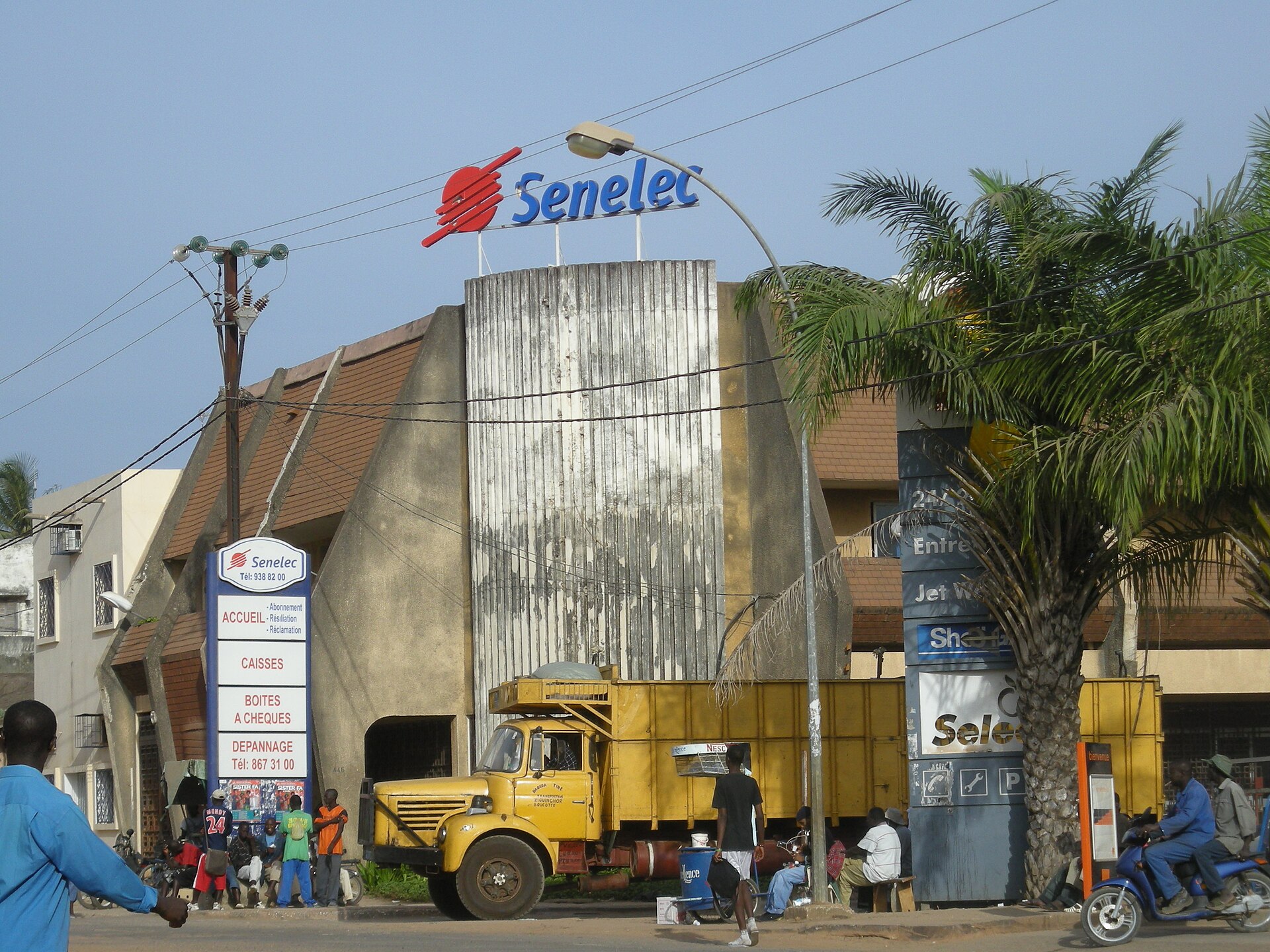
Two Figures the Minister Wants Remembered
El Hadji Abdourahmane Diouf has been Minister of Energy and Petroleum since a reshuffle on Monday, 1 June. He previously served as minister of the environment, Le Soleil, the state-owned daily, reported.
“There are two clear figures that all Senegalese must remember,” Diouf told reporters, according to Dakaractu, a Dakar news site. The first is the 6,471 localities without power; the second is a financing need of 400 billion CFA francs (about US$686 million).
He said the figures came from an assessment made when he took over the sector. Spread across all 6,471 localities, the sum works out at roughly US$106,000 each.
The total exceeds the US$550 million Power Compact signed in 2018 by the Millennium Challenge Corporation, a US aid agency. Le Soleil put the precise remaining gap at 395.8 billion CFA francs (about US$679 million) on Monday, 28 September.
Diouf had given the 400 billion figure at a press breakfast on Thursday, 1 October, APS reported. Conversions use exchange rates of 5 October 2026.
Where Senegal Stands on Electricity Access
Official figures cited by Le Soleil put national electricity access at 86.2%, or about six in seven people. In rural areas the rate is 69.8%, so roughly three in ten country dwellers have no connection.
World Bank data, which lag by a year or more, show 82.9% national access and 67.1% rural access in 2024. The government figures are newer and slightly higher.
Diouf said projects under way should lift coverage to almost 95% in 2027, APS reported. He said universal access in 2029 would put Senegal in the circle of countries that have achieved it, Dakaractu reported.
This is not the first such appeal to lenders. A 2021 roundtable mobilised 237 billion CFA francs (about US$406 million), according to Le Soleil.
Oil and Gas Wealth Beside Villages Without Power
Senegal became an oil producer in June 2024, when Australia’s Woodside started output at the offshore Sangomar field. Gas exports followed in April 2025, when the first cargo left Greater Tortue Ahmeyim, a field shared with neighbouring Mauritania.
British oil major BP operates Greater Tortue Ahmeyim, with Kosmos Energy and the two countries’ state oil companies as partners. Its floating plant is rated at 2.7 million tonnes of liquefied natural gas a year, Kosmos says.
Diouf also described a planned gas pipeline of about 340 kilometres, APS reported on 1 October. That is roughly the distance from New York to Washington.
Oil and gas income does not, by itself, run power lines to remote villages. Each connection still needs poles, cables, transformers or solar kits, and someone to finance them.
What It Means for US Readers
Kosmos Energy, a Dallas-based company listed on the New York Stock Exchange, is a partner in Greater Tortue Ahmeyim. Woodside, which runs Sangomar, also has shares traded in New York.
Power Africa, a US programme launched in 2013 to expand electricity across the continent, was largely ended in February 2025. Most of its programmes were cancelled as the Trump administration dismantled most of USAID, the former US aid agency.
The Millennium Challenge Corporation’s US$550 million Senegal Power Compact is still running. A May 2026 Federal Register notice set out a six-month extension to 9 March 2027, approved by the MCC board, after an unplanned halt in early 2025.
The finance minister’s stress on cheap money also matters to holders of Senegal’s international bonds. How much Senegal borrows, and on what terms, feeds directly into the price of that debt.
What Is Not Known
Diba said some financing would be made official, but no amounts or partners had been reported by Tuesday afternoon. It is also unclear how much of the 400 billion CFA francs (about US$686 million) would come as grants rather than loans.
Officials did not say how many people live in the 6,471 localities. Nor have they published a year-by-year schedule showing how the 2029 deadline will be met.
What Comes Next
The roundtable is meant to produce a 2026–2029 roadmap with milestones, APS reported. It also seeks risk-sharing frameworks so Senegalese firms can invest in rural concessions, mini-grids and solar kits.
On the US side, the power compact is set to end on 9 March 2027 under that proposed extension. Tuesday’s meeting does not mean new money is committed, nor that the villages will be connected soon.
Frequently Asked Questions
What currency does Senegal use?
Senegal uses the West African CFA franc, shared with several neighbours and pegged to the euro, worth about US$0.0017 each. On 5 October 2026 one US dollar bought 583.03 CFA francs, so 400 billion CFA francs equals about US$686 million.
Why do villages lack power if Senegal produces oil and gas?
Oil and gas income flows to the state budget, but each village still needs power lines or solar systems built. Production began only in 2024 and 2025, and extending rural networks takes years.
Who will pay for universal access?
The government wants development partners and private firms to cover the gap, preferring grants and very cheap loans. No amounts or partners had been reported after Tuesday's meeting.
Is the United States still funding electricity in Senegal?
Yes, through the Millennium Challenge Corporation's US$550 million Senegal Power Compact, which is set to run to 9 March 2027 under a proposed extension. Power Africa, the broader US electrification programme, was largely ended in 2025.
What is a mini-grid?
A mini-grid is a small local power network, often run on solar panels and batteries, that serves one or a few villages. It is used where extending the national grid would be too slow or costly.
Sources: Prime Minister’s Office of Senegal, minister profile; APS, roundtable report; APS, financing need; APS, 1 October briefing; Federal Register, MCC Senegal Power Compact extension; IMF Press Release 25/77; Kosmos Energy, first LNG cargo; Woodside, Sangomar first oil; Dakaractu; Le Soleil, financing needs; World Bank, access to electricity; Le Soleil, new government; Africanews, Power Africa (all accessed 6 October 2026).
This article was produced by The Rio Times’ automated newsroom system. How we use AI · Report an error · Editorial responsibility: Matthias Camenzind, Editor-in-Chief