Pemex Defends Losses to Hold Fuel Prices
Mexico’s state oil company says cheap fuel is a choice it pays for. What that choice costs has not been published.

Energy: Mexico
Pemex, Mexico’s state-owned oil company, told lawmakers on Monday 9 November 2026 that it accepts losses and lower revenue to keep petrol and diesel prices down. Juan Carlos Carpio Fragoso, its director general, spoke before the Energy Commission of the Chamber of Deputies, the lower house of Mexico’s Congress.
US readers have reasons to watch. Pemex carries US$77.6 billion of financial debt, and Pemex says its fuel prices help hold down Mexican inflation.
Key Facts
- Who. Pemex, Mexico’s state oil company, led by director general Juan Carlos Carpio Fragoso.
- What. Pemex says it accepts losses and lower revenue to keep fuel prices down.
- Where. Energy Commission of Mexico’s Chamber of Deputies, on 9 November 2026.
- Prices. Pemex says it keeps regular petrol and diesel cheap at the cost of its own revenue.
- As of. 24 November 2026, 10:00 GMT
Mexico’s state oil company says cheap fuel is a choice it pays for. What that choice costs has not been published.
Carpio spoke during the review of President Claudia Sheinbaum’s second government report. Pemex summarised his remarks in communique No. 87/2026 of 9 November 2026, filed with the Mexican Stock Exchange (BMV).
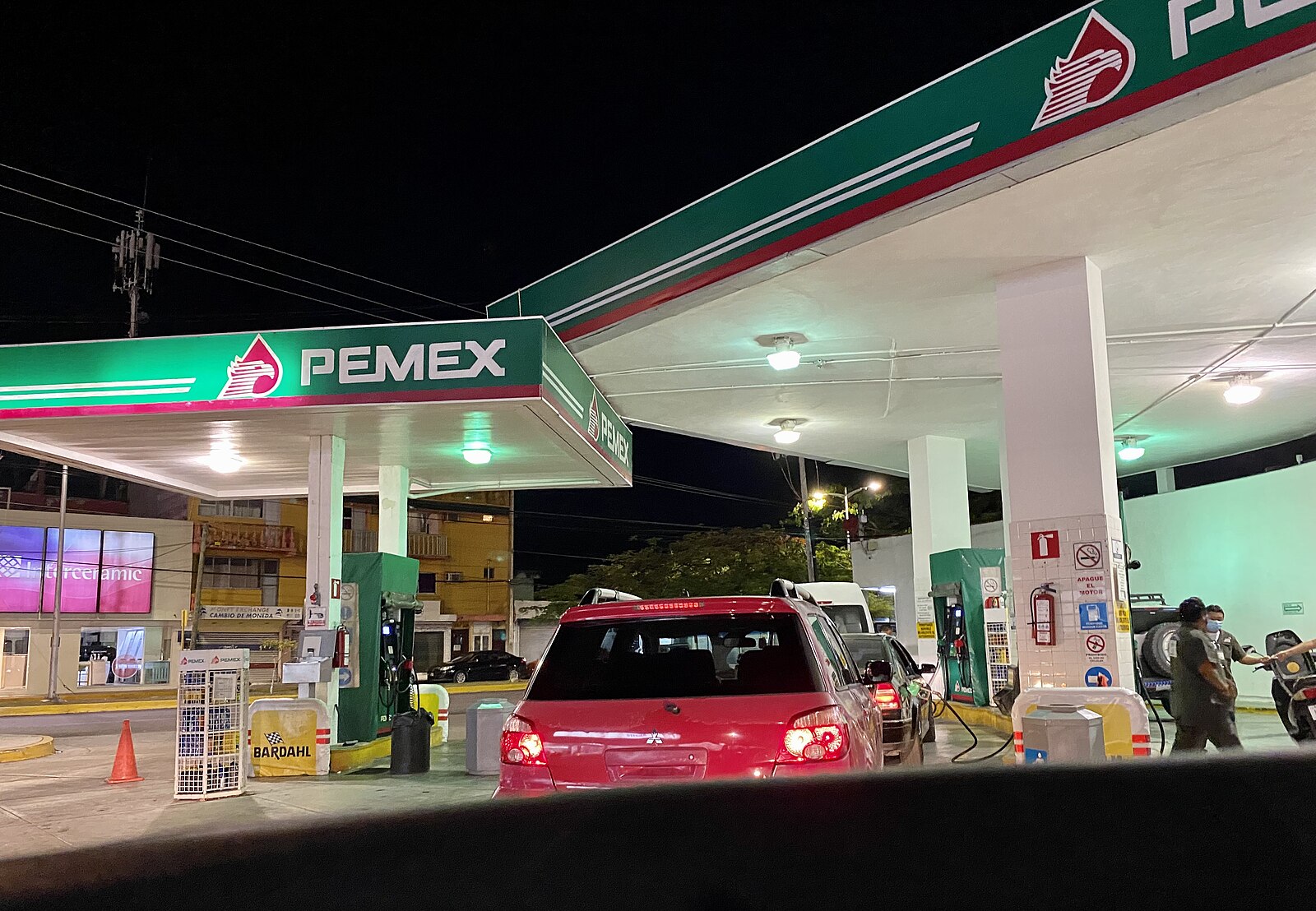
Pemex says regular petrol sells below 24 pesos a litre (about US$1.25) and diesel at 27 pesos (about US$1.41) at most stations. Every peso conversion here uses the Bank of Mexico (Banxico, the central bank) FIX rate of 19.1648 pesos per US dollar on 23 November 2026.
Carpio told legislators on 9 November 2026 that Pemex’s cash box “would be very full” (“estaría llenísima”) if it sold fuels at international prices. He also pointed to debt interest and the oil-profits duty Pemex pays the state, the “derecho petrolero para el bienestar”, as causes of the losses.
Pemex has not published how much of its loss comes from the price policy. It has also published no end date for the price levels, so the statement rules out neither continued losses nor a later price rise.
The company’s third-quarter 2026 results, published on 30 October 2026, show a net loss of 10,795 million pesos (about US$563 million). A year earlier, in the third quarter of 2025, the net loss was 61,242 million pesos (about US$3.2 billion).
Revenue in the quarter was 486,779 million pesos (about US$25.4 billion), up 28.5%. These figures are preliminary and unaudited.
IMCO, the Mexican Institute for Competitiveness, a think tank, puts the nine-month net loss at 38.8 billion pesos (about US$2.0 billion). That compares with 45.1 billion pesos (about US$2.4 billion) in 2025, and IMCO calls its figures preliminary.
Pemex argues that its core business is improving. In communique 87/2026 it says earnings before interest, tax, depreciation and amortisation (EBITDA) rose 49% to 385 billion pesos (about US$20.1 billion) in January to September 2026. Its net result “improved 14%”.
The same communique puts financial debt at US$77.6 billion, the lowest since 2014 and more than US$20 billion below the level of under two years ago. In 2027, Pemex says, it will need 64% less money from the federal government, which goes only to debt payments.
Credit rating agencies have noticed. Fitch raised Pemex from B+ to BB+ at the end of 2025 and reaffirmed BB+ with a stable outlook in 2026, while Moody’s raised it from B3 to B1.
For scale, ExxonMobil, the US oil major, reported third-quarter 2026 net income under US accounting rules of US$15.413 billion in its release of 30 October 2026. The two companies serve different purposes, so the figure marks scale and is not a like-for-like test.
Opposition legislators raised fuel smuggling, known as “huachicol fiscal”, at the same hearing. The Pemex communique does not cover their criticism.
Pemex also plans own-funds investment above 1.8 trillion pesos (about US$94 billion) in 2025 to 2030, according to its communique. Our earlier reports cover Pemex owes banks US$21 billion, half to US lenders and the Pemex fuel self-sufficiency plan.
Carpio closed by saying every barrel, litre and peso should translate into “energy sovereignty and well-being”. Further coverage is in our Mexico news section.
Frequently Asked Questions
Why does Pemex keep fuel prices low?
Pemex says it wants to keep prices competitive, and Carpio links the policy to “energy sovereignty and well-being”. The company has published no end date for the current price levels.
Does the price policy explain Pemex’s losses?
Pemex has not published how much of its loss the policy causes. Carpio says the company would hold far more cash if it charged international prices.
Why should a US reader follow this?
Pemex is heavily indebted, and it says its fuel prices help hold down inflation.
Sources: Carpio’s remarks to the Energy Commission of the Chamber of Deputies, 9 November 2026; Pemex communique No. 87/2026, 9 November 2026; Pemex third-quarter 2026 results, 30 October 2026; ExxonMobil third-quarter 2026 results release, 30 October 2026; Banco de México FIX rate, 23 November 2026; IMCO, “Pemex en la mira”, third quarter 2026.
This article was produced by The Rio Times’ automated AI newsroom. Editorial responsibility: Matthias Camenzind, Publisher and Editor-in-Chief. The Rio Times also runs Ask Rio Times, which answers from 100,000+ of our own articles, the daily Latin America Power Map, and prediction-market odds on elections and markets.. How we use AI · Report an error